

Nile Breweries Invests UGX4bn in Sebei Barley Handling Facility as Local Sourcing Expands
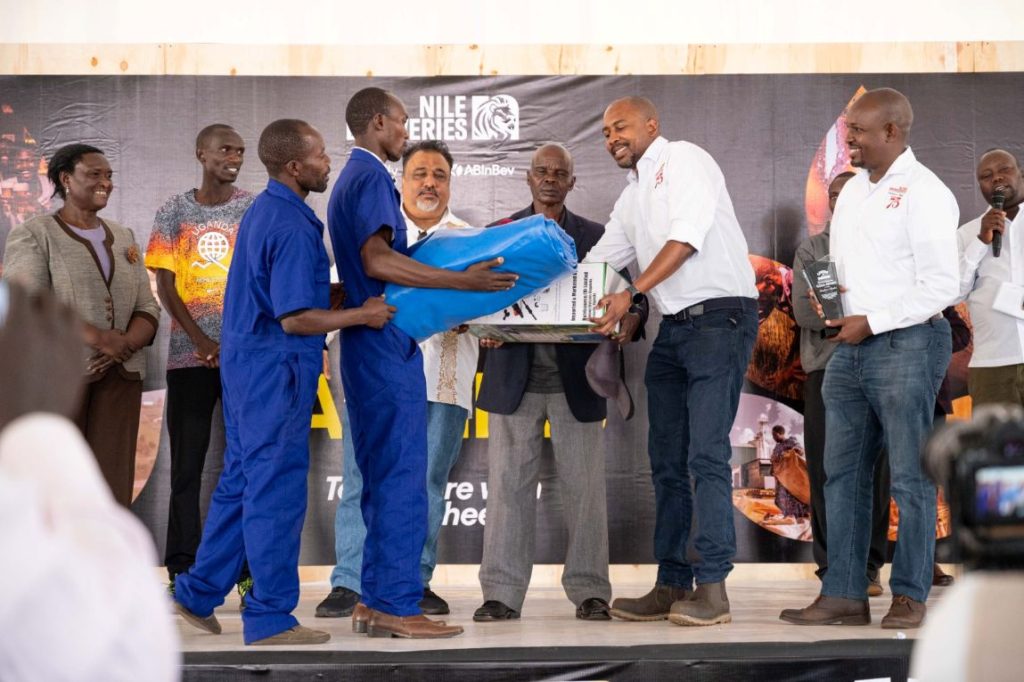 Nile Breweries Limited (NBL) Managing Director Nkanyiso Mncwabe (2R) hands over a sprayer and tarpaulin to outstanding barley farmers during NBL’s “Cheers to Farmers” celebrations at the Cheminy Drying Facility in Kween District. Looking on are NBL’s Emmanuel Njuki (R); Hon. Sanjay Tanna, Minister of Trade, Industry and Cooperatives; athlete Joshua Cheptegei; and Kween Resident District Commissioner Rtd ASP Hope Atuhaire (L). The event recognised farmers’ contribution to Uganda’s barley value chain
Nile Breweries is strengthening its local barley supply chain through a UGX4 billion drying and storage facility in Kween, improved seed initiatives and agricultural support for farmers across the Sebei sub-region.
Investment in post-harvest infrastructure and improved agricultural inputs is helping strengthen Uganda’s barley value chain, with Nile Breweries Limited (NBL) seeking to improve grain quality and secure supplies from farmers in the Sebei sub-region.
The brewery recently brought together more than 500 barley farmers at its Cheminy Drying Facility in Kween District under its “Cheers to Farmers” campaign, recognising growers and promoting better agricultural and post-harvest practices.
The engagement comes against the backdrop of NBL’s growing reliance on locally sourced agricultural inputs. The company works with about 25,000 farmers across Uganda to grow barley, sorghum, cassava and maize, including approximately 4,000 barley farmers in the Kapchorwa highlands.
More than 98pc of the brewery’s raw materials are sourced locally, representing annual expenditure of more than UGX156 billion.
Joseph Luzinda, NBL’s Agro Services Manager, said the brewery procures approximately 10,000 tonnes of barley annually from farmers. The company is also working with the National Agricultural Research Organisation (NARO) to develop a new barley seed variety to improve production.
Through its Local Raw Material programme, NBL provides farmers with improved seed, agricultural extension services and access to a market for their produce.
One of the challenges facing barley growers in Sebei has been the drying of grain during rainy periods, when harvesting coincides with unfavourable weather conditions. Poor drying can compromise grain quality and affect its suitability for malting.
To address this constraint, NBL invested UGX4 billion in the Cheminy barley cleaning and drying facility, which was commissioned in 2023. The facility serves farmers in Kween, Kapchorwa and Bukwo districts, providing cleaning, drying and storage services intended to preserve grain quality and reduce dependence on open-air drying.
Speaking at the farmers’ celebration, Trade, Industry and Cooperatives Minister Sanjay Tanna said a dependable market gives farmers greater confidence to invest in production, while local processing creates opportunities for employment and wider economic activity.
He said the relationship between agricultural producers and manufacturers demonstrated how local sourcing could connect farming communities to industrial value chains.
NBL Managing Director Nkanyiso Mncwabe said the company’s 75-year presence in Uganda had been built partly on relationships with farmers who supply agricultural raw materials to its breweries.
He said the company works with growers throughout the production cycle, from access to seed and agricultural advice to the handling of harvested grain.
Beyond agricultural extension, NBL’s farmer support initiatives also include training in budgeting, bookkeeping, savings and credit management, aimed at strengthening household and farm-level financial management.
The Sebei engagement included practical training on barley production by agricultural extension officers and recognition of outstanding farmers.
Local leaders said the partnership had helped improve farmers’ access to markets and address some of the practical difficulties associated with grain handling.
Kamuchaki Augustine, LC1 Chairperson of Chemolon Cell, said income from farming supports household expenditure, including school fees, while stimulating trade within local communities.
Kween District LC5 Chairperson Paul Kapchemeiko Majinjach said access to improved seed, agricultural advice and a reliable market had helped growers improve the quality of their barley, while the Cheminy facility had eased drying and storage constraints.
Kapchorwa District LC5 Chairperson Chelimo Vinscent called for greater access to soil testing services to help farmers understand soil conditions and improve productivity. He also urged the development of more employment opportunities for young people in the region.
Related Posts
 Isaiah Rwanyekiro: Wearing my Scars with Pride After Years of Battling Cancer
 Equity Bank Unveils Richard Byarugaba as it Targets Ugandans in Kenya with Cross-border Investment Proposition
 SITA’s New eWAS+ Electronic Flight Bag Integrates Weather and Flight Operations Data for Pilots
 United Opens new Dulles Concourse as it Expands International Network
 ICEA LION Urges Stronger Employee Protection as Insurer Backs HR Conference with UGX15m
 Nissan Patrol Marks 75 Years with Exclusive Anniversary Edition for Middle East Market
Get business news delivered to you everyday
Latest News

Nile Breweries Invests UGX4bn in Sebei Barley Handling Facility as Local Sourcing Expands

Equity Bank Extends Women’s Enterprise Financing Programme to Buvuma Island

Isaiah Rwanyekiro: Wearing my Scars with Pride After Years of Battling Cancer

Equity Bank Unveils Richard Byarugaba as it Targets Ugandans in Kenya with Cross-border Investment Proposition

SITA’s New eWAS+ Electronic Flight Bag Integrates Weather and Flight Operations Data for Pilots

United Opens new Dulles Concourse as it Expands International Network

ICEA LION Urges Stronger Employee Protection as Insurer Backs HR Conference with UGX15m

Stanbic Alerts Customers to Tighter OTC Transaction Limits Ahead of January 2027 Changes

Financing Gap Hobbles Uganda’s Shift to Mercury-Free Gold Mining

Equity’s MSME Financing Helps Fill the Missing Middle in Uganda’s Economy