
MTN’s R6bn Share Buyback Highlights Cost of Iran Exit – Analysts
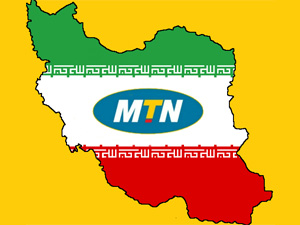
MTN’s R6bn share buyback signals confidence in its African cash-generating businesses, but the telecom giant’s costly and complicated exit from Iran continues to weigh on its balance sheet and investor outlook, says London-based market intelligence and news platform Allen Dreyfus.
MTN’s decision to return R6 billion ($375 million) to shareholders underscores the strength of its African operations, even as the telecoms group continues to carry the financial and geopolitical cost of its long-running exposure to Iran, according to London-based market intelligence and news platform Allen Dreyfus.
MTN owns a 49pc stake in Irancell, a joint venture between South Africa’s MTN and an Iranian government-controlled consortium. But US sanctions, coupled with the sharp depreciation of the Iranian rial, have trapped significant shareholder value in the volatile market, limiting MTN’s ability to exercise its exit option.
Dreyfus reports that the continent’s largest mobile operator has approved the share buyback after reporting a 21.3pc increase in adjusted half-year profit, with adjusted headline earnings per share rising to 793 cents from 654 cents.
Investors responded positively, pushing MTN’s share price 4.61pc higher to R201 as the buyback reinforced confidence in the group’s cash-generating capacity.
For MTN, however, the headline numbers conceal a more complicated picture according to Dereyfus.
Reported headline earnings per share fell 5.8pc after the group recognised a R3.9 billion non-cash impairment on its 49pc stake in Irancell, its Iranian associate. The impairment reflects the impact of hyperinflation and the sharp depreciation of the Iranian rial.
Currency weakness elsewhere in MTN’s footprint also continued to weigh on performance, with foreign-exchange losses in South Sudan highlighting the broader risks of operating across volatile frontier markets.
But Iran remains the more difficult problem to resolve. MTN has been working to complete its withdrawal from the Middle East and focus its portfolio increasingly on Africa. Its exit from Iran, however, has been complicated by US sanctions, leaving approximately R880 million in dividends trapped in the country since 2018, according to Dreyfus.
That creates an unusual contrast in MTN’s capital allocation story – while the group is sufficiently confident in its African cash flows to commit R6 billion to buying back its own shares, a substantial pool of money generated by an overseas investment remains inaccessible.
“The distinction is important for investors assessing MTN’s longer-term strategy,” says Dreyfus.
“With more than 317 million subscribers across 19 markets, the group remains deeply exposed to the growth of Africa’s consumer economy, particularly through mobile data, digital services and financial technology. Its African operations provide the underlying growth story supporting shareholder returns.”
The Iran exposure, by contrast, represents a legacy investment whose strategic value has diminished as MTN has sought to simplify its portfolio and concentrate on markets where it can exercise greater operational and financial control.
“The buyback is a strong vote of confidence in MTN’s ability to generate cash from its core African operations, but it also highlights the unfinished business around Iran,” said Dreyfuss.
For investors, the next question may therefore be less about whether MTN can return capital and more about how quickly it can remove the remaining obstacles to a cleaner, Africa-focused balance sheet.
The R6 billion buyback signals that MTN can absorb the financial strain associated with its legacy exposures. Closing the Iran chapter, however, could give investors a clearer view of the African growth story the group increasingly wants to present.
Related Posts
 Why Africa’s Institutions Must Turn Knowledge and Investment into Farmer Prosperity
 Stanbic experts offer investment insights to navigate current market uncertainty
 Africa Carbon Markets Urged to Turn Potential into Investment and Delivery
 Corporate Buyers Could Help Unlock SAF Market Worth Millions of Tonnes by 2030
 Airbus sees USD420bn Global Aviation Services Boom: Can Africa Capture its Share?
 Nile Breweries Celebrates 75 Years of Growing with Uganda
Get business news delivered to you everyday
Latest News

Why Africa’s Institutions Must Turn Knowledge and Investment into Farmer Prosperity

Forbes ranks MTN Group third globally on best telecom employer list

Stanbic experts offer investment insights to navigate current market uncertainty

Africa Carbon Markets Urged to Turn Potential into Investment and Delivery

Bank of Uganda hikes base rate from 9.75% to 12% amidst global tensions

Corporate Buyers Could Help Unlock SAF Market Worth Millions of Tonnes by 2030

Airbus sees USD420bn Global Aviation Services Boom: Can Africa Capture its Share?

Nawangwe Urges Architects to Document Uganda’s Built Heritage

Stanbic installs solar power system at Mbale School for the Deaf

NWSC Seeks Grundfos Partnership to Manufacture Pumps, Spare Parts in Uganda