

Editorial | Uganda must rethink its economic reliance on a volatile America
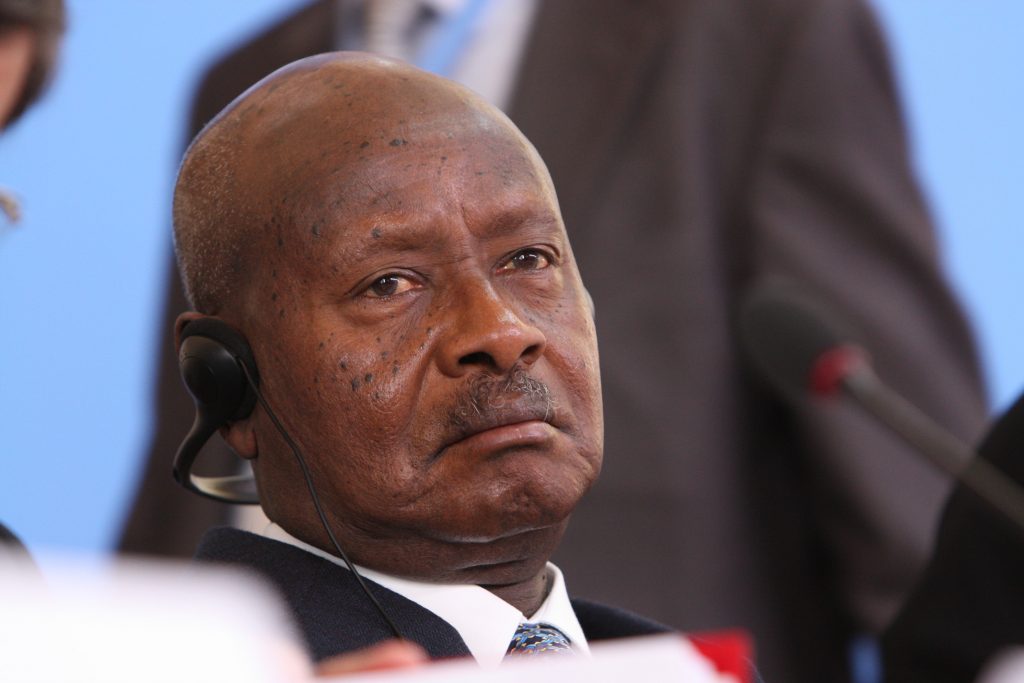 Museveni said keeping a range of options available does not prevent the development of its renewables, but forcing Africa down
one route will hinder its fight against poverty.
Museveni said keeping a range of options available does not prevent the development of its renewables, but forcing Africa down
one route will hinder its fight against poverty.
The decision by U.S. President Donald Trump to unilaterally hike tariffs on Ugandan exports—raising duties from 10pc% to 15pc—should not come as a surprise but serve as a definitive wake-up call.
While cloaked in the language of “rebalancing the global economy,” Trump’s latest tariff barrage is nothing short of economic strong-arming. Uganda joins a long list of countries—many of them African—targeted not for any demonstrable wrongdoing, but for the simple reason that they do not “align sufficiently with the United States on economic and national-security matters.” In plain terms: you are either in America’s corner politically, or you will be punished economically.
This is not trade policy; it is coercion.
Uganda’s inclusion in the punitive tariff sweep, despite having no ongoing trade dispute with Washington, exposes the fragility and one-sidedness of African-American economic ties. At the same time, it validates a growing consensus among African policymakers: the continent cannot—and must not—continue to tether its economic destiny to the shifting whims of U.S. domestic politics.
It is time for strategic disengagement.
This does not mean isolationism or severing ties. It means recalibrating the terms of engagement. It means prioritising self-interest over sentimentality and investing in regional economic resilience over Atlantic dependency. Africa, and Uganda in particular, must seize this moment to turn inward—to AfCFTA, to COMESA, to East African regional supply chains—and build trade infrastructure that cannot be so easily weaponised by foreign powers.
Trump’s move jeopardizes sectors vital to Uganda’s export economy—coffee, textiles, floriculture, and processed foods—placing the ongoing pivot to value-addition, jobs and incomes at risk. It also undermines decades of goodwill nurtured under frameworks like AGOA, which are now exposed as privileges granted, not rights upheld.
The logic of dependency has failed us. American market access, while valuable, is no longer reliable. The volatility of U.S. trade policy—marked by executive overreach, disregard for multilateralism, and ideological realignment—makes it a poor foundation for African economic planning.
Uganda should respond not with indignation, but with strategy. This is the time to aggressively court alternative export markets in Asia, Latin America, and within Africa itself. It is time to leverage the African Continental Free Trade Area (AfCFTA) as more than a slogan—to operationalise it, build cross-border infrastructure, harmonize standards, and eliminate tariff and non-tariff barriers within the continent.
President Museveni was blunt but right when he said, “Don’t involve me in issues to do with Trump… You have Africa—work on Africa.” That is not just a defiant quip; it is a doctrine waiting to be institutionalised.
The new tariffs are a blow—but they are also an opportunity. Uganda can either plead for access to a market that weaponises trade for political gain—or it can take the first real steps toward building a Pan-African economic future.
Related Posts
 Why Africa’s Institutions Must Turn Knowledge and Investment into Farmer Prosperity
 Lt Gen Frederick Alexander Okecho: The Gallant Soldier Who Knew When to be Still
 Uganda’s Oil Refinery Still Makes Sense in a USD500 Billion Economy
 Beyond the Classroom: A Ugandan Student Inside China’s Manufacturing World
 Hon. John Musila and the Duty of MPs to Respect Institutional Accountability
 Africa Faces Gunboat Diplomacy Without the Gunboats
Get business news delivered to you everyday
Latest News

Solar Power Linked to More Births and Better Patient Access at Rural Ugandan Clinics

China’s GPMI Interface Leapfrogs HDMI, USB With 192Gbps Speeds and 480W Power

Stanbic Seeks Northern Uganda Business Feedback as It Marks 35 Years in Country

Uganda Emerges as Africa’s Largest Organic Farming Country as Exports Reach USD225 Million

SITA Acquisition of Collins Airport Solutions Signals Moves to Consolidate Aviation Technology

Uganda Coffee Roasters Tap Richard Rugaya as Executive Director, with Focus on Commercial Growth

Equity Bank Reports UGX37.6 Billion in Green Loans as Uganda Seeks to Scale Climate Investment

Why Africa’s Institutions Must Turn Knowledge and Investment into Farmer Prosperity

Forbes ranks MTN Group third globally on best telecom employer list

Stanbic experts offer investment insights to navigate current market uncertainty