

East African aviation growth cited as fastest across continent for 2026
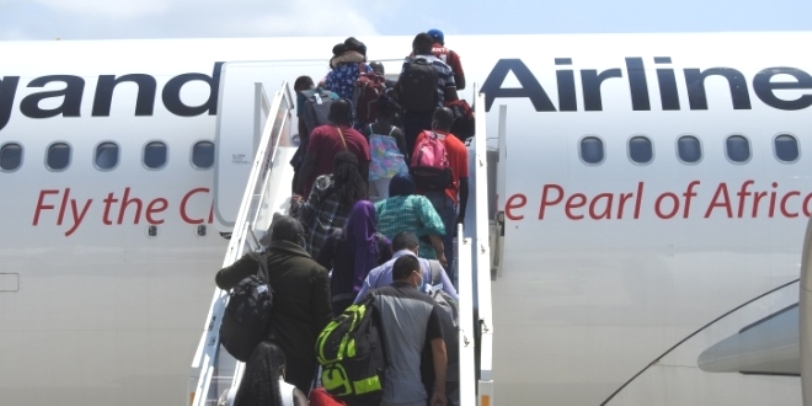 While North Africa might have the largest number of seats so far for 2026 with a 10.7 pc boost giving it 71.1 million seats, the region’s growth levels has been outstripped by Eastern Africa where a 24.3 pc jump in seats means 46.5 million departure seats are currently available for 2026.
East Africa has been described as the standout regional aviation growth story for 2026, recording a 24.3 pc jump in departure seats to 46.5 million – outpacing every other African region and cementing its status as the continent’s most dynamic aviation market.
According to a recently published paper by the African Travel & Tourism Association (ATTA), Africa’s aviation sector is experiencing record growth, with international seat capacity increasing by 18.6 pc year-on-year.
While North Africa might have the largest number of seats so far for 2026 with a 10.7 pc boost giving it 71.1 million seats, the region’s growth levels has been outstripped by Eastern Africa where a 24.3 pc jump in seats means 46.5 million departure seats are currently available for 2026. Meanwhile, Southern Africa’s increase of 19.1 pc gives it 35.5 million seats. Only Central and Western Africa have remained the same at about 29.2 million seats.
Kgomotso Ramothea, the ATTA Chief Executive Officer said, “East Africa is where the energy is right now. The combination of world-class wildlife, improving infrastructure and visionary airlines is creating a perfect storm for aviation growth.”
Titled, Africa in the Air: Aviation & Tourism Outlook 2026, the paper explores the rapid resurgence of aviation capacity across Africa and its pivotal role in driving the continent’s tourism growth by drawing on data from aviation analysts and global industry bodies.
Author, Ed Robertson says in the first 10 months of 2026, for which data is available, OAG statistics show that there are 182.4 million departure seats available in Africa, a 13.7 pc increase on the 160.4 million available in the same period in 2025 while also double the 6.1 pc growth seen between the whole of 2024 and 2025.
Official Airline Guide (OAG) is the world’s leading provider of digital flight information, intelligence and analytics for airports, airlines and travel tech companies. The paper also exams the expansion in international airlift, the growing demand from key source markets and significant infrastructure investment in emerging hubs.
Of the 182.4 million seats scheduled to leave airports so far this year, 129.5 million serve the international – out of Africa – market and it is here that the key growth can be seen with an 18.6 pc increase on available seats compared to the 3.3 pc increase in domestic – intra-Africa – seats to 52.9 million.
The OAG data also shows that Egypt remains the biggest market with 30.9 million departure seats available from January to October 2026, a 12.6 pc increase on the same period in 2025, while South Africa’s 26.8 million seats for 2026 represent a 19.6 pc increase. Third placed Morocco’s 22.5 million seats are 21.8 pc more than in 2025 while Ethiopia enjoyed growth of 31.2 pc with 17 million departure seats so far assigned for 2026, followed by Kenya’s 10.2 million seats which represent an increase of 22.3 pc this year
This 2026 growth in African aviation is built on strong foundations, with the UN Tourism’s World Tourism Barometer showing that Africa enjoyed the strongest growth globally of 10 pc in the first nine months of 2025 when the number of over-night global international tourists grew by 50 million, 5 pc year on year, to 1.1 billion.
The UN Tourism’s figures also show that of the top 20 best performing destinations globally, five were African with Egypt growing by 20 pc, South Africa up by 19 pc, Ethiopia increasing by 15 pc, Morocco by 14 pc and the Seychelles enjoying a 13 pc boost.
Ethiopian Airlines leads the continent as Africa’s largest international carrier with 23.8 million departure seats scheduled for January3 October 2026, cementing its role as the continent’s primary hub connector.
The need for more African routes was highlighted at the 2025 AviaDev Africa conference in Zanzibar, where routes such as Maputo-Entebbe, Kigali-Lusaka, and Dar es Salaam-Brazzaville were identified as transformative for intra-African tourism.
Just a single 100-seat aircraft operating three times a week could boost such routes, especially given that 28 pc of intra-African routes are visa-free, with countries like Rwanda, Ghana and Namibia further opening up via visa-on-arrival or e-visa programmes.
However, Africa’s aviation potential is significantly constrained by the absence of a meaningful pan-African open skies agreement. High taxes, protectionist policies and fragmented bilateral air service agreements continue to inflate ticket prices and limit route development across the continent.
African airlines, already operating on thin margins, are particularly exposed to aviation fuel increases caused by current geopolitical instability; governments could consider reducing fuel taxes to sustain growth.
The African Union’s Single African Air Transport Market (SAATM), launched in 2018, was designed to liberalise intra-African air travel. However, progress has been slow, with only 38 of 55 AU member states having signed up and fewer still having fully implemented its provisions. The result is that intra-African air travel remains among the most expensive in the world relative to distance travelled.
“The lack of any meaningful pan-African open-skies agreement continues to impact the sector. None of these problems are insoluble and we are urging governments, tourist boards and airlines to work more closely together,” Ramothea said.
The International Air Transport Association (IATA) estimates that full liberalisation of African aviation could generate an additional $1.3 billion in GDP and create 155,000 new jobs across the continent. With African passenger numbers predicted to reach 345 million per annum by 2043, the stakes for getting policy right have never been higher.
Related Posts
 SITA Acquisition of Collins Airport Solutions Signals Moves to Consolidate Aviation Technology
 IATA says Aviation Safety’s Next Gains Will Depend on People, Technology and Standards
 Airlink Expands Cape Town Network with New Lanseria and Mauritius Links
 Airbus A350F Freighter Takes Flight as Cargo Market Shifts Toward Newer, More Efficient Aircraft
 IATA Warns Cargo Screening Alone Cannot Contain Undeclared Dangerous Goods Risk
 Entebbe-Based Jet Fresh Cargo Takes Ugandan Air Freight into Global Awards Contest
Get business news delivered to you everyday
Latest News

SITA Acquisition of Collins Airport Solutions Signals Moves to Consolidate Aviation Technology

Uganda Coffee Roasters Tap Richard Rugaya as Executive Director, with Focus on Commercial Growth

Equity Bank Reports UGX37.6 Billion in Green Loans as Uganda Seeks to Scale Climate Investment

Why Africa’s Institutions Must Turn Knowledge and Investment into Farmer Prosperity

Forbes ranks MTN Group third globally on best telecom employer list

Stanbic experts offer investment insights to navigate current market uncertainty

Africa Carbon Markets Urged to Turn Potential into Investment and Delivery

Bank of Uganda hikes base rate from 9.75% to 12% amidst global tensions

Corporate Buyers Could Help Unlock SAF Market Worth Millions of Tonnes by 2030

Airbus sees USD420bn Global Aviation Services Boom: Can Africa Capture its Share?