

COMESA launches revised competition and consumer protection rules in landmark reform
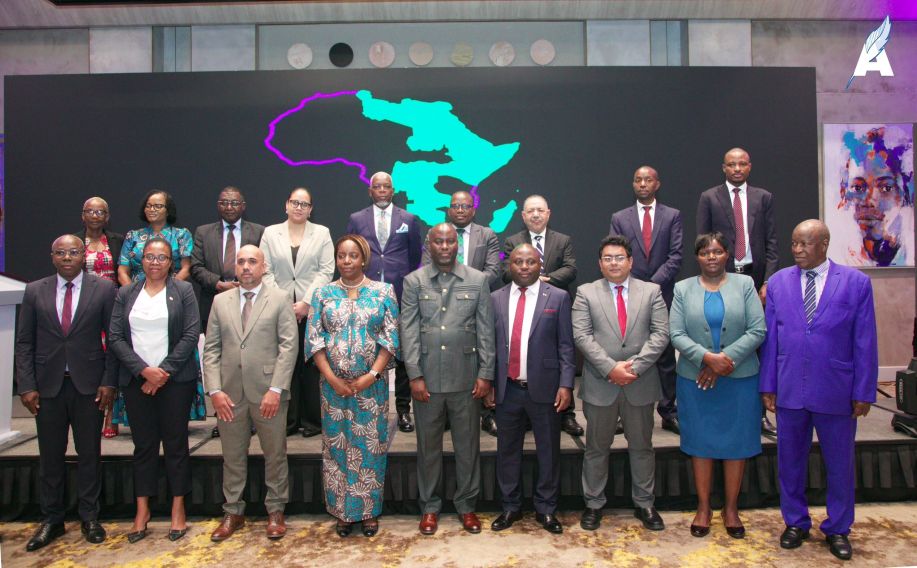
The COMESA Competition Commission has rebranded as the COMESA Competition and Consumer Commission, unveiling sweeping 2025 regulations in Livingstone aimed at strengthening digital market oversight and consumer protection across the 21-member bloc.
Michael Wakabi
The COMESA Competition Commission has officially rebranded as the COMESA Competition and Consumer Commission (CCCC), marking a significant institutional shift alongside the launch of its revised 2025 Regulations and Rules.
The announcement was made on Tuesday, February 24, 2026, during a high-level ceremony at the Radisson Blu Mosi-Oa-Tunya Livingstone Resort, attended by policymakers, regulators, ambassadors and stakeholders from across the 21-member Common Market for Eastern and Southern Africa (COMESA).
The rebranding formalises an expanded mandate that places consumer protection at the core of the Commission’s regional oversight role.
Approved by the Council of Ministers on December 4, 2025, the new Regulations repeal the 2004 framework and formalise both a legal and institutional transformation of the Commission, including a change of name to reflect an expanded consumer protection mandate.

Dr Willard Mwemba, Chief Executive Officer Comesa Competition and Consumer Commission
Dr Willard Mwemba, Chief Executive Officer of the Commission, described the launch as a historic turning point for competition and consumer protection in the region.
He said the revised framework places stronger emphasis on consumer rights and addresses regulatory gaps that had emerged over two decades of rapid market evolution.
“The adopted Regulations have resulted in a change of name for the institution. What is evidently clear in all this is the emphasis on ‘consumer’,” he noted, adding that the reforms followed an internal review process that began in 2021 and included consultations with key stakeholders such as Google and Safaricom PLC.
The reforms respond to structural changes in regional markets, particularly the growth of digital commerce. Africa’s digital market, valued at more than US$30 billion in 2025 and projected to double by 2030, has created new competition dynamics that the 2004 framework was not designed to regulate.
Among the key innovations in the 2025 Regulations are stronger merger control provisions, enhanced investigative powers and explicit safeguards targeting harmful online practices.
Dr Mwemba highlighted provisions aimed at tackling manipulative digital practices, describing so-called “dark patterns” — deceptive interface designs that influence consumer behaviour — as a serious threat to consumer rights.
The Regulations also introduce clearer enforcement tools to address cross-border anti-competitive conduct, an increasingly important feature in a regional bloc where trade integration and digital services transcend national boundaries.
In her keynote address, Chileshe Mpundu Kapwepwe, Secretary General of Common Market for Eastern and Southern Africa (COMESA), framed the new regulations as a milestone in the evolution of regional market governance.
She noted that the reforms align with COMESA’s upcoming 2026–2030 Medium-Term Strategic Plan and strengthen the institutional architecture required to sustain a rules-based common market.
“This milestone marks a significant evolution in the regional legal and institutional framework governing competition and consumer protection in the COMESA Region,” she said.
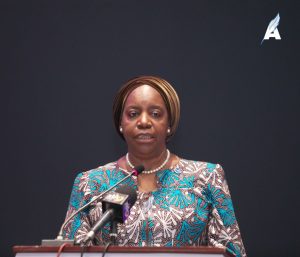
Chileshe Mpundu Kapwepwe, Secretary General of Common Market for Eastern and Southern Africa (COMESA)
Kapwepwe underscored that the revised Regulations go beyond enforcement mechanics to incorporate broader public-interest considerations, including employment, support for small and medium enterprises, sustainability and innovation.
The Common Market encompasses 21 Member States with a combined population of approximately 682 million and a GDP exceeding US$1.1 trillion. Rising foreign direct investment flows — estimated at US$65 billion in 2024 — were cited as evidence of growing investor confidence in the region’s regulatory trajectory.
The updated framework, regional officials argue, strengthens that confidence by harmonizing competition rules, improving transparency and reinforcing consumer-centric governance.
As digital trade, cross-border mergers and multinational platforms expand their footprint in Africa, the revised Regulations signal COMESA’s intention to position itself as a modern regulatory bloc capable of balancing market openness with consumer protection.
Related Posts
 Air Tanzania Moscow Suspension Highlights rising Geopolitical Risks for African Airlines
 Uganda Airlines Separates CEO and Accountable Manager Roles in Major Leadership Reset
 Boeing Holds Bullish Africa Aviation Outlook as Fleet Set to More than Double by 2045
 Inside Dr Silver Mugisha and NWSC’s Long Game to Keep Kampala’s Taps Running into the Future
 Oil Money’s First Test Will be Uganda’s Ability to Stop it Leaking Through Flawed Procurement
 Uber exits Uganda after a decade in Kampala
Get business news delivered to you everyday
Latest News

TAAG Joins Westbrook Racing as Race Partner for Luanda E1 Grand Prix

IFAD, Equity Launch USD200m Mechanism to Take Climate Finance to East Africa’s Farmers

Air Tanzania Moscow Suspension Highlights rising Geopolitical Risks for African Airlines

Uganda Airlines Separates CEO and Accountable Manager Roles in Major Leadership Reset

Boeing Holds Bullish Africa Aviation Outlook as Fleet Set to More than Double by 2045

Inside Dr Silver Mugisha and NWSC’s Long Game to Keep Kampala’s Taps Running into the Future

Oil Money’s First Test Will be Uganda’s Ability to Stop it Leaking Through Flawed Procurement

Appellation: Uganda Gives its Crude a Brand as ‘Pearl Sweet’ Ahead of November First Oil

Equity Financing Helps Vurra Secondary School turn Enrolment Pressure into Growth Opportunity

El Niño Puts More Than 162 Million Children at Risk Across Africa as UNICEF warns of worsening drought, flooding and extreme heat hazard