

Airbus cuts 2025 delivery target over supplier issue but maintains financial outlook
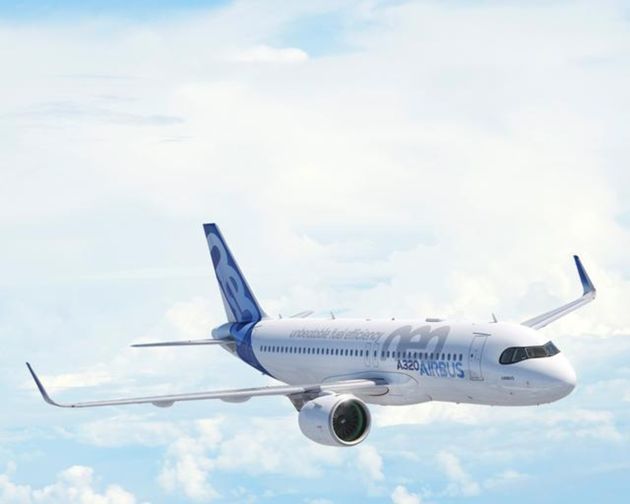
Airbus has trimmed its commercial aircraft delivery target for 2025 following a supplier quality issue affecting fuselage panels on its A320 Family jets, but says the disruption will not derail its financial outlook for the year.
The manufacturer now expects to hand over around 790 aircraft in 2025, down from the earlier projection of 820 units. The adjustment reflects delays linked to a recently identified problem at a supplier that has slowed A320 production flow—its highest-volume programme.
Despite the revised delivery outlook, Airbus has reaffirmed its full-year guidance, maintaining expectations of €7.0 billion in EBIT Adjusted and €4.5 billion in free cash flow before customer financing.
The update comes as Airbus continues to navigate persistent supply-chain pressure while ramping up output across its programmes. The A320 Family remains central to its long-term strategy, with a planned production rate of 75 aircraft per month by 2027. Other programmes are also on upward trajectories: the A330 is set to climb to rate 5 by 2029, the A350 to rate 12 by 2028, and the A220 to rate 12 in 2026 following a moderated ramp-up path.
Nine-Month Results Show Broad-Based Growth
In the nine months to September 2025, Airbus delivered 507 commercial aircraft, generating €47.4 billion in revenue, a 7pc rise from the same period last year. EBIT Adjusted stood at €4.1 billion, supported by stronger profitability in Defence and Space and a double-digit revenue increase within Airbus Helicopters.
Commercial aircraft revenue reached €33.9 billion, buoyed by higher deliveries and expanding services. The company’s order book remains robust: by September, Airbus held 8,665 aircraft in backlog, with 514 net commercial orders recorded over the nine-month period.
Airbus Defence and Space posted a sharp turnaround, achieving €420 million EBIT Adjusted, while Airbus Helicopters grew its EBIT Adjusted to €495 million on the back of higher deliveries and services.
Cash Flow and Balance Sheet Remain Healthy
Free cash flow before customer financing was –€914 million, reflecting inventory build-up ahead of the year-end delivery surge—an annual pattern for the airframer. Airbus closed September with €21.3 billion in gross cash and €7.0 billion in net cash, despite dividend payouts and currency headwinds.
Strategic Reshaping of European Space
Beyond the aircraft business, Airbus is advancing a landmark restructuring of Europe’s space sector. In October, Airbus, Leonardo and Thales signed a Memorandum of Understanding to combine their space activities into a single company. The move aims to consolidate Europe’s industrial capabilities and strengthen strategic autonomy in telecommunications, navigation, earth observation and national security.
The new entity could become operational in 2027, pending regulatory approvals.
Outlook
Airbus says its 2025 guidance is based on an assumption of stable global trade, no major economic shocks, and continued resilience across its supply chain. The current outlook also factors in applicable tariffs and the integration of select Spirit AeroSystems work packages, expected to close later this year.
With deliveries back-loaded and supply-chain pressure still evident, Airbus faces a challenging final stretch to the year. But the reaffirmation of its financial targets signals confidence in its operational recovery and long-term ramp-up strategy.
Related Posts
 Independence Marathon Turns to Blood Storage Gap in Maternal Health Drive
 Fine Spinners Injects Fresh USD5m Into Technology as Uganda Textile Maker Targets African, European Markets
 Equity Trade Mission Puts Uganda’s Manufacturing Capacity to Regional Test
 Uganda Seeks to Calm Coffee, Cocoa Markets as Global Prices Fluctuate on Positive Sentiment
 Uganda Green Entrepreneurs Set for Paris Visit as Stanbic-France Partnership Graduates 106
 Entebbe Airport Passenger Traffic Recovers in August but Remains Below 2025 Levels
Get business news delivered to you everyday
Latest News

Independence Marathon Turns to Blood Storage Gap in Maternal Health Drive

Fine Spinners Injects Fresh USD5m Into Technology as Uganda Textile Maker Targets African, European Markets

Equity Trade Mission Puts Uganda’s Manufacturing Capacity to Regional Test

Uganda Seeks to Calm Coffee, Cocoa Markets as Global Prices Fluctuate on Positive Sentiment

Uganda Green Entrepreneurs Set for Paris Visit as Stanbic-France Partnership Graduates 106

Nile Breweries, Next Media Renew Road Safety Push with Focus on Boda Boda Riders

Equity Bank Explores Value-Chain Financing to Support Zigoti Coffee Expansion

Uganda Breaks Ground on USD310m Kampala Fuel Terminal, Targets September 2028 Completion

Uganda Will Not Close Its 2.4-Million-Unit Housing Deficit with Ribbon-Cuttings in Kira

Nairobi’s 2029 World Athletics Win Draws Doping Scrutiny in UK Media