

Air Transport Industry Calls for Urgent Action as Kenya Aviation as Strike Threatens Regional Hub Status
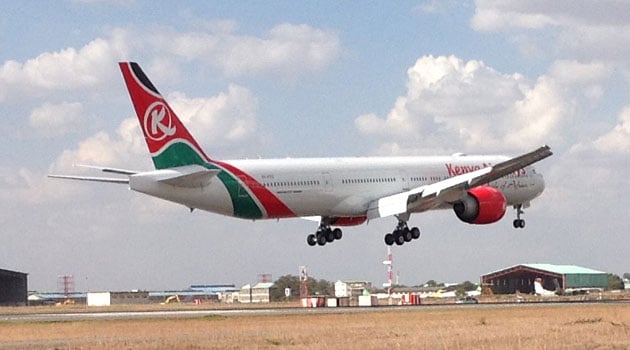
Kenya’s aviation industry has called for an urgent resolution to the ongoing air traffic services strike, warning that repeated disruption is threatening passenger safety, connectivity and Nairobi’s position as a regional aviation hub.
Kenya’s aviation industry has called for an urgent resolution to an ongoing strike by air traffic services workers, warning that repeated disruption at the country’s airports is putting passenger safety, connectivity and the country’s reputation as a regional aviation hub at risk.
The Kenya Association of Air Operators (KAAO), African Airlines Association (AFRAA) and Kenya Tourism Federation (KTF) said the industrial action by the Kenya Aviation Workers Union (KAWU), which began on August 30, has affected operations at Jomo Kenyatta International Airport (JKIA) and other Kenyan airports.
The disruption has resulted in flight delays, cancellations, diversions, rerouting and prolonged aircraft holding, with consequences extending to passengers, airlines, cargo operators and crews.
The three organisations said while workers have a legitimate right to pursue labour grievances, disputes involving safety-critical aviation services require tested contingency arrangements and timely communication to minimise risks.
“Safety cannot be improvised,” said Liz Aluvanze, chief executive officer of KAAO. “Operators, crews and passengers should not carry the burden of a foreseeable disruption when timely notices, tested contingency measures and coordinated airport response should have been in place.”
The industry bodies questioned the preparedness of Kenya’s aviation system, noting that the disruption followed similar industrial action in February.
They cited Regulation 40 of the Kenya Civil Aviation (Air Traffic Services) Regulations, which requires the air traffic services authority to develop and promulgate contingency plans for actual or potential disruption of air traffic services and coordinate them with affected airspace users and neighbouring air traffic services authorities.
According to KAAO, operators were not provided with or briefed on an activated contingency plan for the current disruption. The delayed issuance of the relevant Notice to Airmen (NOTAM) also reduced the time available to airlines to adjust flight plans, fuel requirements, alternate airports, crew rosters and passenger arrangements.
The operators’ association said this effectively transferred avoidable operational costs and risks to airlines.
The Kenya Civil Aviation Authority (KCAA) is responsible for air traffic services and aeronautical information, while the Kenya Airports Authority (KAA), as airport operator, is responsible for airport-side safety, continuity and coordination.
KAAO, AFRAA and KTF said airlines therefore need regular updates on airport conditions, including aircraft stands and gates, apron congestion, ground-handling capacity, diversions, parking, terminal operations, cargo facilities and the expected sequence for restoring normal operations.
The latest disruption has revived concerns about the economic cost of instability in Kenya’s aviation system.
KAAO said its preliminary assessment of 16 operators during the February 16–17 strike recorded 150 flight cancellations, 382 delays and about USD5.1 million in direct losses.
The estimate did not include aircraft diversions, crew disruption, network recovery costs or the wider impact on tourism, trade and medical operations.
The industry bodies warned that another major disruption within the same year demonstrates that temporary settlements have not provided the resilience required by Kenya’s aviation sector.
“Kenya’s role as a continental aviation hub means that disruptions here are felt well beyond its borders, affecting connectivity, trade and travellers across Africa’s aviation network,” said Abdérahmane Berthé, secretary general of AFRAA.
The consequences are particularly significant for Nairobi’s JKIA, which serves as a major gateway for East and Central Africa. Disruptions can cascade through airline networks, affecting connecting passengers and flights in other countries.
The industry groups said reliable air connectivity is central to Kenya’s tourism sector, international trade and investment, as well as humanitarian, medical and time-sensitive cargo operations.
Repeated disruption, they warned, could undermine confidence among airlines, travellers, exporters and international partners and weaken Kenya’s positioning as a dependable regional gateway.
The organisations called on KCAA, KAA, KAWU, the government and other aviation stakeholders to urgently resolve the issues behind the strike while strengthening contingency arrangements for future disruptions.
They also urged stakeholders to restore confidence in Kenya’s air transport system and ensure that safety-critical services can continue during industrial disputes.
Related Posts
 Uganda Coffee Roasters Tap Richard Rugaya as Executive Director, with Focus on Commercial Growth
 Why Africa’s Institutions Must Turn Knowledge and Investment into Farmer Prosperity
 Forbes ranks MTN Group third globally on best telecom employer list
 Stanbic experts offer investment insights to navigate current market uncertainty
 Africa Carbon Markets Urged to Turn Potential into Investment and Delivery
 Corporate Buyers Could Help Unlock SAF Market Worth Millions of Tonnes by 2030
Get business news delivered to you everyday
Latest News

SITA Acquisition of Collins Airport Solutions Signals Moves to Consolidate Aviation Technology

Uganda Coffee Roasters Tap Richard Rugaya as Executive Director, with Focus on Commercial Growth

Equity Bank Reports UGX37.6 Billion in Green Loans as Uganda Seeks to Scale Climate Investment

Why Africa’s Institutions Must Turn Knowledge and Investment into Farmer Prosperity

Forbes ranks MTN Group third globally on best telecom employer list

Stanbic experts offer investment insights to navigate current market uncertainty

Africa Carbon Markets Urged to Turn Potential into Investment and Delivery

Bank of Uganda hikes base rate from 9.75% to 12% amidst global tensions

Airbus sees USD420bn Global Aviation Services Boom: Can Africa Capture its Share?

Nile Breweries Celebrates 75 Years of Growing with Uganda