

African ministers boycott London energy summit in clash over local content agenda
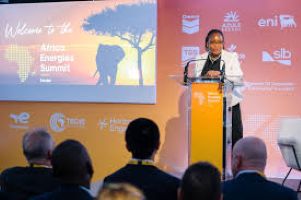
African petroleum ministers have boycotted the Africa Energies Summit in London, protesting concerns over local content and representation. The move highlights growing insistence that global energy platforms align with Africa’s development priorities and industry values.
African petroleum ministers have pulled out of the upcoming Africa Energies Summit, escalating tensions over representation and control of the continent’s energy narrative, and casting uncertainty over one of the industry’s key global platforms.
The summit, scheduled for May 12–14 in London, is organised by Frontier Energy Network. But ministers from several African oil-producing countries have declined to attend, citing concerns that the platform does not adequately reflect Africa’s priorities—particularly on local content and inclusion.
The boycott signals a growing assertiveness among African energy stakeholders, who are increasingly insisting that international forums engaging with the continent’s resources align with domestic development goals.
At the heart of the dispute is the question of local content—policies designed to ensure that oil and gas projects deliver jobs, skills, and economic value within host countries.
NJ Ayuk, Executive Chairman of the African Energy Chamber, framed the boycott as a deliberate statement of priorities.
According to Ayuk, African stakeholders are signalling that participation in global energy discussions will increasingly depend on whether platforms reflect the continent’s economic and social objectives. He suggested that greater inclusivity by organisers could reopen the door for engagement.
Across the continent, local content frameworks have become embedded in oil and gas policy. Countries such as Nigeria and Angola have introduced legislation mandating local participation in energy projects, with measurable economic impact.
Major projects are already reflecting this shift from policy to practice.
The Greater Tortue Ahmeyim project, spanning Senegal and Mauritania, integrates local content across its operations—from supplier engagement and workforce training to community investment. The project exported its first cargo in 2025 and is moving toward full-scale operations.
In Equatorial Guinea, the EG LNG facility has long prioritised local workforce development and supplier integration, supporting thousands of jobs and anchoring broader gas sector expansion.
Similarly, Nigeria’s LNG sector has leveraged local content policies to reduce project costs and build domestic capacity, while emerging producers such as Mozambique, Namibia, and The Gambia are embedding such frameworks into new developments.
The ministers’ withdrawal highlights a deeper divide within the global energy ecosystem—between international platforms and African stakeholders seeking greater control over how the continent’s resources are developed and discussed.
Critics argue that without meaningful African participation and alignment with local content priorities, industry forums risk losing relevance on the continent. Supporters of the boycott say it reflects growing frustration that hard-won gains in local capacity building are being overlooked.
The dispute also underscores a broader recalibration underway in Africa’s energy sector, where governments are balancing the need for foreign investment with demands for domestic value creation.
With the absence of key African policymakers, questions now arise over the credibility and influence of the London summit. While the event is expected to proceed, its ability to shape discourse on African energy may be diminished without direct ministerial engagement.
The message from the debacle is that for African producers, participation in global energy platforms will hinge not just on access to capital and markets, but on alignment with the continent’s development agenda.
As the industry navigates this shift, the standoff over the Africa Energies Summit may prove to be a defining moment in how Africa positions itself within the global energy conversation—less as a resource base, and more as a strategic actor setting its own terms.
Related Posts
 Uganda puts UGX1.4tn Treasury Bonds on Auction
 DHL Launches Direct Bahrain-Johannesburg Freighter Service
 Uganda Set for First National ESG Conference as Sustainable Finance Gains Ground
 Equity Wraps up Uganda Leg of Regional Trade Mission as Value Addition Drive Gains Traction
 JPMorgan Abandons Oil Price Baseline as Iran Conflict Deepens Market Uncertainty
 Frankfurt Airport Malaria Outbreak Raises Questions Over Aviation-Related Health Risks
Get business news delivered to you everyday
Latest News

Uganda puts UGX1.4tn Treasury Bonds on Auction

DHL Launches Direct Bahrain-Johannesburg Freighter Service

Uganda Set for First National ESG Conference as Sustainable Finance Gains Ground

Equity Wraps up Uganda Leg of Regional Trade Mission as Value Addition Drive Gains Traction

JPMorgan Abandons Oil Price Baseline as Iran Conflict Deepens Market Uncertainty

What Maps Communicate: UN Resolution Challenges World Maps that Make Africa Look Smaller

Independence Marathon Turns to Blood Storage Gap in Maternal Health Drive

Fine Spinners Injects Fresh USD5m Into Technology as Uganda Textile Maker Targets African, European Markets

Equity Trade Mission Puts Uganda’s Manufacturing Capacity to Regional Test

Uganda Seeks to Calm Coffee, Cocoa Markets as Global Prices Fluctuate on Positive Sentiment