

Pharaoh’s Dream, the GERD, ENSO, and Modern Nile Basin Resilience: Lessons from seven-year cycles
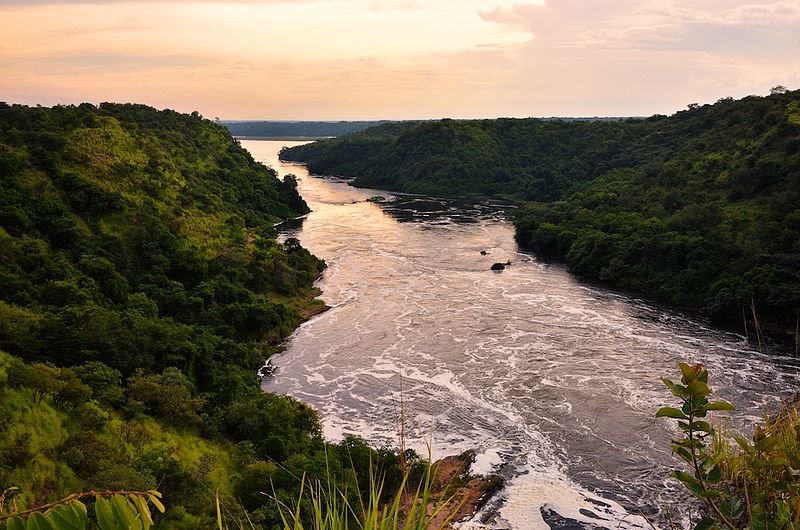
From ancient biblical narratives to contemporary hydro-political challenges, the Nile Basin has long been shaped by cycles of abundance and scarcity. Examining Pharaoh’s dream alongside modern phenomena like ENSO and the Grand Ethiopian Renaissance Dam highlights the enduring importance of foresight, regional cooperation, and climate-informed policy in safeguarding water and food security in the Nile Basin.
Michael Wakabi
The biblical account of Pharaoh’s dream in Genesis 41 has long been interpreted as allegory, theology, or moral instruction. Yet when looked at through the lens of climate risk and statecraft, it emerges as an early narrative on climate variability and institutional preparedness in the Nile Basin. Pharaoh dreams of seven fat cows devoured by seven lean cows and seven full ears of grain consumed by seven thin ones, which Joseph interprets as seven years of abundance followed by seven years of famine. He recommends building reserves during the years of plenty to mitigate the coming scarcity. Beneath its symbolic surface, the story speaks to enduring concerns about hydrological cycles and governance in the Nile basin.
Ancient Egypt was a hydraulic civilisation whose survival depended on the annual flooding of the Nile River. These floods determined agricultural productivity, food security, tax revenues, and political stability. Variability in the inundation was existential with insufficient flooding causing crop failure and famine, while excessive flooding could destroy settlements and disrupt society. Pharaoh’s dream captures the societal anxiety over this variability where abundance could quickly flip into scarcity, threatening the very foundations of the state.
Interestingly, the seven-year cycle in the narrative may echo natural oscillations observed in modern climate science. The El Niño–Southern Oscillation (ENSO), a recurring climatic pattern, drives rainfall variability across East Africa. El Niño events tend to bring above-average rainfall, while La Niña often results in drought. ENSO cycles repeat roughly every two to seven years, closely aligning with the timeframe of the biblical narrative. While the story frames the forecast as divine revelation, it likely reflects long-term observation of hydrological extremes, encoded into collective memory as a lesson in preparedness.
Joseph’s response to the dream is administrative and strategic. He institutes centralised grain storage during surplus years, converting variability into a managed buffer against future scarcity. This mirrors modern climate risk management strategies: anticipating extremes, building reserves, and embedding resilience within institutional structures. Ancient societies such as Egypt had rudimentary monitoring systems. Nilometres measured flood levels and informed planning, illustrating that early attempts at climate adaptation were grounded in empirical observation, even if framed in religious terms.
Today, the Nile Basin spans eleven countries and faces intensified pressures from rising temperatures, erratic rainfall, population growth, and complex transboundary water governance. Hydrological modelling and ENSO-informed seasonal forecasts now allow authorities to anticipate wet and dry periods with unprecedented accuracy. Yet technological capacity alone does not guarantee resilience. The effectiveness of adaptation measures hinges on governance, or the ability of institutions to act on forecasts, coordinate resources, and maintain public trust.
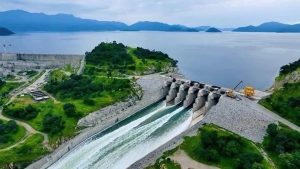 Infrastructure remains a critical complement to forecasting. The Grand Ethiopian Renaissance Dam (GERD) exemplifies modern efforts to mitigate the extremes of Nile hydrology that Pharaoh’s dream allegorically depicted. By storing and regulating the Blue Nile’s flow, GERD allows for a more controlled release of water downstream, smoothing out the sharp contrasts between flood and drought years. In periods of excessive rainfall, the reservoir can capture surplus water, reducing the risk of destructive floods in Sudan and Egypt. Conversely, during droughts, stored water can be released to sustain agriculture, maintain hydropower generation, and secure municipal water supply. While GERD cannot eliminate climate variability, its capacity for strategic water management transforms natural unpredictability into a manageable, predictable resource, echoing the ancient principle of building buffers during periods of abundance to prepare for scarcity.
Another lesson from Pharaoh’s dream is the timing of intervention. Preparedness during periods of abundance is far more effective than emergency measures during scarcity. Policymakers in the Nile Basin today face similar imperatives that require building strategic grain reserves, maintaining operational irrigation infrastructure, and establishing financial mechanisms to sustain water and food security. These measures ensure that cyclical patterns, whether seven-year biblical cycles or ENSO-induced rainfall variability, do not destabilise communities or national economies.
The epistemology of forecasting has changed, but the emotional and political stakes remain constant. Ancient narratives interpreted variability through divine communication; modern science interprets it through data, hydrological models, and satellite monitoring. Both approaches recognise the structural reality that amidst the tension between water abundance and scarcity, societal survival depends on foresight, coordination, and governance.
For policymakers, the story underscores several critical points. Climate variability is normal, yet unmanaged variability becomes crisis. Effective adaptation requires institutional credibility and capacity, regional cooperation, and strategic infrastructure investment. ENSO cycles demonstrate that hydrological extremes are neither new nor unpredictable. The enduring lesson is that governance determines whether these fluctuations produce stability or disaster.
Pharaoh’s dream is thus more than a theological curiosity; it is a cautionary tale with direct policy relevance. The Nile Basin’s modern water planners, regional institutions, and governments can draw three key lessons. First, cyclical climate phenomena, from biblical seven-year patterns to ENSO, have always shaped human livelihoods. Second, resilience must be built during periods of abundance through storage, infrastructure, and contingency planning. Third, data-informed governance and institutional foresight are essential for transforming potential crises into manageable risks.
In conclusion, Genesis 41 provides a lens through which to understand the historical roots of climate anxiety in the Nile Basin. While interpretations of the story vary, its implications for policy are clear. Ancient observers recognised that the Nile’s rhythms required active management; today, science allows policymakers to anticipate and mitigate those same rhythms. The interplay between abundance and scarcity, divine warning and empirical observation, remains profoundly relevant. Pharaoh’s dream reminds us that climate variability is an enduring challenge, but with foresight, governance, and infrastructure, its impacts can be managed, ensuring that cyclical extremes are opportunities for planning rather than catalysts for catastrophe.
Related Posts
 Uganda Emerges as Africa’s Largest Organic Farming Country as Exports Reach USD225 Million
 Uganda Coffee Roasters Tap Richard Rugaya as Executive Director, with Focus on Commercial Growth
 Why Africa’s Institutions Must Turn Knowledge and Investment into Farmer Prosperity
 Forbes ranks MTN Group third globally on best telecom employer list
 Stanbic experts offer investment insights to navigate current market uncertainty
 Africa Carbon Markets Urged to Turn Potential into Investment and Delivery
Get business news delivered to you everyday
Latest News

Stanbic Seeks Northern Uganda Business Feedback as It Marks 35 Years in Country

Uganda Emerges as Africa’s Largest Organic Farming Country as Exports Reach USD225 Million

SITA Acquisition of Collins Airport Solutions Signals Moves to Consolidate Aviation Technology

Uganda Coffee Roasters Tap Richard Rugaya as Executive Director, with Focus on Commercial Growth

Equity Bank Reports UGX37.6 Billion in Green Loans as Uganda Seeks to Scale Climate Investment

Why Africa’s Institutions Must Turn Knowledge and Investment into Farmer Prosperity

Forbes ranks MTN Group third globally on best telecom employer list

Stanbic experts offer investment insights to navigate current market uncertainty

Bank of Uganda hikes base rate from 9.75% to 12% amidst global tensions

Corporate Buyers Could Help Unlock SAF Market Worth Millions of Tonnes by 2030