

IATA warns regulators as 5G and 6G expansion threatens aircraft navigation systems

IATA is urging global and national telecom regulators to ensure that the rollout of 5G and future 6G networks does not interfere with aircraft radio altimeters, warning that expiring protections and delayed next-generation equipment could create a dangerous safety gap ahead of WRC-27.
The International Air Transport Association (IATA) has called on global and national telecommunications regulators to put in place firm protections to ensure next-generation mobile networks do not interfere with aircraft radio altimeters and other safety-critical avionics.
The appeal comes as the International Telecommunication Union (ITU) conducts technical studies ahead of the World Radiocommunication Conference in 2027 (WRC-27), where global conditions for 5G and 6G deployment will be set. IATA says these decisions will shape aviation safety for decades, determining how mobile networks operate around the 4.2–4.4 GHz band used by radio altimeters.
To support the ITU process, IATA has submitted a working paper to the ITU Working Party 5B meeting underway in Geneva (18–27 November 2025). The paper outlines the operational and safety scenarios regulators must consider when setting future spectrum policy.
IATA emphasises that altimeters provide real-time height information during all phases of flight — take-off, approach, landing, taxi, go-arounds, and low-visibility operations — and feed into automated safety systems that pilots rely on during turbulence, windshear or emergency manoeuvres. The association also reiterated that aviation requires a minimum separation of 35 ft (11 m) between aircraft and ground-based 5G transmitters.
“The benefits of 5G and 6G can never come at the cost of aviation safety,” said Nick Careen, IATA’s Senior Vice President for Operations, Safety and Security. “Spectrum decisions must be based on real-world aircraft operations, not idealised telecom modelling. With input from aviation users, WRC-27 must deliver clear global rules to ensure the safe coexistence of altimeters with next-generation networks across all phases of flight.”
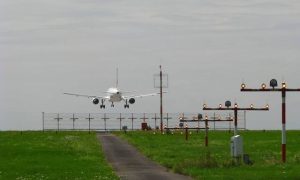 IATA’s warning comes as temporary mitigation measures in several markets approach expiry. Over recent years, telecom operators in countries including the United States, Canada and Australia have voluntarily reduced 5G power levels near airports, created exclusion zones, and tilted antennas downward to reduce interference risks.
Those precautions are now nearing their end. Mitigations in Canada will lapse on 1 January 2026, followed by Australia on 1 April 2026. In the US, regulators are preparing to auction the Upper C-Band (3.98–4.2 GHz), directly adjacent to the altimeter spectrum, while existing protections are expected to be lifted by 2028.
The industry’s concern is compounded by the slow replacement cycle for radio altimeters. Next-generation models—designed to withstand stronger 5G signals—are not expected to enter fleets until the early 2030s, leaving what IATA calls a “significant mitigation gap.”
“Current 5G mitigations were never designed as a long-term solution, and several will expire within months,” Careen added. “At the same time, more resilient altimeters won’t reach airlines until the next decade. Regulators must not assume safety will take care of itself. Clear, consistent safeguards are needed to bridge the gap.”
Related Posts
 Uganda Emerges as Africa’s Largest Organic Farming Country as Exports Reach USD225 Million
 Uganda Coffee Roasters Tap Richard Rugaya as Executive Director, with Focus on Commercial Growth
 Why Africa’s Institutions Must Turn Knowledge and Investment into Farmer Prosperity
 Forbes ranks MTN Group third globally on best telecom employer list
 Stanbic experts offer investment insights to navigate current market uncertainty
 Africa Carbon Markets Urged to Turn Potential into Investment and Delivery
Get business news delivered to you everyday
Latest News

Stanbic Seeks Northern Uganda Business Feedback as It Marks 35 Years in Country

Uganda Emerges as Africa’s Largest Organic Farming Country as Exports Reach USD225 Million

SITA Acquisition of Collins Airport Solutions Signals Moves to Consolidate Aviation Technology

Uganda Coffee Roasters Tap Richard Rugaya as Executive Director, with Focus on Commercial Growth

Equity Bank Reports UGX37.6 Billion in Green Loans as Uganda Seeks to Scale Climate Investment

Why Africa’s Institutions Must Turn Knowledge and Investment into Farmer Prosperity

Forbes ranks MTN Group third globally on best telecom employer list

Stanbic experts offer investment insights to navigate current market uncertainty

Bank of Uganda hikes base rate from 9.75% to 12% amidst global tensions

Corporate Buyers Could Help Unlock SAF Market Worth Millions of Tonnes by 2030