

As Museveni launches starch plant, Dei Biopharma’s Namasagali hub poised to unlock Uganda’s agriculture, pharmaceuticals and biotech future
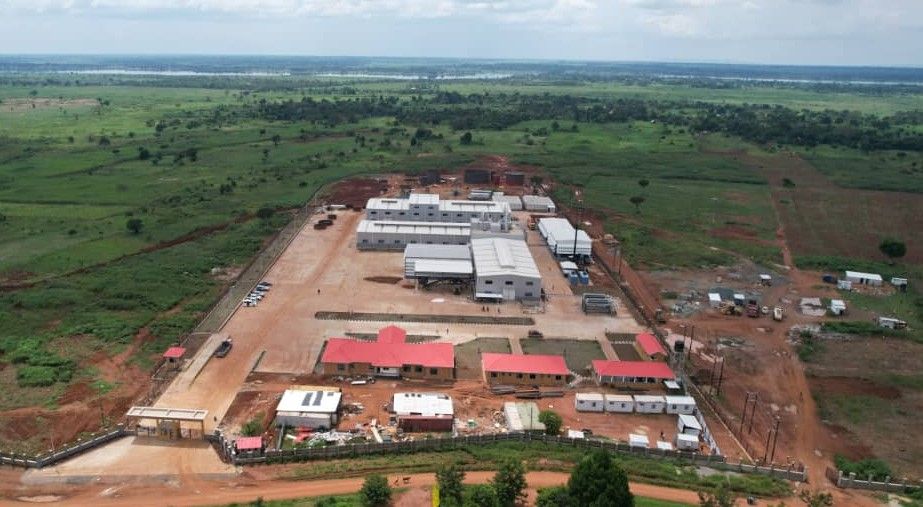
When President Yoweri Museveni travels to Namasagali in Kamuli District in the coming days, he will be unveiling the first physical expression of a sweeping industrial vision that fuses Uganda’s agricultural strengths with advanced biotechnology to build a self-sustaining pharmaceutical ecosystem. The commissioning of Dei Biopharma’s cassava starch plant marks the opening chapter of an ambitious journey toward economic independence, scientific innovation and agricultural renewal.
 The USD50 million facility, the first phase of the Dei Group Advanced Agro-Processing Park, forms the front end of a production chain designed to supply excipients and active pharmaceutical ingredients to Dei Biopharma’s drug complex in Matugga. African pharmaceutical manufacturers have long struggled to compete globally because almost all foundational inputs — from starch to glucose — are imported at high cost. For Dr. Mathias Magoola, founder of Dei Biopharma, localising the production of these ingredients is the missing link needed to position Uganda as a serious contender in the pharmaceutical space.
Yet the impact of this plant extends far beyond industry. It offers a lifeline to farmers across eastern and northern Uganda, with the facility expected to consume 500 metric tonnes of cassava daily. This creates a stable market for growers in Busoga, Bukedi, Teso, Lango and parts of the DRC. For farmers who have spent years trapped in the volatility of sugarcane — a crop with slow turnover and erratic pricing — cassava represents an alternative with quicker cycles, higher returns per acre and the safeguard of household food security. Dei Biopharma has already registered more than 3,000 growers and distributed planting materials for a high-yield variety, Nilocas-1, developed by Ugandan scientists. Extension officers are now working in the field to help farmers adopt cultivation and post-harvest practices that meet pharmaceutical-grade standards.
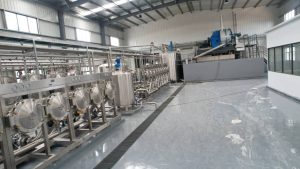
Inside the plant, cassava will be refined into more than just starch. The facility is configured to produce glucose, maltose, fructose and specialised modified starches used across the food, beverage and pharmaceutical industries. These outputs are found in everything from soft drinks and confectionery to the tablets dispensed in hospitals. Magoola notes that nearly 99 percent of excipients used in African-made medicines are imported, a dependency that undermines competitiveness. Producing these materials locally allows Uganda to meet its own pharmaceutical needs and eventually export across Africa and the Global South once FDA certification is secured.
But the starch plant is only one component of a far more expansive blueprint. Over the next decade, Dei Biopharma plans to invest USD10 billion in constructing a fully integrated agro-industrial and biotechnology complex on the 5,000-acre Namasagali site. Alongside the starch facility will stand a fertiliser plant, a Foot and Mouth Disease vaccine factory capable of producing 100 million doses annually, and laboratories developing vaccines for poultry and swine. At its Matugga site, the company is developing 30 production lines that will manufacture everything from intravenous fluids to oncology medicines.
Perhaps the most transformative element of the Namasagali vision is the proposed 1,000-bed specialist hospital dedicated to sickle cell disease and rare genetic conditions. Positioned within the biotech park, it aims to bring advanced gene and cell therapies to Africa at a fraction of current international costs. Recent FDA-approved treatments such as Lyfgenia and Casgevy, despite generating global excitement, cost up to US$3.1 million per dose — far beyond reach for nearly all African patients. Magoola proposes a model in which locally manufactured therapies could cost between US$10,000 and US$50,000, enabled by TRIPS provisions that allow least-developed countries to produce patented medicines. For Uganda — one of the five countries most severely affected by sickle cell disease — this could be transformative.
 Driving this industrial momentum is a growing base of intellectual property. Dei Biopharma has filed more than 100 patent applications spanning pharmaceuticals, biomedical technologies and advanced materials. Magoola argues that Africa has long been left behind because it has not owned the discoveries that power global industries. Establishing a biotechnology ecosystem anchored in Uganda, he says, is a step toward reclaiming scientific ground and building industries capable of competing with global peers.
The company plans to list on the Uganda Securities Exchange next year, opening its ownership to broader participation as production expands and investments mature. Magoola frames the project not simply as a national undertaking, but as a continental one.
As November 20 approaches, the Namasagali starch plant stands as the first proof of concept — the physical anchor of a vision stretching from rural cassava fields to advanced gene therapy laboratories. It is a story that weaves farmer livelihoods with pharmaceutical affordability, and agricultural revival with scientific ambition. When the production lines come alive, Uganda will be signalling a shift not only from importing what it needs, but toward producing what the world needs.
For the farmers planting cassava, the scientists filing patents and the patients awaiting life-saving therapies, the commissioning marks the beginning of a new era — one in which agriculture and biotechnology advance together, redefining what is possible on Ugandan soil.
Related Posts
 Uganda Coffee Roasters Tap Richard Rugaya as Executive Director, with Focus on Commercial Growth
 Why Africa’s Institutions Must Turn Knowledge and Investment into Farmer Prosperity
 Forbes ranks MTN Group third globally on best telecom employer list
 Stanbic experts offer investment insights to navigate current market uncertainty
 Africa Carbon Markets Urged to Turn Potential into Investment and Delivery
 Corporate Buyers Could Help Unlock SAF Market Worth Millions of Tonnes by 2030
Get business news delivered to you everyday
Latest News

SITA Acquisition of Collins Airport Solutions Signals Moves to Consolidate Aviation Technology

Uganda Coffee Roasters Tap Richard Rugaya as Executive Director, with Focus on Commercial Growth

Equity Bank Reports UGX37.6 Billion in Green Loans as Uganda Seeks to Scale Climate Investment

Why Africa’s Institutions Must Turn Knowledge and Investment into Farmer Prosperity

Forbes ranks MTN Group third globally on best telecom employer list

Stanbic experts offer investment insights to navigate current market uncertainty

Africa Carbon Markets Urged to Turn Potential into Investment and Delivery

Bank of Uganda hikes base rate from 9.75% to 12% amidst global tensions

Airbus sees USD420bn Global Aviation Services Boom: Can Africa Capture its Share?

Nile Breweries Celebrates 75 Years of Growing with Uganda