

Women Turn Coffee By-products into New Business Opportunities in Mityana
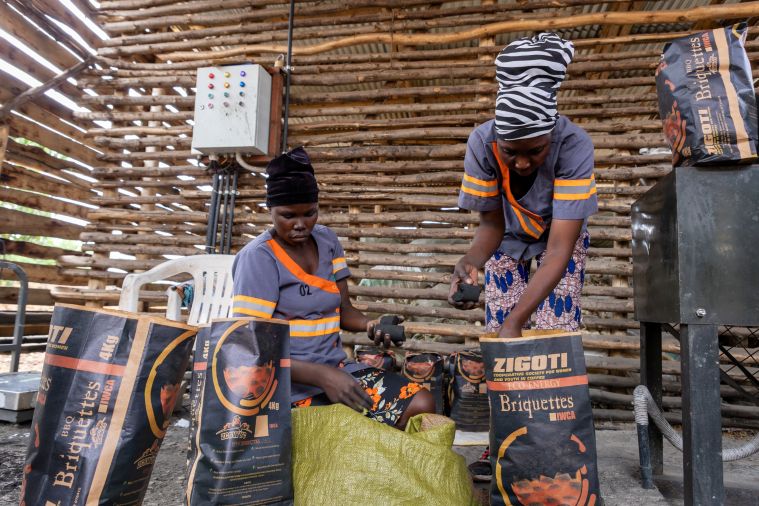
A women-led coffee enterprise in Zigoti, Mityana District, is helping women build livelihoods beyond coffee production through employment, savings, organic fertiliser production and briquette-making.
When 26-year-old Cissy Nafula left Busia for Zigoti in Mityana District, her priority was finding a reliable source of income to support her two children. Starting a small business was her preferred option. Working on a coffee farm was not part of the plan.
That changed earlier this year when she was introduced to Zigoti Coffee Works Limited, a women-led coffee enterprise headed by Managing Director Rose Kato Nakayenga.
The opportunity provided more than employment. It gave Nafula a regular income and, with it, a measure of financial stability.
“I came here looking for something I could do to support my children,” she says. “When I got the opportunity to work, I took it. It gives me an income and something I can depend on.”
Nafula is among dozens of women whose livelihoods are linked to the company’s coffee production and processing operations. Their responsibilities range from tending coffee gardens and mulching fields to sorting, cleaning and preparing harvested beans for processing.
According to Operations Manager William Muyanja, the company employs eight women on permanent contracts and engages an average of 20 others daily, particularly during peak post-harvest periods.
For many of these workers, however, the enterprise is becoming a springboard for activities beyond coffee production.
Loyce Nakitende, a mother of two, says her employment has given her an opportunity to earn while considering other ways of improving her family’s financial position.
“I came here hoping to start my own business, but getting work on the farm has given me another opportunity,” she says. “I can earn, save and think about what I want to do next.”
That transition from earning an income to building financial independence is central to Nakayenga’s approach to women’s participation in the coffee value chain.
“When you empower a woman, you empower a community,” she says. “A woman who earns an income can support her children, contribute to her household and create opportunities for others.”
The economic activity around Zigoti Coffee Works is increasingly extending to the utilisation of agricultural waste.
Through the Women in Coffee Savings and Credit Cooperative Organisation (SACCO), the women have pooled resources to establish small enterprises that turn materials previously discarded during agricultural production into marketable products.
One initiative involves breeding black soldier fly larvae, which feed on organic waste and help convert it into nutrient-rich fertiliser. The resulting product can be sold to farmers, creating an additional source of income while promoting the productive use of organic waste.
The women have also established a briquette-making venture using coffee husks, maize cobs, charcoal dust, cassava flour and other locally available materials.
The briquettes provide an alternative cooking fuel for households while offering SACCO members another income-generating activity. A four-kilogramme pack currently sells for Shs10,000.
The initiatives illustrate how agricultural value chains can create secondary business opportunities by making productive use of by-products, rather than relying exclusively on the primary crop.
For the women, they also offer an opportunity to diversify household incomes and build enterprises around resources readily available within their farming environment.
Beyond supporting these businesses, the SACCO provides a mechanism through which members can build savings and access credit.
Loyce Nakitende packing the Briquettes with Cissy Nafula looking on. a host of other women work do the same work to earn a living
Regular contributions enable members to accumulate funds and borrow when faced with emergencies or when seeking capital to pursue small business opportunities.
Financial literacy training provided by Equity Bank Uganda has complemented the initiative, equipping members with practical skills in budgeting, saving and investing.
The combination of employment, collective savings and access to financial knowledge is helping women move beyond immediate household needs towards longer-term financial planning.
For workers such as Nafula and Nakitende, the opportunity to save part of their earnings provides a foundation from which they can consider investments and other income-generating activities.
The enterprise’s influence is also beginning to extend across generations.
Some women have worked on the farm for years while raising their children. Having grown up around coffee production, some of those children are now beginning to participate in the business, acquiring practical skills and an understanding of the agricultural value chain.
This emerging intergenerational involvement adds another dimension to the enterprise’s contribution to the local economy, linking employment with the transfer of agricultural knowledge and entrepreneurial experience.
At Zigoti, therefore, coffee is providing more than a marketable agricultural commodity. It is creating a base for employment, collective savings and complementary enterprises built around agricultural resources.
For Nafula, the journey began with a search for work that would help her provide for her children. The wider experience at Zigoti suggests how that first opportunity can develop into something more substantial when employment is linked to financial inclusion, skills development and opportunities to build additional sources of income.
Related Posts
 BRENDA NANYONJO: Quietly Raising a Generation of Ugandan Female Champions
 TAP, PAY, DONE: How Young Africans are Shaping a More Frictionless Payment Future
 Museveni Seeks Tanzania Backing to Curb Second-hand Clothes Imports
 UCU Invites Investors for USD110million Campus Infrastructure Project
 Equity Group Sustains Earnings Momentum as Q3 Profit Rises 32pc
 SITA Survey finds Travel Stress Deterred 42pc of Passengers from Booking Trips
Get business news delivered to you everyday
Latest News

BRENDA NANYONJO: Quietly Raising a Generation of Ugandan Female Champions

TAP, PAY, DONE: How Young Africans are Shaping a More Frictionless Payment Future

Museveni Seeks Tanzania Backing to Curb Second-hand Clothes Imports

UCU Invites Investors for USD110million Campus Infrastructure Project

Equity Group Sustains Earnings Momentum as Q3 Profit Rises 32pc

Employee Protection Becomes a Balance-sheet Issue for Ugandan Businesses

Black Pirates Overcome Heathens to Reach Uganda Cup Final

EDECS wins DP World Contract to Upgrade Angola’s Port of Luanda

Women Turn Coffee By-products into New Business Opportunities in Mityana

Uganda Tightens Monetary Grip as Kenya Widens Access to Investment Funds