

Museveni Seeks Tanzania Backing to Curb Second-hand Clothes Imports
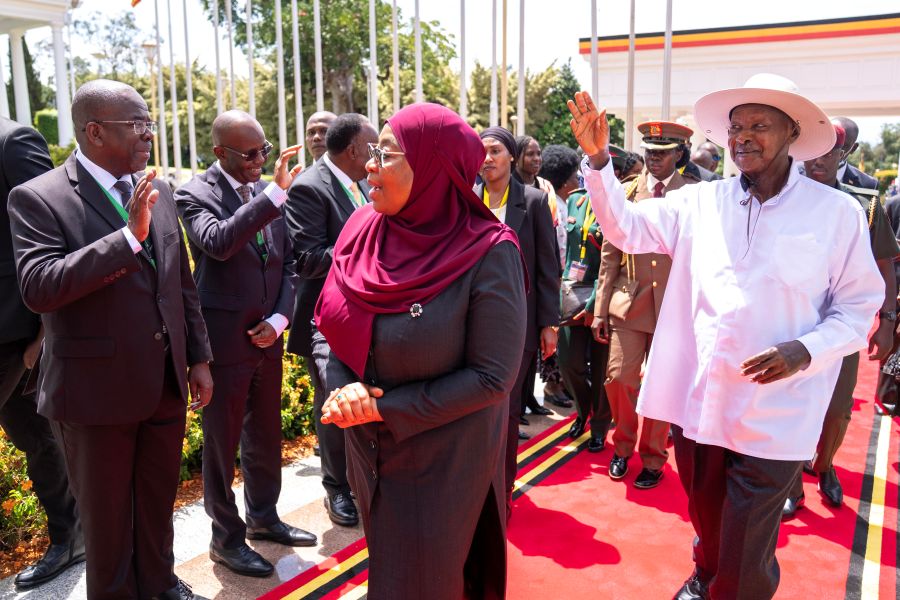
Museveni seeks Tanzania’s backing to curb second-hand clothing imports and protect local textile manufacturing, while cautioning against retaliatory trade barriers.
President Yoweri Museveni has asked Tanzania to support Uganda’s efforts to restrict imports of second-hand clothes into the region, arguing that the trade is undermining domestic textile manufacturing and limiting opportunities for industrial growth and job creation.
However, the President cautioned against an escalation of trade restrictions among East African Community (EAC) partner states, warning that retaliatory measures could undermine regional integration and hurt producers on both sides of the borders.
Museveni raised the issue during bilateral talks with Tanzanian President Samia Suluhu Hassan at State House, Entebbe, on November 18, as the two leaders discussed trade, investment and regional economic cooperation.
He questioned why the second-hand clothing issue had not received sufficient attention from the Uganda-Tanzania inter-ministerial committee in Arusha and called for it to be prioritised in forthcoming engagements.
The President urged Tanzania to support Uganda’s position in the discussions, saying continued imports of used garments, commonly known as mivumba, were denying local textile manufacturers the market opportunities needed to expand production.
Strengthening the textile industry, he argued, would help both countries retain more value within their economies, create employment and build domestic manufacturing capacity.
The appeal reflects a longstanding EAC policy debate over the place of second-hand clothing in the region’s industrialisation ambitions. Partner states have previously considered phasing out such imports to create room for local textile and garment manufacturers, although implementation has remained uneven.
But Museveni’s position also highlighted the difficulty of pursuing industrial protection without undermining the regional trade arrangements that Uganda depends on.
Citing the example of Tanzanian rice entering the Ugandan market, he said he had rejected calls to restrict the imports because the product was cheaper and of better quality.
He warned that blocking Tanzanian rice could invite reciprocal restrictions against Ugandan exports in neighbouring markets, potentially creating a cycle of protectionism that would hurt businesses and farmers across the region.
His argument was that countries should allow competition to work while addressing genuine concerns about industrial development through regional dialogue rather than unilateral trade barriers.
The intervention comes against the backdrop of persistent trade frictions within the EAC, where non-tariff barriers, inconsistent enforcement of trade rules and disagreements over market access continue to raise the cost of doing business.
In their joint communiqué, Museveni and Suluhu expressed concern that outstanding non-tariff barriers were constraining competitiveness and the benefits of regional integration. They directed relevant ministries and agencies to resolve outstanding issues through bilateral consultations and established EAC mechanisms.
The leaders also emphasised balanced and mutually beneficial trade, including greater product diversification, value addition and stronger private-sector partnerships. They called for a Tanzania-Uganda Joint Trade Committee to provide a mechanism for addressing recurring trade disputes.
The two-day visit also secured commitments to accelerate strategic infrastructure projects, including the East African Crude Oil Pipeline and the proposed Standard Gauge Railway connection through Tanzania to Uganda and eastern Democratic Republic of Congo.
The trade discussion brought into focus the broader of how to protect emerging industries and expand domestic production without fragmenting the common market that gives those industries access to a larger consumer base.
For Uganda, the textile debate also raises questions about the capacity of domestic manufacturers to supply affordable, competitive garments at the scale required to meet consumer demand.
Museveni’s appeal to Tanzania suggests that Uganda would prefer a coordinated regional approach to the issue, while his warning against retaliatory restrictions amplified the risks of pursuing industrial policy at the expense of neighbouring trading partners.
Related Posts
 BRENDA NANYONJO: Quietly Raising a Generation of Ugandan Female Champions
 TAP, PAY, DONE: How Young Africans are Shaping a More Frictionless Payment Future
 UCU Invites Investors for USD110million Campus Infrastructure Project
 Equity Group Sustains Earnings Momentum as Q3 Profit Rises 32pc
 SITA Survey finds Travel Stress Deterred 42pc of Passengers from Booking Trips
 Employee Protection Becomes a Balance-sheet Issue for Ugandan Businesses
Get business news delivered to you everyday
Latest News

BRENDA NANYONJO: Quietly Raising a Generation of Ugandan Female Champions

TAP, PAY, DONE: How Young Africans are Shaping a More Frictionless Payment Future

Museveni Seeks Tanzania Backing to Curb Second-hand Clothes Imports

UCU Invites Investors for USD110million Campus Infrastructure Project

Equity Group Sustains Earnings Momentum as Q3 Profit Rises 32pc

SITA Survey finds Travel Stress Deterred 42pc of Passengers from Booking Trips

Black Pirates Overcome Heathens to Reach Uganda Cup Final

EDECS wins DP World Contract to Upgrade Angola’s Port of Luanda

Women Turn Coffee By-products into New Business Opportunities in Mityana

Uganda Tightens Monetary Grip as Kenya Widens Access to Investment Funds