

Uganda’s health financing model under strain as donor retreat exposes structural fragility
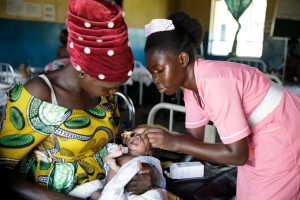
Uganda’s headline per capita health spending masks a fragile financing model built on donor support. As external aid retreats and domestic allocations stagnate, experts warn the country risks a slow erosion of essential health services unless funding priorities and efficiencies are urgently rethought.
Uganda’s reported per capita health expenditure of USD127, often cited as evidence of improving investment in healthcare, is obscuring a growing structural vulnerability in the country’s health system as external donors dial down support while domestic allocations remain largely unchanged.
Although the figure exceeds the World Health Organization’s minimum benchmark of US$86, health financing experts warn that it is heavily underwritten by donor funding, leaving Uganda exposed to sudden service disruptions as development assistance contracts. The country currently allocates 6.1 percent of its national budget to health, far below the 15 percent target set under the Abuja Declaration, a gap that is becoming increasingly consequential in an era of global fiscal tightening.
These concerns were raised during the CSO Webinar on Africa Leadership for Health Sovereignty, convened by the AIDS Healthcare Foundation (AHF) Africa in partnership with AFRICA REACH, WACI Health and RANA. The high-level dialogue brought together civil society leaders and policymakers to assess how declining external financing is reshaping health systems across Africa, with Uganda cited as a particularly exposed case.
Participants pointed to a looming continental financing crisis. According to the Africa Centres for Disease Control and Prevention, Africa faces an estimated US$66 billion annual gap in health financing, with projections showing that as much as 70 percent of Official Development Assistance could disappear by 2025. Countries that have long depended on external aid to sustain core services are now approaching what analysts described as a “funding cliff”.
Compounding the challenge are persistent inefficiencies within existing systems. Africa CDC estimates suggest that between 20 and 40 percent of health spending is lost through weak procurement, governance gaps and suboptimal resource allocation. For Uganda, speakers argued, addressing these inefficiencies could unlock significant resources for essential services without increasing debt or taxes.
 An analysis of Uganda’s 2025/26 Budget Framework by Parliament Watch Uganda reinforces these concerns. While overall expenditure appears stable on paper, nearly 45 percent of the development budget remains donor-financed, limiting the government’s ability to independently sustain health investments. At the same time, chronic workforce shortages continue to undermine service delivery, with Uganda’s doctor-to-patient ratio estimated at 1:25,000, compared with the WHO-recommended 1:1,000.
Addressing the webinar, Dr. Penninah Iutung, Executive Vice President of AHF, warned that continued underinvestment in health would entrench inequality and weaken national resilience. She noted that most African countries allocate only 7 to 8 percent of their national budgets to health, despite longstanding commitments under the Abuja Declaration. In her assessment, health financing can no longer be treated as a social sector concern alone but must be recognised as a core pillar of national security and economic stability.
The discussion also explored regional solutions to fiscal constraints. Dr. Julius Simon Otim of the East African Community Secretariat argued that deeper regional integration could help countries like Uganda mitigate rising costs. By pooling demand and coordinating procurement with neighbouring states, governments could achieve significant savings on medicines and medical supplies while strengthening supply chain resilience.
The webinar concluded with a renewed call for Uganda to rethink the sustainability of its health financing model in the face of declining donor support. Participants urged greater domestic prioritisation of health spending, improved efficiency in the use of existing resources and clearer planning for donor transitions. Without such adjustments, they warned, the country risks entering a period in which health gains made over decades are eroded not by crisis, but by slow fiscal neglect.
Related Posts
 Why Experience Still Matters in Aviation — and why Girma Wake’s Uganda appointment is being misread
 Uganda study shows how treating depression can strengthen HIV care
 Airlink expands regional footprint with Ndola capacity boost and new Nacala route
 Government reaffirms commitment to capitalise UDB as Bank deepens development finance role
 Uganda’s DEI Biopharma gene therapy breakthrough could transform sickle cell treatment
 Equity Bank Uganda set to close 2025 on firmer footing as clean-up phase gives way to growth
Get business news delivered to you everyday
Latest News

Uganda’s health financing model under strain as donor retreat exposes structural fragility

Why Experience Still Matters in Aviation — and why Girma Wake’s Uganda appointment is being misread

Uganda study shows how treating depression can strengthen HIV care

Stanbic Economic Forum returns with focus on Uganda’s competitiveness in a shifting global economy

Equity Bank, UKAID launch affordable electric cooking finance to accelerate clean energy transition in Uganda

Airbus sees Asia-Pacific aviation services market surging to USD 138.7bn by 2044

How Uganda’s economy can withstand global turmoil

Veteran Ato Girma Wake takes interim role as Uganda opens search for new Uganda Airlines CEO

Airlink expands regional footprint with Ndola capacity boost and new Nacala route

Government reaffirms commitment to capitalise UDB as Bank deepens development finance role