

Solar irrigation turns Lira tree nursery into reforestation powerhouse
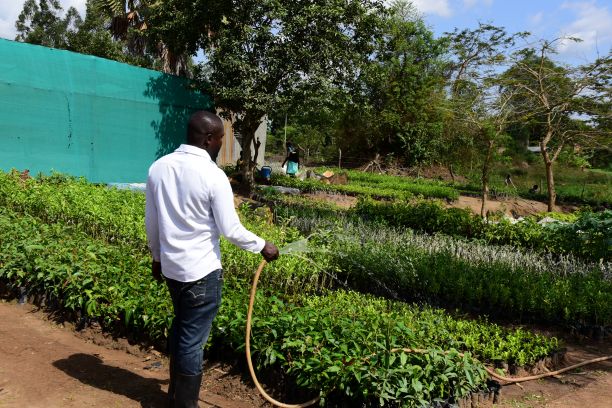
A solar-powered irrigation system has transformed a small tree nursery in Lira into a major seedling supplier, boosting production fourfold while supporting reforestation, youth skills development and climate-resilient livelihoods.
What began as a modest backyard tree nursery sustained by watering cans and manual labour has grown into one of northern Uganda’s emerging suppliers of tree seedlings, illustrating how renewable energy is helping small enterprises overcome longstanding productivity constraints.
Located in Boroboro Parish in Lira City, Dopla Tree Nurseries has quadrupled its annual production after adopting solar-powered irrigation, allowing the business to meet rising demand for seedlings used in reforestation, fruit farming and landscaping projects.
Founded in 2019 by entrepreneur Daniel Ocen, the nursery started with limited resources and faced persistent challenges associated with watering thousands of seedlings under northern Uganda’s harsh climatic conditions. Workers often travelled considerable distances to fetch water, while irregular irrigation affected seedling survival rates and restricted the nursery’s growth.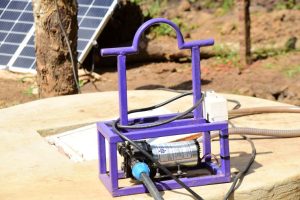
“We relied entirely on manual watering, which was labour-intensive and time-consuming,” Ocen says. “Maintaining healthy seedlings during the dry season was particularly difficult.”
The turning point came in early 2025 when Ocen connected with a field agent from Tulima Solar, which conducted a site assessment and designed a solar-powered irrigation system comprising solar panels, a high-capacity pump and a distribution network that delivers water directly to nursery beds.
The investment was supported through the Results-Based Financing (RBF) Programme implemented by Equity Bank Uganda in partnership with Energising Development (EnDev) Uganda and GIZ. The initiative provides targeted incentives to solar technology suppliers, helping reduce the cost of renewable energy systems for small and medium-sized enterprises and making quality clean-energy solutions more affordable.
Since the installation, the nursery has recorded significant operational improvements. Automated irrigation has reduced dependence on manual labour, enabling workers to focus on seedling management, quality control and other value-adding activities. Plant survival rates and seedling quality have also improved.
The impact on production has been equally striking. Annual output has increased from about 50,000 seedlings to approximately 200,000, while peak-season revenues have grown from around Shs20 million to nearly Shs30 million.
Today, Dopla Tree Nurseries supplies seedlings to non-governmental organisations, institutions and individual farmers involved in environmental restoration, commercial fruit growing and urban landscaping projects.
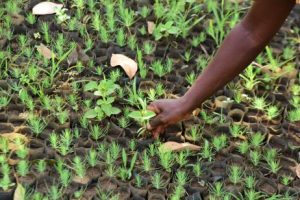 The business has also evolved into a community training hub. Ocen currently mentors 12 young people and women in nursery management and seedling propagation, equipping them with practical skills that can generate income and support local conservation efforts.
Encouraged by the results, Ocen plans to install additional solar-powered irrigation infrastructure and security lighting as part of the nursery’s next phase of expansion.
Dopla Tree Nurseries demonstrates how improved access to renewable energy can help small enterprises overcome operational constraints, increase productivity and create employment opportunities. As Uganda promotes climate-resilient agriculture and landscape restoration, solar-powered technologies are increasingly emerging as practical tools for businesses seeking to grow while contributing to environmental sustainability.
For northern Uganda, where tree-planting initiatives continue to gain momentum amid concerns about land degradation and climate change, the success of Dopla Tree Nurseries shows how clean energy can simultaneously drive enterprise growth, job creation and ecological restoration.
Related Posts
 Independence Marathon Turns to Blood Storage Gap in Maternal Health Drive
 Fine Spinners Injects Fresh USD5m Into Technology as Uganda Textile Maker Targets African, European Markets
 Equity Trade Mission Puts Uganda’s Manufacturing Capacity to Regional Test
 Uganda Seeks to Calm Coffee, Cocoa Markets as Global Prices Fluctuate on Positive Sentiment
 Uganda Green Entrepreneurs Set for Paris Visit as Stanbic-France Partnership Graduates 106
 Entebbe Airport Passenger Traffic Recovers in August but Remains Below 2025 Levels
Get business news delivered to you everyday
Latest News

Independence Marathon Turns to Blood Storage Gap in Maternal Health Drive

Fine Spinners Injects Fresh USD5m Into Technology as Uganda Textile Maker Targets African, European Markets

Equity Trade Mission Puts Uganda’s Manufacturing Capacity to Regional Test

Uganda Seeks to Calm Coffee, Cocoa Markets as Global Prices Fluctuate on Positive Sentiment

Uganda Green Entrepreneurs Set for Paris Visit as Stanbic-France Partnership Graduates 106

Nile Breweries, Next Media Renew Road Safety Push with Focus on Boda Boda Riders

Equity Bank Explores Value-Chain Financing to Support Zigoti Coffee Expansion

Uganda Breaks Ground on USD310m Kampala Fuel Terminal, Targets September 2028 Completion

Uganda Will Not Close Its 2.4-Million-Unit Housing Deficit with Ribbon-Cuttings in Kira

Nairobi’s 2029 World Athletics Win Draws Doping Scrutiny in UK Media