

COMESA Competition Commission warns firms against price gouging as Middle East crisis rattles markets
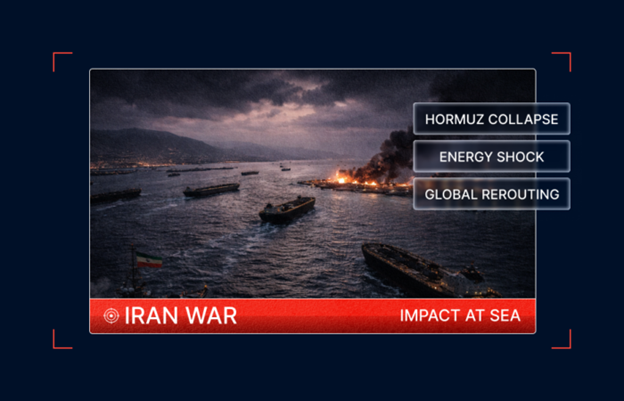
The COMESA Competition and Consumer Commission warns businesses against price gouging and collusion as the Middle East crisis disrupts supply chains, drives up costs, and threatens to fuel inflation across the region.
The COMESA Competition and Consumer Commission (CCCC) has issued a stark warning to businesses across its member states, cautioning against anti-competitive conduct and unfair trade practices as global supply chains come under strain from the ongoing Middle East crisis.
In a public statement, CCCC Chief Executive Officer Willard Mwemba said the conflict’s ripple effects were already being felt across markets, with disruptions to supply chains driving up logistics costs and triggering commodity shortages.
“Conflict in any part of the world has ripple effects across global economies,” Mwemba noted, pointing to emerging price shocks in crude oil that are cascading into higher costs for goods and services across the Common Market for Eastern and Southern Africa.
The Commission warned that rising oil prices could have far-reaching consequences, particularly for agriculture, where fertiliser costs are closely linked to energy markets. Any sustained increase, it said, risks pushing up food prices and inflation, potentially worsening poverty levels across the region.
The CCCC said it is particularly concerned that some market players may exploit the crisis through practices such as excessive pricing, collusion, hoarding and price gouging. It stressed that the current global environment does not justify such conduct.
“We shall unapologetically enforce competition and consumer laws to the letter and spirit,” Mwemba said, adding that the Commission would deploy its full investigative and enforcement powers to detect and penalise violations.
The warning comes as African economies, many of them import-dependent, face heightened vulnerability to external shocks. Supply bottlenecks linked to geopolitical tensions have historically translated into domestic inflation, often disproportionately affecting low-income households.
While taking a hard line against market abuse, the Commission acknowledged that certain forms of coordination between businesses may be permitted under exceptional circumstances. Under Regulation 39 of the COMESA Competition and Consumer Protection Regulations, firms can apply for authorisation for agreements that may otherwise be considered anti-competitive, provided they deliver broader public interest benefits.
The CCCC also called on consumers and businesses to report suspected unfair practices, saying such information would be critical in enabling timely investigations and corrective action.
Despite the uncertainty, the Commission signalled its intent to safeguard market stability and consumer welfare, warning that the crisis must not become a pretext for exploitation.
“The CCCC stands with honest businesses and consumers during this challenging period,” Mwemba said. “Maintaining trust in markets is essential to the region’s resilience and recovery.”
Related Posts
 Uganda Returnees Look to Rebuild Livelihoods as Government Pledges UGX2bn
 ERAM Award puts Uganda’s Animal-Health Manufacturing Ambitions in Focus
 Agroecology Week Targets Stronger links Between Farmers, Policy and Markets
 Energy Ministry and Equity Bank target lower hotel energy costs through green investment initiative
 FAA Certifies Boeing 737-10, Clearing Path for Deliveries of Largest 737 MAX Variant
 Aviation Industry Coalition Presses EU to Protect Voluntary use of Biometric Travel Technology
Get business news delivered to you everyday
Latest News

Uganda Returnees Look to Rebuild Livelihoods as Government Pledges UGX2bn

Beyond Gold Exports, Uganda’s Next Test Is Economic Transformation

ERAM Award puts Uganda’s Animal-Health Manufacturing Ambitions in Focus

Why Community-Led Climate Action Is Essential to Building Climate Resilience

Agroecology Week Targets Stronger links Between Farmers, Policy and Markets

Stanbic Commits UGX20m to Virunga Gorilla Marathon’s Conservation Drive

Energy Ministry and Equity Bank target lower hotel energy costs through green investment initiative

FAA Certifies Boeing 737-10, Clearing Path for Deliveries of Largest 737 MAX Variant

Somalia Recognises IATA Safety Audits in Push for Common African Aviation Standards

Stanbic Donates UGX40 Million in Maternal Health Equipment to Obongi Facility