

Uganda’s e-waste time bomb: Why awareness and recycling can’t wait
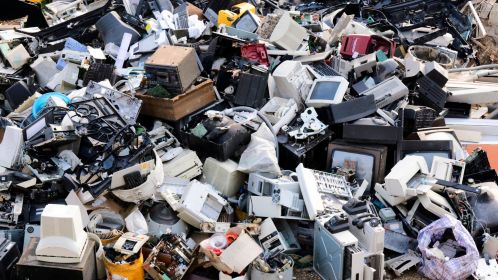
Uganda is facing a fast-growing e-waste crisis as millions of discarded phones, TVs, and computers pile up in homes, streets, and landfills. With toxic materials leaking into the environment and only a fraction of electronic waste properly recycled, urgent action is needed. This article explores how awareness, data security, and stronger recycling systems can turn a looming environmental hazard into a national opportunity.
By Simon Peter Wamahe
Think about it: do you remember your first mobile phone? How many have you owned since? And for those over 40, where is that bulky TV set with the “big bum”? Many of these devices now sit in drawers or corners, gathering dust—relics of a time when technology felt more permanent.
This quiet hoarding, driven by habit and sentiment, is exactly how e-waste accumulates out of sight. What stays in our drawers today will eventually end up in landfills unless we change course.
Every year, millions of tonnes of electrical and electronic equipment (EEE) reach the end of their life, making e-waste one of the fastest-growing waste streams globally. Chances are high that you are reading this on a device that will one day become part of that growing pile.
As technologies advance—from 5G and artificial intelligence to data centres and the Internet of Things—our digital lives are becoming richer and more connected. Yet behind this progress lies an uncomfortable truth: our expanding digital footprint carries an increasingly heavy environmental cost.
The Global E-Waste Monitor estimates that the world generated about 62 million tonnes of e-waste in 2022, yet less than a quarter was properly collected and recycled. As we mark International E-Waste Day on 14 October 2025, it is worth reflecting on how Uganda—a young, tech-embracing nation—is grappling with this challenge.
With one of the youngest and fastest-growing populations in the world, Uganda’s demand for electronic devices is rising rapidly. Every new smartphone, television, or laptop entering a household pushes an older one into obsolescence. But waste-management systems—both household and industrial—are not keeping pace with consumption.
And e-waste is far more than clutter. It is a ticking environmental hazard. When improperly discarded, old electronics release toxic elements like mercury, cadmium, and chromium that seep into soil and water, threatening human health, wildlife, and aquatic ecosystems.
Uganda is estimated to have generated 41,000 tonnes of e-waste in 2022. Only around 200 tonnes were formally collected and recycled. The rest remains unmanaged—handled by informal collectors or dumped in open spaces such as Kiteezi, Kampala’s former landfill.
Yet amid this challenge lies a significant opportunity. E-waste is both hazardous and valuable. Inside every discarded phone, computer, or fridge are recoverable materials—copper, gold, and rare earth metals—that can be reused. The difference between risk and value lies entirely in how we collect and process what we throw away. And that begins with public awareness.
Government institutions such as the Uganda Communications Commission (UCC) and the Ministry of ICT have already set important processes in motion. But more emphasis is needed on public education, transparency, and especially data security. Many people hesitate to hand over old devices because they fear their personal information could be exposed. Certified data sanitisation—guaranteeing that devices are permanently wiped—can help rebuild trust.
A strengthened legal framework can further support sustainable e-waste management by encouraging private-sector participation. Agencies including UCC, NEMA, local governments, and the Ministry of Works and Transport must collaborate to enhance collection systems, promote safe recycling, and unlock circular-economy opportunities.
Managed well, e-waste can create jobs, support small businesses, recover valuable materials, and transform an environmental challenge into an economic advantage.
So, would you release your old phone or laptop today—knowing it will be safely recycled, your data completely erased, and its components given a second life? Uganda’s digital-sustainability future depends on how we each answer that question.
About the Author
Simon Wamahe is a digital transformation and IT professional passionate about technology, digital inclusion, and responsible innovation. He writes about the intersection of technology, society, and digital impact.
Related Posts
 Putting data to work for a stronger aviation industry
 Africa leads global air cargo surge as demand jumps 16.6pc in October — IATA
 Stanbic rolls out direct Yuan settlements as Standard Bank links Africa to China’s CIPS network
 Kenya Airways issues profit warning as supply chain snags ground widebody fleet
 Africa faces surge in AI fraud as deepfakes redefine identity threats, Sumsub warns
 African lawyers urged to lead in competition law and cross-border deals
Get business news delivered to you everyday
Latest News

Putting data to work for a stronger aviation industry

Uganda’s e-waste time bomb: Why awareness and recycling can’t wait

Africa leads global air cargo surge as demand jumps 16.6pc in October — IATA

Stanbic rolls out direct Yuan settlements as Standard Bank links Africa to China’s CIPS network

Kenya Airways issues profit warning as supply chain snags ground widebody fleet

Africa faces surge in AI fraud as deepfakes redefine identity threats, Sumsub warns

Uganda, Kenya push for smoother borders at 14th JBC meeting in Jinja

Stanbic staff donate ICT equipment and supplies to Masaka School for the Deaf

Crypto uptake outpaces cyber safeguards across Africa, experts warn

US moves to reassert influence in Africa through $150m Zipline drone partnership