

New pilot fatigue rules trigger massive cancellations as India’s largest airline IndiGo cuts schedules
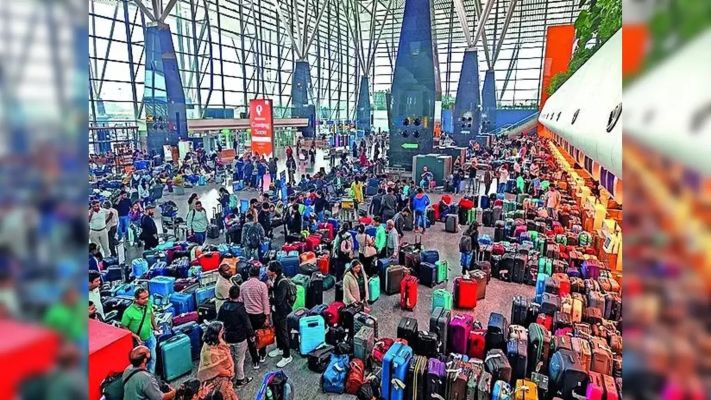
IndiGo’s mass flight cancellations have plunged India’s aviation system into turmoil, exposing deep cracks in the airline’s crew planning as new fatigue rules take effect. With more than 900 flights cancelled in four days and disruptions rippling nationwide, the carrier now warns that recovery may take months. This story unpacks the regulatory shifts, operational miscalculations, and industry implications behind India’s biggest aviation meltdown of the year.
India’s largest airline, IndiGo, is grappling with one of the most severe operational breakdowns the country has witnessed in recent years. More than 900 flights have been cancelled in just four days, unleashing nationwide delays and leaving thousands of passengers stranded. What began as a regulatory shift intended to protect pilots from fatigue has exposed significant weaknesses in the airline’s crew planning and staffing approach.
The shift brings India closer to international best practice, but it also removes flexibility that airlines previously relied on to stretch lean crew rosters. Where other Indian carriers have managed the transition with comparatively minor disruption, IndiGo’s size — paired with a densely scheduled, high-frequency network — has made compliance far harder without a buffer of excess pilots.
The crisis is rooted in India’s revised Flight Duty Time Limitations (FDTL), introduced by the Directorate General of Civil Aviation (DGCA). The new rules lengthen mandatory rest periods, expand the definition of night hours, tighten flying-hour limits and reduce the number of weekly night landings a pilot may perform. In effect, they drastically cut the scheduling flexibility airlines once relied on to run tightly packed operations. Although the DGCA announced these reforms nearly two years ago and agreed to phase them in gradually, their full impact became unavoidable when the second implementation stage began on November 1.
For IndiGo, the shift has been brutal. The airline’s high-frequency network depends heavily on early-morning departures and late-night returns, and much of its efficiency is built on pilots flying as close to the allowable limits as possible. With the new rules in place, IndiGo suddenly lacks enough rested pilots to maintain its timetables. The carrier has admitted that planning misjudgments contributed to the collapse, acknowledging that the scale of its staffing shortfall is incompatible with the new fatigue-management regime.
The effects have been immediate and widespread. In November, IndiGo logged more than 1,200 cancellations, with a majority directly linked to FDTL constraints. December has begun in even more dramatic fashion. On December 5, Delhi Airport announced that all IndiGo departures that day were cancelled until midnight — a striking indication of how deeply the disruption has penetrated the national aviation system. Across the country, passengers have confronted a mix of cancellations, rolling delays, and chaotic scenes at airports as they attempt to rebook or secure refunds. Crew-positioning challenges have worsened the situation, forcing the airline to withdraw flights even when pilots and aircraft appear available on paper.
What has puzzled many travellers is why other Indian airlines are experiencing far less disruption. Industry observers point to a simple explanation: IndiGo’s enormous network leaves it more exposed, while carriers with smaller fleets or more generous crew-to-aircraft ratios can adjust more smoothly to the new rules. In other words, the margin for error at IndiGo was razor-thin even before the regulatory changes; once the FDTL reforms took effect, the entire system began to wobble.
As the cancellations mounted, IndiGo appealed to the DGCA for temporary exemptions. The airline warned that without relief, operational instability could stretch well into February 2026. The regulator has since offered limited support. It has removed the restriction preventing crew planners from substituting leave for weekly rest and granted a temporary return to the previous allowance of six weekly night landings. Whether these changes will meaningfully ease the airline’s capacity constraints remains uncertain.
IndiGo has taken its own corrective step by scaling back schedules from December 8 to align operations with available crew. For passengers, this means the turbulence is far from over. The airline expects further cancellations through mid-December, thinner flight frequencies across its busiest routes, and continued delays as it attempts to reposition crews more efficiently. A gradual stabilisation may begin in early 2026, but IndiGo itself cautions that normal operations may not return until mid-February.
The episode is fast becoming a test of India’s aviation growth model. For years, airlines have expanded rapidly, carried by surging demand and intense competition. The new fatigue rules represent a recalibration of safety and wellbeing standards — and IndiGo’s struggles show the strain that emerges when a fast-growing sector has not built in sufficient resilience. While the immediate fallout is being felt by passengers stuck in terminals across India, the deeper consequence may be a shift in how airlines plan their staffing, manage their schedules and balance efficiency with safety.
Related Posts
 Airbus wins contract for 340 New OneWeb satellites as global race for LEO dominance intensifies
 COMESA issues consumer alert as Nestlé recalls infant formula over safety fears
 Kenchic completes takeover of Uganda’s Yo Kuku after COMESA clears merger
 EBO SACCO leans on Equity Bank to drive financial inclusion
 Africa leads global air travel growth as airlines post double-digit surge
 Africa leads the world in air cargo growth as global freight demand strengthens
Get business news delivered to you everyday
Latest News

Airbus wins contract for 340 New OneWeb satellites as global race for LEO dominance intensifies

Uganda coffee earnings hit record UGX 8.8 trillion as export volumes surge

COMESA issues consumer alert as Nestlé recalls infant formula over safety fears

Kenchic completes takeover of Uganda’s Yo Kuku after COMESA clears merger

EBO SACCO leans on Equity Bank to drive financial inclusion

Africa leads global air travel growth as airlines post double-digit surge

Uganda’s private sector ends 2025 on solid ground as demand fundamentals strengthen

For Ken Agutamba, continental honour affirms a new era of strategic communication leadership

Change of guard at Nile Breweries as new managing director takes over

Measles alert issued for East and West African travellers transiting Newark Airport