

Kabalega Airport Nears Completion as Uganda Accelerates Aviation Expansion
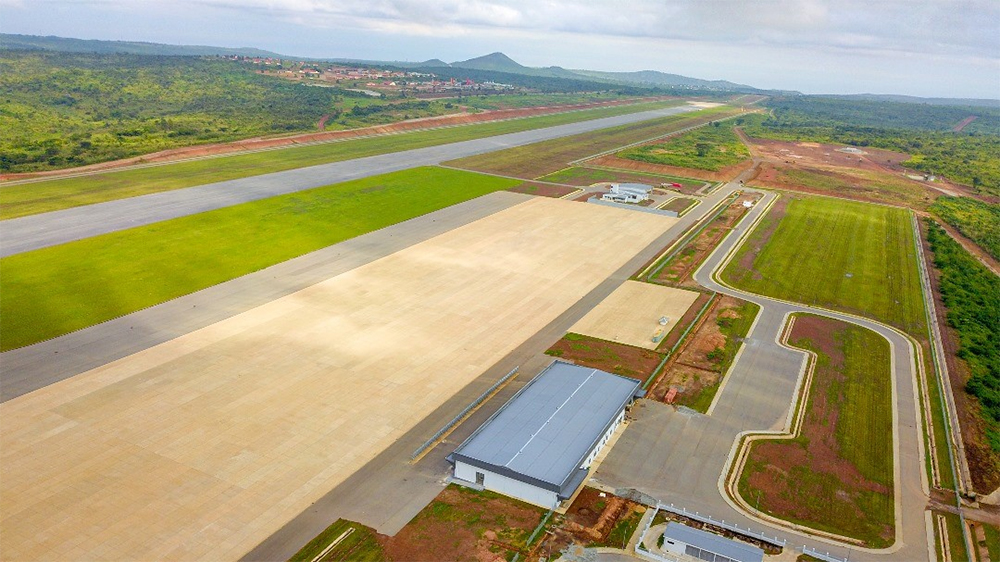
Uganda expects to receive the completed first phase of Kabalega International Airport by the end of July 2026, as government accelerates aviation infrastructure projects across the country, including the construction of Kidepo International Airport and preparations for AFCON 2027.
Uganda expects to receive the completed first phase of Kabalega International Airport by the end of July, marking a major milestone in the country’s ambitious aviation infrastructure programme.
Speaking at the 53rd Uganda Civil Aviation Authority (UCAA) Board Air Services Licensing Committee meeting in Kampala on Friday, Acting Director General Olive Birungi Lumonya said Phase I of the airport project in Hoima is now 98 percent complete and on track for handover by July 31.
The licensing committee was meeting to consider 15 applications for air service licence applications, comprising five renewals and ten new applications, as Uganda seeks to expand aviation services alongside major investments in airport infrastructure.
“Government is also making significant progress on the development of Kabalega International Airport. Phase I of the project is now 98 percent complete and is expected to be finalised by 31st July 2026,” Lumonya said.
She added that government has already moved to fast-track parts of the second phase in preparation for Uganda’s hosting of the 2027 Africa Cup of Nations (AFCON).
“In preparation for Uganda’s hosting of the Africa Cup of Nations (AFCON) 2027, Government has decided to accelerate part of the Phase II works, particularly the construction of the passenger terminal building. The contractor is expected to assume site on 1st July 2026, with completion scheduled for March 2027 to ensure readiness for the tournament,” she said.
The update comes as Uganda intensifies investments in aviation infrastructure aimed at boosting tourism, trade and regional connectivity. Construction of the airport, which forms part of the Kabaale Industrial Park and the head of the East African Crude Oil Pipeline (EACOP), started in 2019, with an envisaged 36 months construction period. But progress was interrupted by the onset of the Covid 19 Pandemic in early 2020, occasioning prolonged delays and cost overruns.
Lumonya revealed that government has embarked on an ambitious programme to upgrade six priority airports across the country, including Kidepo, Arua, Gulu, Kasese, Kisoro and Pakuba.
“I am pleased to report that on 5th June 2026, His Excellency the President of the Republic of Uganda officially commissioned the construction of Kidepo International Airport in Karenga District. This landmark project, valued at over USD 72 million and funded by the Sharjah Chamber of Commerce and Industry of the United Arab Emirates, represents a significant milestone in Uganda’s aviation development agenda,” she said.
According to Lumonya, the new airport will be developed to international standards and is expected to transform the Karamoja sub-region.
“Upon completion, Kidepo International Airport will feature a 3.6-kilometre runway, a modern passenger terminal building covering 7,408 square metres, a cargo terminal of 74,200 square metres, and other supporting infrastructure,” she said.
“The project is expected to greatly enhance tourism, trade, investment, and socio-economic development within the Karamoja sub-region and the country at large.”
She also revealed that project preparation for the redevelopment of Arua, Gulu and Kasese airports has been completed and government is mobilising financing for implementation, while Kisoro and Pakuba remain at the project preparation stage.
The Acting Director General said the expansion and modernisation of Entebbe International Airport continues as part of broader efforts to position Uganda as a regional aviation hub.
“In April 2026, Entebbe International Airport handled a total of 189,130 international passengers, comprising 94,320 arrivals and 94,810 departures. This performance reflects the continued recovery and expansion of air travel demand and underscores Uganda’s growing connectivity to regional and international markets,” she said.
Cargo traffic also recorded growth, with exports reaching 3,389 metric tonnes and imports 1,434 metric tonnes during the month.
The Authority also reported progress on other infrastructure projects, including the completion of runway, taxiway and apron upgrades at Jinja Airport and the near completion of terminal modernisation works at Pakuba Airport.
“At Pakuba Airport, modernisation of the terminal building has reached 97 percent completion and is progressing satisfactorily,” Lumonya said.
Beyond infrastructure, UCAA is also reviewing regulations governing air service licensing, competition and consumer protection.
“The revised Civil Aviation Regulations are designed to strengthen Uganda’s aviation sector by ensuring that competent and financially sound operators participate in the market, promoting safety, reliability, and sustainability,” she said.
“They also seek to foster fair competition by creating a level playing field that encourages innovation, efficiency, and investment, while enhancing consumer protection through stronger safeguards for passenger rights, including provisions relating to flight delays, cancellations, baggage handling, refunds, and fare transparency.”
Addressing the same meeting, UCAA Board Chairperson Justice Dr. Steven Kavuma said continued demand for operating licences reflects growing confidence in Uganda’s aviation industry.
“The continued interest by operators in obtaining Air Service Licences is a strong indicator of confidence in Uganda’s aviation sector and its future prospects,” Kavuma said.
He noted that Uganda currently has 25 licensed air operators providing passenger, cargo, flight training, aerial work and private aviation services.
Kavuma said Uganda has significantly expanded its international aviation relationships, signing air services agreements with 64 countries.
“To date, Uganda has concluded Air Services Agreements with sixty-four countries, creating a framework that facilitates international connectivity, trade, tourism, and investment,” he said.
“As a result of these agreements, twenty international airlines currently operate scheduled services to and from Entebbe International Airport, linking Uganda to major destinations across Africa, the Middle East, Europe, and Asia.”
The UCAA Board Chair also highlighted the growing international reach of Uganda Airlines, describing the national carrier as a strategic asset.
“We are also encouraged by the continued growth of Uganda Airlines, which remains a strategic national asset in advancing Uganda’s connectivity objectives. The airline currently serves fifteen international destinations and has been designated under various bilateral air services arrangements to operate to twenty-three destinations,” he said.
Kavuma urged operators to pursue greater collaboration through commercial partnerships and codeshare arrangements to strengthen Uganda’s position within the global aviation network.
“As the aviation industry continues to evolve, success will increasingly depend on collaboration, innovation, and strategic partnerships. The Authority therefore encourages licensed operators to explore opportunities for cooperation, including codeshare arrangements, interline agreements, and other commercial partnerships that can enhance connectivity, improve operational efficiencies, and increase passenger and cargo traffic,” he said.
Related Posts
 Independence Marathon Turns to Blood Storage Gap in Maternal Health Drive
 Fine Spinners Injects Fresh USD5m Into Technology as Uganda Textile Maker Targets African, European Markets
 Equity Trade Mission Puts Uganda’s Manufacturing Capacity to Regional Test
 Uganda Seeks to Calm Coffee, Cocoa Markets as Global Prices Fluctuate on Positive Sentiment
 Uganda Green Entrepreneurs Set for Paris Visit as Stanbic-France Partnership Graduates 106
 Entebbe Airport Passenger Traffic Recovers in August but Remains Below 2025 Levels
Get business news delivered to you everyday
Latest News

Independence Marathon Turns to Blood Storage Gap in Maternal Health Drive

Fine Spinners Injects Fresh USD5m Into Technology as Uganda Textile Maker Targets African, European Markets

Equity Trade Mission Puts Uganda’s Manufacturing Capacity to Regional Test

Uganda Seeks to Calm Coffee, Cocoa Markets as Global Prices Fluctuate on Positive Sentiment

Uganda Green Entrepreneurs Set for Paris Visit as Stanbic-France Partnership Graduates 106

Nile Breweries, Next Media Renew Road Safety Push with Focus on Boda Boda Riders

Equity Bank Explores Value-Chain Financing to Support Zigoti Coffee Expansion

Uganda Breaks Ground on USD310m Kampala Fuel Terminal, Targets September 2028 Completion

Uganda Will Not Close Its 2.4-Million-Unit Housing Deficit with Ribbon-Cuttings in Kira

Nairobi’s 2029 World Athletics Win Draws Doping Scrutiny in UK Media