

Balancing Inclusion, AI, and Sustainability is travel industry’s next frontier
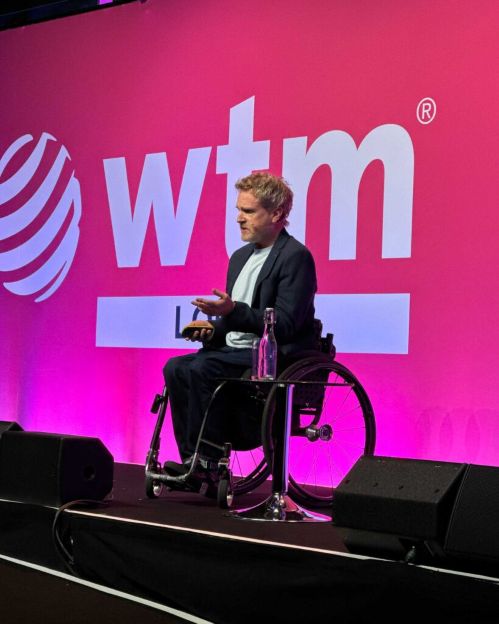
From diversity and accessibility to artificial intelligence and sustainability, the world’s travel leaders are confronting the ideas shaping the industry’s future at World Travel Market London 2025. Across multiple stages, speakers and delegates explored how technology, equity and environmental stewardship can be woven into tourism’s next chapter — and how humour, culture and connection still drive its human core.
The discussions marked Day Two of WTM London 2025, as the event’s DEAI Summit took centre stage alongside sessions on artificial intelligence, sustainable travel, and new marketing approaches.
An early panel in the DEAI Summit highlighted “inclusion fatigue” and growing political resistance to diversity initiatives. “There is definitely a rollback that is making it more challenging,” said Joanna Reeve of tour operator Intrepid Travel. She added that travel can bridge divides, creating “less of ‘us and them’ and more ‘us’.”
Edgar Weggelaar of Queer Destinations, which works with governments on LGBTQ+ tourism strategies, said the Trump administration’s anti-DEAI rhetoric had tangible effects, citing FBI data showing a rise in hate crimes. “We come to places where we feel comfortable and desired,” he noted, warning that exclusion could cost the US tourism sector. He urged destinations to invest in inclusion efforts beyond Pride month.
Accessibility advocate Richard Thompson of Inclu Group said post-pandemic digital protocols continue to disadvantage travellers with disabilities. “Protocols implemented for covid have stayed in place — and it’s another barrier,” he said. His research across 600 luxury hotels found that pillow menus and pet policies were far more detailed than accessibility information. “We’re turning disabled people into gamblers,” he warned, “betting thousands on holidays without knowing what they’re getting.”
Thompson called accessible travel “the last untapped market”, urging the sector to move beyond the wheelchair stereotype, noting that only 6% of disabled people use one.
In a session on the Business Case for Inclusion, Sadia Ramzan of The Muslim Women Travel Group said small cultural gestures can make a difference — for instance, welcoming Muslim guests with a mocktail instead of champagne. She cited Japan’s halal certifications and modest spa facilities as examples of inclusive innovation.
Futureproofing strategist Sita Sahu of FUTURE& said destinations ignoring inclusivity are “leaving money on the table.” She predicted that by 2030, DEAI principles would move from HR and marketing into governance itself.
Destinations such as Thailand and Malta shared how progressive legislation and academic research are opening new markets. Thailand’s new marriage equality law is expected to enhance its LGBTQ+ tourism brand, while Malta is working with universities to study global inclusion practices. Iceland’s tourism minister, Hanna Katrín Friðriksson, cited the country’s Women’s Day Off protest as a reminder that equality movements, even when controversial, can inspire broader societal inclusion.
AI also featured prominently. At the Media & Influencer Forum, speakers discussed how creators and publishers are diversifying income sources and rethinking content in an era shaped by algorithms. Colin Carter of Weather2Travel warned that AI cannot replace on-the-ground journalism and urged awareness of its environmental footprint. Yet, he acknowledged that publishers must now optimise content for AI-driven search.
Frederic Aouad of Stay22 highlighted AI’s role in streamlining tedious backend tasks, saying, “Optimising affiliate links is a passion of nobody — AI can do that for you.”
A light-hearted but pointed debate at the Technology Summit asked whether AI is a friend or foe to travel. Protect Group’s Stephen Joyce said AI “removes the magical human chaos of being somewhere new,” while proponents argued travellers are already embracing AI’s convenience. The audience vote was overwhelmingly in favour of AI, with Magpie’s Christian Watts remarking it reflected “not where AI is today, but where it’s going.”
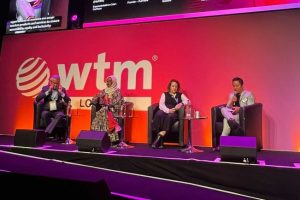 Elsewhere, Geo-economics sessions explored shifting tourism flows and partnerships. Shabib Al Maamari from Visit Oman and Mariano Dima from Civitatis discussed collaboration to attract Spanish- and Portuguese-speaking travellers. Al Maamari described a “race to acquire new source markets” as destinations invest directly in foreign tourism businesses.
At the Sustainability Summit, experts on “cool tripping” and “slow tourism” said environmentally conscious travel must move from niche to mainstream. Hurtigruten’s Iain Powell presented the cruise line’s “open village” concept featuring hybrid ships and hyperlocal food from 70 regional suppliers. Planeterra’s Tricia Schers outlined partnerships with Iberostar and easyJet Holidays to grow community tourism enterprises — from “Women with Wheels” in India to Parwa Restaurant in Peru.
Trip.com Group’s Jane McFadzean said travellers’ intentions often outpace their actions, calling for “clear, credible and consistent” sustainability labels. She noted rising demand for rail and bike-packing, alongside new “Country Retreats” in the Asia-Pacific that develop community-run accommodations.
Meanwhile, Marketing Summit sessions drew TV personalities to explore storytelling’s evolving role. Comedian Maisie Adam championed humour as “a special language and a great tool for connection,” while historian Bettany Hughes told Wanderlust editor George Kipouros that her documentaries, watched by 450 million viewers in 2024, show how culture and history deepen travel’s meaning.
Adam cited the success of a West Midlands campaign featuring Black Sabbath’s Tony Iommi, Shakespearean tour guides and local chefs — part of an effort that helped the region achieve a 2% rise in international visitors.
As Hughes reflected on the viral appeal of ancient artefacts such as 2,000-year-old perfume bottles and Pompeii paint pots, the message was that the travel industry’s future will hinge on both its ability to innovate — and to keep the human story at the heart of the journey.
256 Business News is attending WTM 2025 with support from Uganda Airlines
Related Posts
 Uganda Emerges as Africa’s Largest Organic Farming Country as Exports Reach USD225 Million
 Uganda Coffee Roasters Tap Richard Rugaya as Executive Director, with Focus on Commercial Growth
 Why Africa’s Institutions Must Turn Knowledge and Investment into Farmer Prosperity
 Forbes ranks MTN Group third globally on best telecom employer list
 Stanbic experts offer investment insights to navigate current market uncertainty
 Africa Carbon Markets Urged to Turn Potential into Investment and Delivery
Get business news delivered to you everyday
Latest News

Stanbic Seeks Northern Uganda Business Feedback as It Marks 35 Years in Country

Uganda Emerges as Africa’s Largest Organic Farming Country as Exports Reach USD225 Million

SITA Acquisition of Collins Airport Solutions Signals Moves to Consolidate Aviation Technology

Uganda Coffee Roasters Tap Richard Rugaya as Executive Director, with Focus on Commercial Growth

Equity Bank Reports UGX37.6 Billion in Green Loans as Uganda Seeks to Scale Climate Investment

Why Africa’s Institutions Must Turn Knowledge and Investment into Farmer Prosperity

Forbes ranks MTN Group third globally on best telecom employer list

Stanbic experts offer investment insights to navigate current market uncertainty

Bank of Uganda hikes base rate from 9.75% to 12% amidst global tensions

Corporate Buyers Could Help Unlock SAF Market Worth Millions of Tonnes by 2030