

Americans cautioned on doing business with South Sudan government
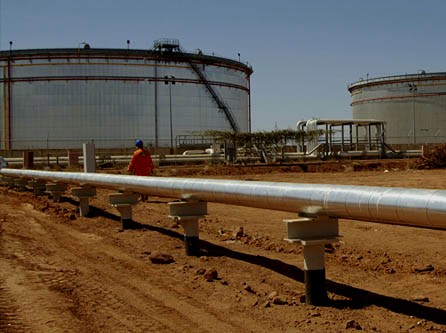 South Sudan has one of the largest oil reserves in sub-Saharan Africa and has virtually no commercial agriculture or production industry.
The United States has cautioned its nationals about the hazards of doing business in South Sudan in a Business Advisory issued on Monday by the US Department of State.
The advisory relates specifically to the Revitalized Transitional Government of National Unity (RTGoNU), companies controlled by government officials and/or their family members, and civilian-owned enterprises with ties to the South Sudanese transitional government. The US government does not seek to curtail or discourage responsible investment or business activities in South Sudan with civilian-owned South Sudanese counterparts that are independent from improper ties to government institutions or officials.
Spokesperson, Matthew Miller said, “The Advisory highlights the growing reputational, financial, and legal risks to US businesses and Americans conducting business or transactions with companies that have significant ties to South Sudan’s extended transitional government or that are controlled by family members of government officials.”
The US is concerned about the failure of the South Sudan transitional government, to implement key economic reforms and public financial management commitments made in the 2018 Revitalized Agreement on the Resolution of the Conflict in the Republic of South Sudan (R-ARCSS), which were due to be completed by February 2023.
Miller said, “The transitional government’s lack of progress on these reforms, the absence of significant progress over the original transition period, and the transitional government’s continued failure to adhere to its own laws in the transparent management of its oil revenue could adversely impact U.S. businesses, individuals, other persons and their operations in South Sudan and the region.”
US businesses and Americans operating in South Sudan and the region have been advised to undertake robust due diligence on corruption and human rights issues or abuses that contribute to violence.
“They should also take care to avoid all dealings, including transactions transiting the United States, that involve any property or interests in property of persons, including from South Sudan, listed on the Department of the Treasury Office of Foreign Assets Control’s (OFAC) Specially Designated Nationals and Blocked Persons. US financial institutions should have familiarized themselves with their due diligence and suspicious activity report (SAR) filing obligations related to senior South Sudanese political figures, as is already required and as outlined in a 2017 advisory from the US Treasury Department’s Financial Crimes Enforcement Network (FinCEN),” he said.
South Sudan has one of the largest oil reserves in sub-Saharan Africa and has virtually no commercial agriculture or production industry. The country’s main sources of goods are Uganda (38.4%), the UAE (26.8%), Kenya (12.3%), China (11.1%), and India (2.2%). The main destinations for the country’s exports are China (58.8%), Italy (17.4%), Singapore (16.8%), the UAE (3.9%), and Uganda (1.6%).
Related Posts
 Agroecology Week Targets Stronger links Between Farmers, Policy and Markets
 Stanbic Commits UGX20m to Virunga Gorilla Marathon’s Conservation Drive
 Energy Ministry and Equity Bank target lower hotel energy costs through green investment initiative
 Aviation Industry Coalition Presses EU to Protect Voluntary use of Biometric Travel Technology
 Somalia Recognises IATA Safety Audits in Push for Common African Aviation Standards
 Stanbic Donates UGX40 Million in Maternal Health Equipment to Obongi Facility
Get business news delivered to you everyday
Latest News

Agroecology Week Targets Stronger links Between Farmers, Policy and Markets

Stanbic Commits UGX20m to Virunga Gorilla Marathon’s Conservation Drive

Energy Ministry and Equity Bank target lower hotel energy costs through green investment initiative

FAA Certifies Boeing 737-10, Clearing Path for Deliveries of Largest 737 MAX Variant

Aviation Industry Coalition Presses EU to Protect Voluntary use of Biometric Travel Technology

Somalia Recognises IATA Safety Audits in Push for Common African Aviation Standards

Airlink Adds Lanseria–Harare Route, Expands Regional Flights for Summer

Uganda SGR Nears €1bn Funding Milestone as OPEC Fund Targets November Approval for €150m

Solar Power Linked to More Births and Better Patient Access at Rural Ugandan Clinics

China’s GPMI Interface Leapfrogs HDMI, USB With 192Gbps Speeds and 480W Power