

Africa’s crypto market matures as fraud rates decline, Sumsub says in new report
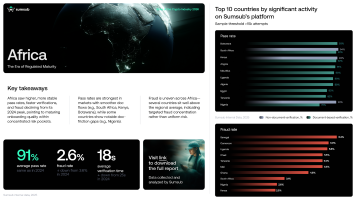
Africa’s crypto sector is entering a more regulated phase, with fraud rates falling and platforms prioritising verification accuracy over rapid growth.
Africa’s cryptocurrency market is showing signs of maturity, with fraud rates declining and platforms shifting focus toward stronger compliance and user verification, according to a new report by Sumsub.
The report, based on industry data from 2024–2025 and a survey of 300 crypto firms, indicates that the sector is moving away from its early “growth at all costs” model toward what it describes as a phase of “regulated maturity.” Globally, 74 percent of crypto providers now prioritise verification accuracy over onboarding speed, reflecting tighter regulatory expectations and growing fraud risks.
In Africa, this transition is already visible. Fraud rates across the continent declined to 2.6 percent in 2025, down from 3.6 percent in 2024, marking a 28 percent year-on-year drop. The improvement follows a sharp rise from 1.7 percent in 2023, suggesting that stronger controls and better verification systems are beginning to take effect.
However, fraud patterns remain uneven across markets. Ghana recorded the highest rate among major economies at 4.6 percent, followed by South Africa at 3.1 percent, Nigeria at 2.6 percent and Kenya at 2.5 percent. In smaller or emerging markets such as Senegal, Mali, Tanzania and Uganda, fraud rates exceeded 5 percent in some cases, underscoring persistent vulnerabilities as adoption expands.
The report highlights how Africa’s mobile-first financial ecosystem is helping improve verification performance. Digital onboarding tools and smartphone-based identity systems are enabling faster and more accurate user verification, particularly in leading crypto markets such as South Africa, Nigeria, Kenya, Ghana and Mauritius.
At the same time, regulation is tightening across the continent. South Africa has introduced new reporting requirements under its Crypto-Asset Reporting Framework, while Nigeria has formally recognised virtual assets under its securities law. Kenya and Ghana are advancing legislation to regulate virtual asset service providers, and Mauritius continues to position itself as a regulated digital finance hub.
These developments point to a broader shift toward formal oversight of digital assets, as governments attempt to balance innovation with financial crime prevention.
Globally, the report identifies artificial intelligence as a central battleground in crypto security. More than half of providers now rank AI-powered fraud detection as their top priority, as attackers increasingly use automation to scale fraudulent activity. In response, platforms are investing in systems that analyse identity, behaviour and transaction data in real time.
Another emerging trend is the integration of compliance into user experience. Document-free onboarding and reusable digital identity solutions are gaining traction, allowing users to verify themselves across multiple platforms without repeated documentation. In Africa, these systems are already delivering high verification success rates, exceeding 90 percent in key markets such as Nigeria, Kenya and South Africa.
Despite these gains, challenges remain. More than half of crypto platforms reported fraud incidents in 2025, while a significant share were unsure whether fraud had occurred, highlighting ongoing detection gaps. Compliance with global standards such as the “Travel Rule” also remains inconsistent, with less than a quarter of providers fully aligned.
The report concludes that the next phase of crypto growth will depend on embedding compliance and risk management directly into platform design. As regulatory scrutiny intensifies and fraud techniques evolve, the industry’s ability to balance security with seamless user experience will define its long-term trajectory.
Related Posts
 Uganda Coffee Roasters Tap Richard Rugaya as Executive Director, with Focus on Commercial Growth
 Why Africa’s Institutions Must Turn Knowledge and Investment into Farmer Prosperity
 Forbes ranks MTN Group third globally on best telecom employer list
 Stanbic experts offer investment insights to navigate current market uncertainty
 Africa Carbon Markets Urged to Turn Potential into Investment and Delivery
 Corporate Buyers Could Help Unlock SAF Market Worth Millions of Tonnes by 2030
Get business news delivered to you everyday
Latest News

SITA Acquisition of Collins Airport Solutions Signals Moves to Consolidate Aviation Technology

Uganda Coffee Roasters Tap Richard Rugaya as Executive Director, with Focus on Commercial Growth

Equity Bank Reports UGX37.6 Billion in Green Loans as Uganda Seeks to Scale Climate Investment

Why Africa’s Institutions Must Turn Knowledge and Investment into Farmer Prosperity

Forbes ranks MTN Group third globally on best telecom employer list

Stanbic experts offer investment insights to navigate current market uncertainty

Africa Carbon Markets Urged to Turn Potential into Investment and Delivery

Bank of Uganda hikes base rate from 9.75% to 12% amidst global tensions

Airbus sees USD420bn Global Aviation Services Boom: Can Africa Capture its Share?

Nile Breweries Celebrates 75 Years of Growing with Uganda