

Why Wizz Air’s GTF powered A321XLR is a signal Africa should watch with interest
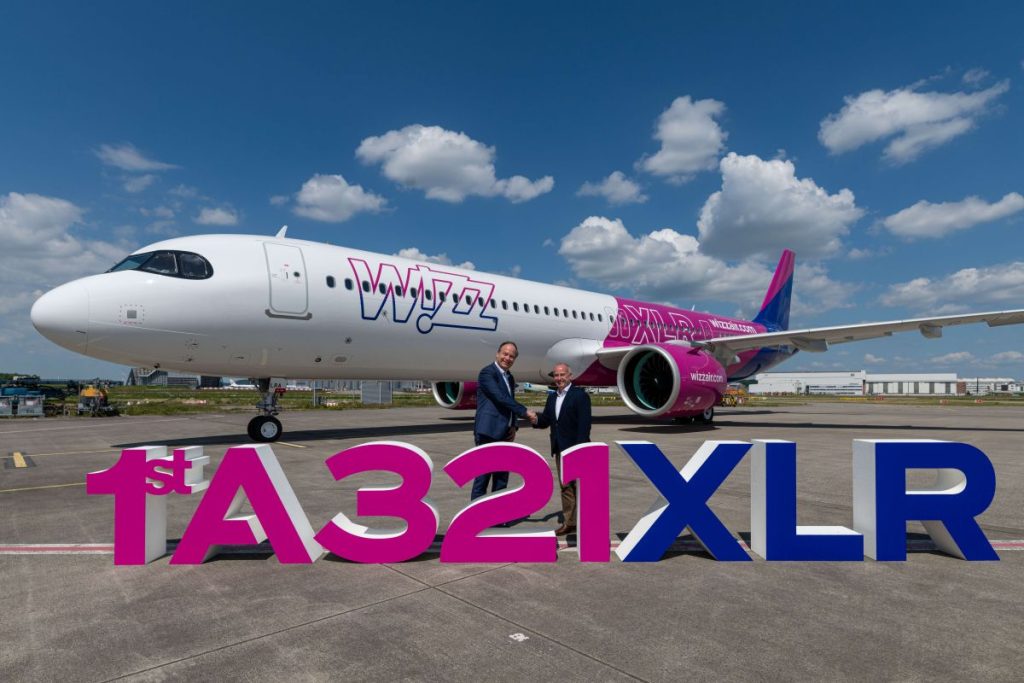
Why African airlines should look past early engine hiccups to embrace the efficiency and opportunity of Airbus’s newest narrowbody long-hauler
ANALYSIS | 256BN Aviation Desk
In a significant milestone for both Airbus and global aviation, Wizz Air has become the first airline to take delivery of the Airbus A321XLR powered by Pratt & Whitney’s Geared Turbofan (GTF) engines. The aircraft, designed to fly up to 4,700 nautical miles (nm) and burn 30pc less fuel per seat than previous-generation aircraft, marks a step-change in single-aisle long-range capability.
The delivery is not just important for Wizz Air’s ultra-low-cost model, which now gains the ability to link deeper points between Europe and the Middle East, but it also represents a turning point in the narrative around the GTF engines — which, while revolutionary, have had a rocky start.
For African carriers seeking to expand medium- and long-haul networks in a financially sustainable way, this moment deserves attention. The A321XLR, despite earlier industry concerns around its propulsion system, could offer precisely the type of operational flexibility African airlines need to serve thinner routes profitably — both within the continent and intercontinentally.
GTF Engine Troubles: Learning from the Past
When Pratt & Whitney launched its Geared Turbofan engine line in 2016, it promised dramatic efficiency improvements. The GTF engine decouples the fan from the low-pressure turbine via a gearbox, allowing each component to spin at optimal speeds. This novel approach achieved real-world reductions in fuel burn, noise, and emissions.
However, reliability issues plagued early versions. Airlines experienced unplanned engine removals, maintenance bottlenecks, and disruptions. These problems stemmed from thermal coatings, bearing durability, and in some cases, contamination risks. While damaging to operator trust, these teething problems were not unexpected for such a technically ambitious engine — and thankfully, they have since been addressed.
Pratt & Whitney has invested billions into refining the technology and improving production oversight. According to comoany, the engines being delivered with the A321XLR represent a matured product with updated components and enhanced aftermarket support. For airlines evaluating new fleets today, the lessons of the early GTF years should serve more as a cautionary tale of innovation risk — not a reason to reject a now-proven engine.
A Game Changer for Network Economics
The A321XLR’s main selling point is range: 4,700 nm — roughly the distance from Dakar to Dubai, or Addis Ababa to London. With capacity for 180 to 240 passengers depending on configuration, the aircraft allows airlines to operate long-haul flights with the economics of a narrowbody.
For African airlines, this opens several possibilities:
- “Right-sizing” long-haul routes: Many African flag carriers operate widebody jets like the A330 or Boeing 787 on intercontinental routes that often suffer from low load factors. The A321XLR provides a lower-risk alternative — able to open new city pairs that wouldn’t support a widebody’s seat count.
- Feeding intra-African hubs: African markets are notoriously fragmented and underserved, especially with direct links between secondary cities. The XLR’s range allows point-to-point connectivity without requiring multiple stopovers or inefficient triangulation.
- Supporting diaspora-driven demand: African diasporas in Europe and the Middle East often drive VFR (visiting friends and relatives) traffic. The XLR enables carriers to cater to these flows with appropriately scaled aircraft, offering more frequency or new destinations without the cost burden of a twin-aisle jet.
Operational Efficiency Meets Environmental Imperative
The A321XLR is more than a range upgrade. It offers significant sustainability benefits — a major factor for international funding and carbon-conscious customers. The aircraft is capable of using up to 50pc Sustainable Aviation Fuel (SAF) today, with Airbus targeting 100pcSAF capability by 2030. For African carriers seeking to align with evolving ICAO standards or improve their ESG profiles to attract financing, the XLR is a compelling platform.
Airbus claims the aircraft emits 20pc less NOx and is significantly quieter than comparable aircraft. In increasingly crowded and environmentally regulated airspace, such performance provides tangible operational and reputational value.
Who Could the A321XLR Serve in Africa?
Several African carriers are well-positioned to benefit from introducing the A321XLR into their fleets:
-
Ethiopian Airlines, with a diverse network and multiple European and Middle Eastern destinations, could use the XLR to expand secondary routes while freeing up widebodies for denser markets.
-
Uganda Airlines, currently looking to scale its regional and intercontinental offering, may find the XLR a better fit than investing in more widebody aircraft.
-
Air Senegal and RwandAir, both aspiring to be regional hubs with global reach, could use the XLR to connect underserved city pairs, especially in West Africa and the Sahel.
-
Fast-growing private operators such as Nigeria’s Ibom Air or Green Africa Airways may also consider the aircraft to leapfrog into medium-haul routes without overextending operational capacity.
A Future-Proofed Investment?
With over 500 orders already secured, the A321XLR is poised to dominate the long-range narrowbody market. The fact that a cost-focused operator like Wizz Air — with a track record of strict fleet optimisation — is the first to receive the aircraft sends a strong market signal. This is not a vanity purchase; it’s a strategic one.
The African airline industry, while rebounding from the pandemic, remains cash-constrained and margin-pressured. Yet, the long-term success of carriers will depend not just on surviving, but on selecting the right tools for growth. Aircraft like the XLR — offering high efficiency, low trip costs, and new route potential — represent a chance to compete smarter.
Looking Past Legacy Concerns
The early turbulence in GTF engine operations is no longer the defining narrative of the program. Just as the first versions of the Boeing 787 faced delivery delays and electrical glitches but are now mainstays of global fleets, the GTF’s rocky start should not obscure the transformational potential of the A321XLR for African aviation.
The future of fleet planning on the continent will favor flexibility, cost-efficiency, and environmental compliance. The A321XLR, now flying with one of the world’s most disciplined low-cost carriers, demonstrates it is ready to deliver on those promises.
As African carriers plan their next decade of growth, this aircraft deserves a hard look — not despite its past challenges, but because of its current maturity and future relevance.
Related Posts
 Government reaffirms commitment to capitalise UDB as Bank deepens development finance role
 Uganda’s DEI Biopharma gene therapy breakthrough could transform sickle cell treatment
 Equity Bank Uganda set to close 2025 on firmer footing as clean-up phase gives way to growth
 Stanbic targets wider access to affordable financing with ‘Oli In Charge’ campaign
 USA–Canada certification dispute could expose Uganda and regional airlines to regulatory risk
 Sumsub launches AI Agent Verification as Africa grapples with surge in AI-driven fraud
Get business news delivered to you everyday
Latest News

Government reaffirms commitment to capitalise UDB as Bank deepens development finance role

Uganda’s DEI Biopharma gene therapy breakthrough could transform sickle cell treatment

Equity Bank Uganda set to close 2025 on firmer footing as clean-up phase gives way to growth

Stanbic targets wider access to affordable financing with ‘Oli In Charge’ campaign

USA–Canada certification dispute could expose Uganda and regional airlines to regulatory risk

The hidden cost of blocked airline funds

KPMG flags widening execution gap as tech leaders bet on AI maturity, talent and partnerships

Uganda targets 200,000 visitors for 2026 National Agricultural Show in Jinja

Destination Uganda clinches “Best in Show – Africa” at New York Travel & Adventure Show

Uganda’s Kibirige edges closer to global golf stage after strong PGTI Q-School showing in India