

Uganda’s PM hails Stanbic Business Incubator for empowering SMEs
 Starting in April last year, the 48 graduating entrepreneurs were trained under two programs namely the Stanbic Accelerator Program (SAP) and the Supplier Development Program (SDP). The incubator is a subsidiary of Stanbic Uganda Holdings Limited.
The Prime Minister, Robinah Nabbanja, has hailed the Stanbic Business Incubator for supporting the government in empowering owners of Small and Medium Enterprises (SMEs) to enhance their capacity and grow into sustainable businesses.
The Incubator is the Stanbic Uganda Holdings Limited (SUHL) subsidiary responsible for enterprise development by providing free training in business skilling, market access and access to finance.
In her speech which was read by the Minister of state for Disaster Preparedness, Relief and Refugees Lillian Aber, during the graduation of 48 entrepreneurs at the Uganda Registration Services Bureau (URSB) auditorium on Friday, Nabbanja said, the NRM Government envisions that by 2040, the economy will expand to a GDP of $581 billion, with a per capita income of $9,500; and 90% of Ugandans fully integrated in the money economy.
She said, “The theme for today’s event is ‘Stand out for Uganda’, and it resonates deeply with our government vision for economic transformation. We believe in empowering our entrepreneurs to become catalysts of growth, to rise above limitations and to become national economic champions. Your achievements today are a testament to this vision.”
Nabbanja said SMEs are the backbone of the economy, driving as engines for job creation, innovation and sustainability, and the government is committed to creating an enabling environment.
“I commend Stanbic Business Incubator Limited for its commitment to enterprise development since 2018. This is a credit to your foresight. To the private sector, I encourage you to continue investing in initiatives that support entrepreneurship and SME development, because your partnership is essential in developing our nation’s economic growth,” Nabbanja said.
Starting in April last year, the 48 graduating entrepreneurs were trained under two programs namely the Stanbic Accelerator Program (SAP) and the Supplier Development Program (SDP).
SUHL’s Chief Executive Francis Karuhanga said, “We believe that empowering SMEs is crucial to fostering economic resilience and sustainable growth. Uganda has consistently ranked high on the Global Entrepreneurship Index, and at one point, we were number one. However, our problem has been one of sustainability and the short lifespan of these small businesses.”
He said, “At Stanbic, we are driven by our mandate, ‘Uganda is our home; we drive her growth’. Sustaining Uganda’s economic growth depends on a vibrant private sector from which dynamic entrepreneurs can emerge to innovate and create new jobs. But entrepreneurs, especially young ones, also need training, coaching and mentoring to exploit available opportunities. That is why we saw it befitting to start up the Stanbic Incubator.”
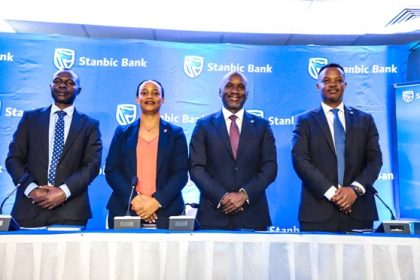
Damoni Kitabire, the Chairperson of the Board at Stanbic Bank Uganda said, “Instead of turning away businesses that are not ready, we are nurturing them. The impact is far reaching and we are helping to build a pipeline of credible investment-ready SMEs that positively impact the economy. We must build a future where young people and women are the centre of economic transformation.”
Specifically, the SAP is an investment readiness program targeted at supporting business owners to acquire the necessary skills to drive their company’s growth and prepare their enterprises to become bankable entities. SAP guides owners into being competent at raising capital and helps ensure the emergence of strong and resilient businesses.
Meanwhile, the SDP aims to demystify the opportunities in Uganda’s energy sector and provide SME owners with the necessary tools to participate as service providers. Through this program, participants gain a deeper understanding of the sector, including market trends, available opportunities, and the challenges involved.
The SDP program also offers participants market linkages by enabling them to connect with potential partners and customers. Additionally, it also explores funding options, including information about grants and loans to support the growth and expansion of their businesses.
Catherine Poran, the Chief Executive of the Stanbic Business Incubator said, “In alignment with NDP IV’s goal of fostering a competitive private sector that drives inclusive growth and job creation, the Stanbic Business Incubator has developed programs that streamline access to finance and markets. Access to affordable, reliable, and long-term financing is crucial for the private sector to stimulate the necessary investment, technology, and expertise for value addition in key growth areas.”
She said achieving this also requires entrepreneurs to embrace innovation and creativity while also embracing joint ventures or partnerships if they need to scale quickly.
While giving his keynote address, Bruce Mpamizo, the Executive Director of Movit Products Limited (MPL), said, “During hard times, as an entrepreneur, it is crucial to always fall back on your clearly defined goals or objectives. Use them as a benchmark to drive you forward.”
“As entrepreneurs, it is essential to embrace digital technology in your work, because it helps in executing duties such as conducting considerable research to develop innovative products that ensure compatibility and comfort. Understanding your market is essential. We do market research, assess the risks then make a decision. Today, Movit Products Limited has a presence in over eight African countries,” Mpamizo said.
Related Posts
 Government reaffirms commitment to capitalise UDB as Bank deepens development finance role
 Uganda’s DEI Biopharma gene therapy breakthrough could transform sickle cell treatment
 Equity Bank Uganda set to close 2025 on firmer footing as clean-up phase gives way to growth
 Stanbic targets wider access to affordable financing with ‘Oli In Charge’ campaign
 USA–Canada certification dispute could expose Uganda and regional airlines to regulatory risk
 Sumsub launches AI Agent Verification as Africa grapples with surge in AI-driven fraud
Get business news delivered to you everyday
Latest News

Government reaffirms commitment to capitalise UDB as Bank deepens development finance role

Uganda’s DEI Biopharma gene therapy breakthrough could transform sickle cell treatment

Equity Bank Uganda set to close 2025 on firmer footing as clean-up phase gives way to growth

Stanbic targets wider access to affordable financing with ‘Oli In Charge’ campaign

USA–Canada certification dispute could expose Uganda and regional airlines to regulatory risk

The hidden cost of blocked airline funds

KPMG flags widening execution gap as tech leaders bet on AI maturity, talent and partnerships

Uganda targets 200,000 visitors for 2026 National Agricultural Show in Jinja

Destination Uganda clinches “Best in Show – Africa” at New York Travel & Adventure Show

Uganda’s Kibirige edges closer to global golf stage after strong PGTI Q-School showing in India