

Uganda and Kenya agree on SGR technical standards as land acquisition enters final leg
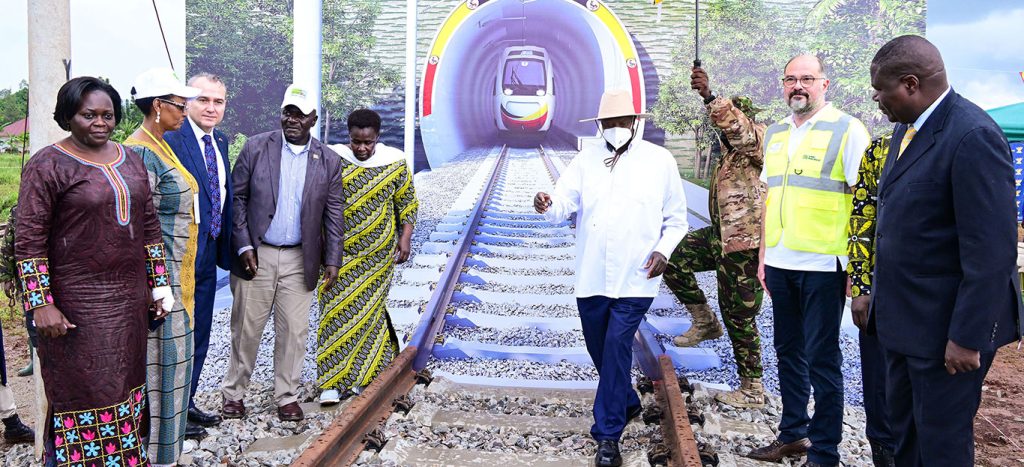
Uganda and Kenya have reached a milestone agreement on the technical standards that will guide the development of a seamless Standard Gauge Railway between the two countries, a move that strengthens regional integration as Uganda’s land acquisition for the project enters its final stretch in Mukono, Wakiso and Kampala.
Uganda and Kenya have reached a landmark agreement on the technical and policy standards needed to build a seamless Standard Gauge Railway (SGR) system between the two countries, removing one of the biggest obstacles to establishing an integrated Northern Corridor railway.
The breakthrough follows a three-day bilateral meeting on SGR interoperability and technical harmonisation held from November 12–14, where the two states aligned positions on how their differing engineering systems will connect. Kenya’s SGR is built on Chinese standards, while Uganda is adopting a combination of European Norms, AREMA and UIC standards—an approach that required extensive engineering reconciliation.
Uganda’s Permanent Secretary for Works and Transport, Waiswa Bageya, said alignment with Kenya was a contractual obligation under Uganda’s Engineering Procurement and Construction/Turnkey (EPC/T) agreement with civil contractor Yapi Merkezi.
“The EPC/T contract places a binding obligation on the contractor to ensure full compatibility and interoperability with adjoining networks, particularly the Kenya SGR,” Bageya said, noting that the bilateral agreements now form the reference point for all interface design decisions.
The meeting concluded with both countries endorsing a harmonised framework covering track systems, traction power, bridges, signaling and communications, rolling stock, and operational protocols—effectively setting the foundation for a single, interoperable SGR system across the border.
Land acquisition reaches Kampala periphery
Meanwhile, Uganda’s SGR development is accelerating on the ground. Land acquisition moved into Mukono District and is on track to reach Wakiso and Kampala by the end of 2025. Compensation disclosures, financial literacy sessions, and payment processes are underway, with nine of the 12 affected districts already cleared.
Under a Limited Notice to Proceed, Yapi Merkezi is completing preliminary and detailed designs while preparing to establish a sleeper factory and construction camp. The EPC/T contract is expected to come into full effect early in 2026.
SGR Project Coordinator Canon Eng. Perez Wamburu said the harmonisation discussions confirmed that Uganda’s choice of standards remains compatible with Kenya’s system.
“Differing standards do not hinder interoperability. Refining specifications within these standards ensures seamless connection between the Uganda and Kenya networks,” Wamburu noted.
Nairobi outlines progress on its SGR network
The Kenyan delegation, led by Wendy Maina, Deputy Director in the Rail Transport Directorate, provided updates on the Mombasa–Nairobi–Naivasha line and ongoing plans for the Naivasha–Kisumu–Malaba extension. Kenya disclosed that land acquisition and compensation for Phase 2B (Naivasha–Kisumu, 262 km) have begun, with China Communications Construction Company (CCCC)—the contractor for the Nairobi–Naivasha section—retained for the next phase.
The Kenyan team also outlined plans for future electrification, signalling upgrades, and rolling stock expansion, giving Uganda’s technical team a clearer picture of the interface requirements at the Malaba border. Uganda’s engineers, together with the contractor and supervising consultant, will undertake a study visit to Kenya before the end of 2025.
Uganda’s Works and Transport Minister, Gen. Katumba Wamala, urged both sides to move swiftly toward implementation, describing the newly signed bilateral report as binding and essential for completing a unified corridor.
“The agreed positions form a solid basis for the design of the Uganda SGR system wherever it interfaces with Kenya,” he said in remarks delivered on his behalf by junior minister Fred Byamukama.
The renewed cooperation marks one of the most significant steps forward for the Uganda SGR in recent years, anchoring both countries’ ambitions to complete a modern freight and passenger rail artery from Mombasa to Kampala and eventually deeper into the Great Lakes region.
Related Posts
 Equity Bank Uganda set to close 2025 on firmer footing as clean-up phase gives way to growth
 Stanbic targets wider access to affordable financing with ‘Oli In Charge’ campaign
 USA–Canada certification dispute could expose Uganda and regional airlines to regulatory risk
 Sumsub launches AI Agent Verification as Africa grapples with surge in AI-driven fraud
 KPMG flags widening execution gap as tech leaders bet on AI maturity, talent and partnerships
 Uganda targets 200,000 visitors for 2026 National Agricultural Show in Jinja
Get business news delivered to you everyday
Latest News

Equity Bank Uganda set to close 2025 on firmer footing as clean-up phase gives way to growth

Stanbic targets wider access to affordable financing with ‘Oli In Charge’ campaign

USA–Canada certification dispute could expose Uganda and regional airlines to regulatory risk

Sumsub launches AI Agent Verification as Africa grapples with surge in AI-driven fraud

The hidden cost of blocked airline funds

KPMG flags widening execution gap as tech leaders bet on AI maturity, talent and partnerships

Destination Uganda clinches “Best in Show – Africa” at New York Travel & Adventure Show

Uganda’s Kibirige edges closer to global golf stage after strong PGTI Q-School showing in India

Breathtaking Uganda unveils curated Easter getaway to Zanzibar

IATA, CFM renew agreement to ease engine maintenance bottlenecks as supply chain crisis deepens