

TAAG–SAA codeshare signals a quiet reordering of Southern Africa’s aviation map
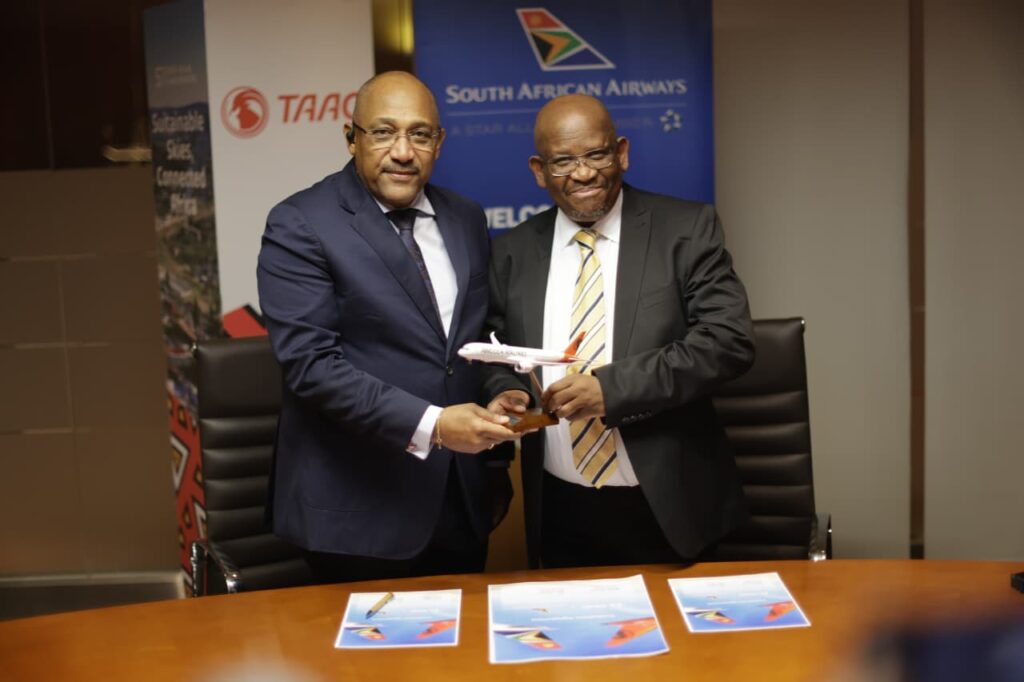
TAAG Angola Airlines and South African Airways (SAA) have entered a new codeshare agreement that, while technical on the surface, marks a deeper shift in how Southern African carriers are repositioning themselves in a post-pandemic, capacity-constrained aviation market.
The partnership, which opened for ticket sales ahead of its 17 November launch, links Luanda, Johannesburg and Cape Town into a more coherent hub system. But the strategic play is less about adding flight codes and more about consolidating influence in a region where demand is rebounding faster than fleets and finances can keep up.
For TAAG, the agreement strengthens its long-running ambition to position Luanda as a credible West-Central African gateway. By piggybacking SAA’s code into South Africa’s domestic and regional cities — Durban, Gqeberha, Cape Town, Harare and Lusaka — it gains a ready-made feeder network without the cost of building new routes from scratch. That creates smoother onward flows into its long-haul services to Lisbon and São Paulo, where Angolan diaspora and business ties already drive consistent traffic.
Nelson Rodrigues de Oliveira, CEO of TAAG, expressed enthusiasm about the collaboration, stating, “This alliance with South African Airways enhances our continental connectivity, opening new international destinations for our customers. It also strengthens Angola’s role as a strategic hub, benefiting our economy and tourism sector. We are thrilled about this partnership, which aligns with our growth strategy and market expansion.”
For SAA, the partnership is even more telling. The airline is still rebuilding its network after years of retrenchment, making international expansion expensive and risky. By attaching its code to TAAG flights out of Johannesburg and Cape Town to Luanda, it effectively reopens two long-haul corridors — Europe and South America — at a fraction of the cost of operating its own metal. It also restores some of its former role as a continental connector, even as competitors like Ethiopian Airlines and Kenya Airways have grown aggressively.
“This partnership marks a significant milestone in African aviation, strengthening connectivity across the continent and creating new opportunities for travellers (leisure and business). By collaborating with TAAG, we are expanding our reach, enhancing passenger experience, and unlocking vital commercial pathways,” said SAA Group CEO, Professor John Lamola “As South African Airways continues to grow its network, this alliance reinforces our commitment to serving as a bridge between Africa and the world, driving seamless travel, support trade and investment, tourism development, cultural exchange and economic development.”
Passengers stand to gain the most immediate benefits: single-ticket itineraries, through check-in, and a wider map of destinations bookable in local currency. But the bigger picture lies in how these alliances shape economic flows. Strengthened air links between Angola and South Africa support long-standing trade relations; improved links to Brazil and Portugal tap into multi-directional investment and mobility patterns; and enhanced regional connectivity helps knit together a still-fragmented African aviation landscape.
The enthusiasm from both chief executives reflects this broader calculus. TAAG’s Nelson Rodrigues de Oliveira frames the partnership as a boost to Angola’s hub aspirations and tourism economy. SAA’s Professor John Lamola casts it as a structural step toward regaining continental relevance while driving new commercial pathways.
Codeshares are often dismissed as administrative arrangements, but in Africa — where cross-border air travel remains costly and underdeveloped — they can shift the balance of market power. The TAAG–SAA agreement is one such moment: a pragmatic alliance that shores up two recovering carriers, expands choice for travellers, and hints at a more interconnected Southern African airspace.
Related Posts
 Equity Bank Uganda set to close 2025 on firmer footing as clean-up phase gives way to growth
 Stanbic targets wider access to affordable financing with ‘Oli In Charge’ campaign
 USA–Canada certification dispute could expose Uganda and regional airlines to regulatory risk
 Sumsub launches AI Agent Verification as Africa grapples with surge in AI-driven fraud
 KPMG flags widening execution gap as tech leaders bet on AI maturity, talent and partnerships
 IATA, CFM renew agreement to ease engine maintenance bottlenecks as supply chain crisis deepens
Get business news delivered to you everyday
Latest News

Equity Bank Uganda set to close 2025 on firmer footing as clean-up phase gives way to growth

Stanbic targets wider access to affordable financing with ‘Oli In Charge’ campaign

USA–Canada certification dispute could expose Uganda and regional airlines to regulatory risk

Sumsub launches AI Agent Verification as Africa grapples with surge in AI-driven fraud

The hidden cost of blocked airline funds

KPMG flags widening execution gap as tech leaders bet on AI maturity, talent and partnerships

Uganda targets 200,000 visitors for 2026 National Agricultural Show in Jinja

Destination Uganda clinches “Best in Show – Africa” at New York Travel & Adventure Show

Uganda’s Kibirige edges closer to global golf stage after strong PGTI Q-School showing in India

Breathtaking Uganda unveils curated Easter getaway to Zanzibar