

Stanbic Business Incubator forges ahead in scaling Ugandan SMEs
 Poran believes that to unleash the full potential of entrepreneurship as a genuine engine of economic growth, there has to be a shift from merely celebrating the quantity of businesses created to nurturing the quality, resilience, and competitiveness of these enterprises.
Like most African countries, Uganda does not have a small business administration, specifically a government-funded, but independent agency that provides support to entrepreneurs and small businesses. However, the basis of a similar service does exist, in the guise of the Stanbic Business Incubator Limited (SBIL).
SBIL is not a big operation, but its impact has been telling, especially in highlighting the need to invest in partnerships that encourage and empower small business owners. The SBIL efforts have proven that with the right interventions at the right time to the right people, success can become the norm rather than the exception.
Since 2018, this private sector entity, which is a subsidiary of the Stanbic Uganda Holdings Limited, has been offering business development training, and mentors to guide small business owners along the path of sustainable growth. This is crucial because one of leading challenges facing small and medium enterprises (SMEs) in Uganda is short life spans, varying between two and five years.
Sustainability is a major factor in SME development. It is related to lack of skills, specifically management, marketing and financial planning. The three SBIL training pillars are business skilling, market access and access to finance.
SBIL assists micro, small and medium enterprises (MSMEs) with the knowhow to grow from a point of mere existence until they become thriving and sustainable enterprises. MSMEs account for over 90% of private sector firms and over 80% of employment.
However, according to the State of Entrepreneurship in Uganda 2024 Report, while entrepreneurs have positive attitudes and a strong willingness to grow their businesses, there are considerable gaps in key business management skills such as financial planning, record-keeping, and adopting standard business processes.
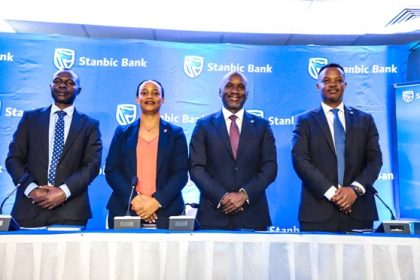
Catherine Poran, the SBIL Chief Executive said, “We see ourselves as more than just trainers. We link SMEs owners to market opportunities, help them understand and unpack these opportunities, and bring them into the market so they can see where the real growth lies. Our approach is global in perspective, but locally grounded.”
Giving the example of Uganda’s rapidly developing natural resource sector, she said, “Some of the businesses we’ve supported have seen their revenues rise significantly, especially in the oil and gas sector. On average, their revenues increased to about UGX 150 million, which is a very positive outcome for us.”
To date, the incubator has trained and mentored over 3000 individuals through various programs such as the Enterprise Development Program, Advisory Board, Hi-Innovator NSSF, Master classes and the Albertine Enterprise Development Program.
Nelson Kasada, the SBIL Head of Programs, said much of the incubator’s success has to do with its holistic capacity-building model, which also involves engaging industry experts who deliver practical and actionable knowledge.
“We don’t just offer theoretical training. We equip entrepreneurs with skills they can implement immediately from structuring contracts to risk management and ESG considerations,” he said.
SBIL programs are designed to be accessible and of high quality, often delivered at no cost through collaborations with key stakeholders such as the National Social Security Fund (NSSF), Uganda Revenue Authority (URA), United States African Development Foundation (USADF), Uganda Registration Services Bureau (URSB), the Petroleum Authority of Uganda (PAU) and others.
Juliet Kanyesigye, the CEO of Kanye’s Dairy Farm said, “I am glad to have been a part of the Stanbic Business Incubator programs and specifically, the Hi-Innovator Accelerator program. I have improved my skills in record management and mastered how to document my business. I was not fully registered, but my business is now fully registered, meets its tax returns, and is registered with URA, NSSF and UNBS. With the funding received from the Hi-Innovator Accelerator Program I have built my internal capacity.”
The incubator has supported more than 4,000 businesses in areas such as oil and gas, clean energy, transport, agriculture, and manufacturing. The vision is to become a trusted partner for the development of the private sector in Uganda.
Poran however, insists that to unleash the full potential of entrepreneurship as a genuine engine of economic growth, there has to be a shift from merely celebrating the quantity of businesses created to nurturing the quality, resilience, and competitiveness of these enterprises.
“This shift can facilitate a transformative journey, allowing entrepreneurship to be a robust pathway to prosperity rather than a simple alternative to unemployment. Policymakers and development financiers should prioritize businesses that address genuine market needs. Supporting scalable enterprises ensures that the growth of businesses contributes meaningfully to job creation and economic vibrancy,” she said.
Ultimately, the aim is turn SMEs into investment-ready and bankable businesses which are strong enough to face the challenges of a competitive operating environment.
Related Posts
 Government reaffirms commitment to capitalise UDB as Bank deepens development finance role
 Uganda’s DEI Biopharma gene therapy breakthrough could transform sickle cell treatment
 Equity Bank Uganda set to close 2025 on firmer footing as clean-up phase gives way to growth
 Stanbic targets wider access to affordable financing with ‘Oli In Charge’ campaign
 USA–Canada certification dispute could expose Uganda and regional airlines to regulatory risk
 Sumsub launches AI Agent Verification as Africa grapples with surge in AI-driven fraud
Get business news delivered to you everyday
Latest News

Government reaffirms commitment to capitalise UDB as Bank deepens development finance role

Uganda’s DEI Biopharma gene therapy breakthrough could transform sickle cell treatment

Equity Bank Uganda set to close 2025 on firmer footing as clean-up phase gives way to growth

Stanbic targets wider access to affordable financing with ‘Oli In Charge’ campaign

USA–Canada certification dispute could expose Uganda and regional airlines to regulatory risk

The hidden cost of blocked airline funds

KPMG flags widening execution gap as tech leaders bet on AI maturity, talent and partnerships

Uganda targets 200,000 visitors for 2026 National Agricultural Show in Jinja

Destination Uganda clinches “Best in Show – Africa” at New York Travel & Adventure Show

Uganda’s Kibirige edges closer to global golf stage after strong PGTI Q-School showing in India