

Equity Bank Uganda scales up climate action with UGX 22 billion in Equi-Green loans
Equity Bank Uganda has stepped up its environmental sustainability agenda by scaling access to clean and affordable energy solutions through its flagship Equi-Green product, in what is emerging as one of the strongest green finance efforts in the country’s financial sector.
The bank announced it had disbursed UGX 22.24 billion in green loans to individuals, businesses, and institutions pursuing renewable energy and energy-efficient projects. The loans, issued under the Equi-Green programme, are helping communities reduce reliance on polluting energy sources such as charcoal and kerosene, while promoting healthier lifestyles, lower household energy costs, and environmental protection.

EBUL Ceo Gift Shoko
“Climate change remains one of the most defining challenges of our time. Through Equi-Green, we are enabling our clients to adopt affordable and clean energy alternatives that meet their everyday needs while preserving the environment,” said Equity Bank Uganda Managing Director Gift Shoko .
The Equi-Green loan product covers a range of energy-saving and WASH (water and sanitation) technologies, including clean cooking stoves, solar lighting systems, and safe water solutions. The bank reports that it has successfully distributed over 51,800 clean energy products to date, with a strong focus on underserved and rural communities.
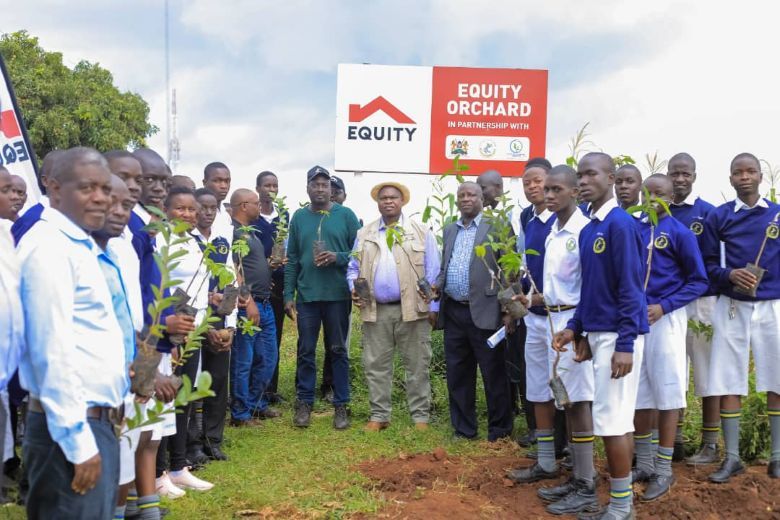
In 2024, the institution planted 30,118 trees, reinforcing its climate mitigation efforts and response to Uganda’s deforestation and soil erosion challenges. The bank also signed up 18 clean energy implementation partners, a move aimed at strengthening product delivery and ensuring clients have access not only to financing, but to quality equipment and technical support.
In a further boost to its sustainability programme, Equity Bank secured an additional UGX 5 billion in climate finance through a partnership with the Uganda Energy Credit Capitalization Company (UECCC). The facility is being channeled into renewable energy initiatives to widen access to clean energy technologies and support the government’s broader green energy transition.
Equity’s sustainability work aligns closely with UN Sustainable Development Goals (SDGs), particularly SDG 7 (Affordable and Clean Energy) and SDG 13 (Climate Action). By increasing access to clean technologies and promoting energy efficiency, the bank is positioning itself as a key enabler of Uganda’s climate change mitigation goals.
“Green finance is not just a trend—it’s a necessity,” Shoko said. “We are proud to be at the forefront of climate-responsive banking and will continue supporting communities and enterprises to make the transition to sustainable energy solutions.”
With Uganda continuing to face the twin pressures of environmental degradation and energy poverty, Equity’s Equi-Green model may provide a replicable blueprint for inclusive and impactful green financing across the country and the region.
Related Posts
 Government reaffirms commitment to capitalise UDB as Bank deepens development finance role
 Uganda’s DEI Biopharma gene therapy breakthrough could transform sickle cell treatment
 Equity Bank Uganda set to close 2025 on firmer footing as clean-up phase gives way to growth
 Stanbic targets wider access to affordable financing with ‘Oli In Charge’ campaign
 USA–Canada certification dispute could expose Uganda and regional airlines to regulatory risk
 Sumsub launches AI Agent Verification as Africa grapples with surge in AI-driven fraud
Get business news delivered to you everyday
Latest News

Government reaffirms commitment to capitalise UDB as Bank deepens development finance role

Uganda’s DEI Biopharma gene therapy breakthrough could transform sickle cell treatment

Equity Bank Uganda set to close 2025 on firmer footing as clean-up phase gives way to growth

Stanbic targets wider access to affordable financing with ‘Oli In Charge’ campaign

USA–Canada certification dispute could expose Uganda and regional airlines to regulatory risk

The hidden cost of blocked airline funds

KPMG flags widening execution gap as tech leaders bet on AI maturity, talent and partnerships

Uganda targets 200,000 visitors for 2026 National Agricultural Show in Jinja

Destination Uganda clinches “Best in Show – Africa” at New York Travel & Adventure Show

Uganda’s Kibirige edges closer to global golf stage after strong PGTI Q-School showing in India