

Equity Bank touts cash transfer success as world marks Refugee Day
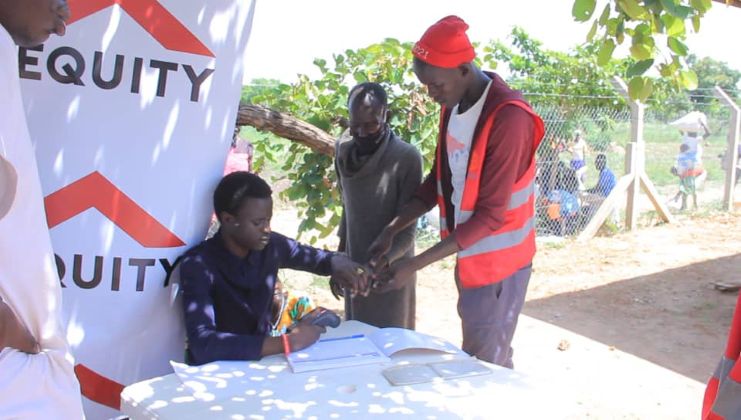
As Uganda joins the global community in commemorating World Refugee Day, Equity Bank Uganda is showcasing the impact of its cash transfer and financial inclusion initiatives, which have helped thousands of refugees’ transition from aid dependence to self-reliance.
Through its Social Protection Program, Equity Bank has delivered over UGX 301.7 billion in direct cash support since 2018 to more than 130,000 refugee households across nine of Uganda’s 13 refugee settlements. The support enables vulnerable families to meet essential needs such as food, education, healthcare, and the startup capital for small businesses.
Speaking ahead of the commemoration, Derrick Kyambadde, Manager for Social Protection at Equity Bank Uganda, said the bank’s approach prioritises dignity and opportunity over handouts.
“Uganda hosts the highest number of refugees on the continent. At Equity, we believe they don’t just need help — they need opportunity,” Kyambadde said. “Access to financial services gives them the dignity and freedom to rebuild their lives and seize opportunities within and around the settlements.”
In just the past two years, Equity Bank has disbursed nearly UGX 1.8 billion to nearly 400 refugee-led businesses, supporting 7,182 women and 3,867 men as they grow small enterprises that now serve as vital economic lifelines in host communities.
This year’s World Refugee Day theme — “Solidarity with Refugees” — is mirrored in the bank’s long-running commitment to integrate refugees into Uganda’s formal financial ecosystem.
Kyambadde emphasized that the cash transfer model is not only effective, but empowering.
“Cash transfers offer a dignified and efficient way to provide humanitarian aid. Beneficiaries gain financial independence, manage their spending, and open fully-fledged bank accounts — often for the first time — supported by biometric smart cards that ensure convenience, security, and transparency.”
These smart cards allow users to withdraw funds, make purchases, and access a range of services, effectively bridging the gap between humanitarian relief and long-term economic participation.
Refugees also receive financial literacy training, covering core principles of budgeting, saving, borrowing, and investing — knowledge that is often a critical missing piece in rebuilding lives.
“Participants are empowered to make informed financial choices and use services that previously seemed beyond their grasp,” said Kyambadde. “Our support helps them work toward financial goals, become more bankable, and ultimately transform their lives.”
Uganda currently hosts over 1.5 million refugees, largely from South Sudan, the Democratic Republic of Congo, and Burundi — making it the largest refugee-hosting country in Africa. While many depend on humanitarian assistance, Equity Bank’s model illustrates how targeted financial services can be used to foster independence and resilience.
The bank’s Social Protection Program, implemented in partnership with development agencies and humanitarian organizations, is also seen as a blueprint for rethinking how humanitarian aid is delivered.
Related Posts
 Government reaffirms commitment to capitalise UDB as Bank deepens development finance role
 Uganda’s DEI Biopharma gene therapy breakthrough could transform sickle cell treatment
 Equity Bank Uganda set to close 2025 on firmer footing as clean-up phase gives way to growth
 Stanbic targets wider access to affordable financing with ‘Oli In Charge’ campaign
 USA–Canada certification dispute could expose Uganda and regional airlines to regulatory risk
 Sumsub launches AI Agent Verification as Africa grapples with surge in AI-driven fraud
Get business news delivered to you everyday
Latest News

Government reaffirms commitment to capitalise UDB as Bank deepens development finance role

Uganda’s DEI Biopharma gene therapy breakthrough could transform sickle cell treatment

Equity Bank Uganda set to close 2025 on firmer footing as clean-up phase gives way to growth

Stanbic targets wider access to affordable financing with ‘Oli In Charge’ campaign

USA–Canada certification dispute could expose Uganda and regional airlines to regulatory risk

The hidden cost of blocked airline funds

KPMG flags widening execution gap as tech leaders bet on AI maturity, talent and partnerships

Uganda targets 200,000 visitors for 2026 National Agricultural Show in Jinja

Destination Uganda clinches “Best in Show – Africa” at New York Travel & Adventure Show

Uganda’s Kibirige edges closer to global golf stage after strong PGTI Q-School showing in India