

Equity Bank launches tree planting drive in Bugisu subregion
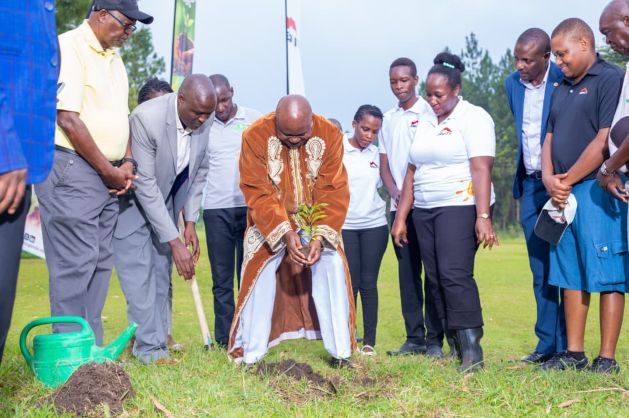
Bank commits UGX60 million to plant 60,000 trees by end of 2026
Lender Equity Bank Uganda has joined forces with the Umukuka wa Bugisu, the cultural leader of the Bamasaba, and Gro Foundation to launch a large-scale tree planting initiative aimed at restoring degraded ecosystems and promoting environmental sustainability across the Bugisu subregion.
The project, officially launched on Saturday during celebrations marking the Umukuka’s second anniversary as head of the Bugisu Kingdom, targets the planting of 60,000 trees by the end of 2026. Equity Bank has committed UGX60 million to finance the program, while Gro Foundation, a nonprofit specializing in reforestation, will provide technical expertise to ensure that indigenous tree species are planted, nurtured, and monitored for long-term survival.
Covering eight acres around the main dumping site in Mbale City, the project will establish green buffers that act as natural carbon sinks — helping to reduce emissions, stabilise soils, and protect communities from climate-related risks. The effort also seeks to prevent disasters like the Kitezi landfill collapse in Kampala, underscoring the urgent need for sustainable waste management solutions in growing urban centers.
Speaking at the launch, Virginia Ssemakula, Equity Bank’s Manager for Energy, Environment and Climate Change, said the initiative reflects the bank’s broader commitment to sustainability.
“At Equity, we believe our responsibility extends beyond traditional banking,” she said. “We are investing in healthier communities and a more sustainable future — growing not only financial prosperity but also environmental resilience.”
Lydia Apeduno, Mbale City Council’s Composite Manager, noted that the tree belt around the landfill will serve a dual purpose of cutting emissions and preventing encroachment.
“Dumping sites often emit gases such as carbon dioxide. These trees will help absorb carbon while creating a natural boundary that safeguards the area,” she explained.
Beyond the landfill, the tree planting program aims to support agricultural transformation and community livelihoods across Bugisu. The trees will improve soil fertility, conserve water, and strengthen farm resilience against the recurring mudslides that have long plagued the region. They will also provide farmers with food, fodder, and additional income streams.
Laban Musiguzi from Gro Foundation emphasized the broader ecological and economic benefits of the initiative.
“Integrating trees into farming systems helps control soil erosion, manage pests and diseases, and foster more diverse and productive ecosystems,” he said. “This is not just about planting trees, but about planting hope — securing the environment and protecting the climate for generations to come.”
The Bugisu project forms part of the bank’s Environmental, Social and Governance (ESG) strategy, which embeds sustainability into all operations. Nationwide, Equity Bank targets planting 35 million trees by 2026, positioning it among the leading financial institutions driving climate action in Uganda.
Related Posts
 Equity Bank Uganda set to close 2025 on firmer footing as clean-up phase gives way to growth
 Stanbic targets wider access to affordable financing with ‘Oli In Charge’ campaign
 USA–Canada certification dispute could expose Uganda and regional airlines to regulatory risk
 Sumsub launches AI Agent Verification as Africa grapples with surge in AI-driven fraud
 KPMG flags widening execution gap as tech leaders bet on AI maturity, talent and partnerships
 IATA, CFM renew agreement to ease engine maintenance bottlenecks as supply chain crisis deepens
Get business news delivered to you everyday
Latest News

Equity Bank Uganda set to close 2025 on firmer footing as clean-up phase gives way to growth

Stanbic targets wider access to affordable financing with ‘Oli In Charge’ campaign

USA–Canada certification dispute could expose Uganda and regional airlines to regulatory risk

Sumsub launches AI Agent Verification as Africa grapples with surge in AI-driven fraud

The hidden cost of blocked airline funds

KPMG flags widening execution gap as tech leaders bet on AI maturity, talent and partnerships

Uganda targets 200,000 visitors for 2026 National Agricultural Show in Jinja

Destination Uganda clinches “Best in Show – Africa” at New York Travel & Adventure Show

Uganda’s Kibirige edges closer to global golf stage after strong PGTI Q-School showing in India

Breathtaking Uganda unveils curated Easter getaway to Zanzibar