

EAC urged to leverage domestic capital as engine for infrastructure growth

Mobilising domestic capital to fund strategic infrastructure has emerged as a critical priority for East African economies seeking to reduce dependence on external financing and fast-track regional integration.
At the recent Stanbic Bank sponsored East Africa Institutional Investors Forum, held in Arusha, policymakers, asset managers, development financiers, and regulators gathered to deliberate on how to unlock local pools of capital — particularly pension funds and institutional savings — for investments in transportation, energy, real estate, and communication networks.
With the East African Community (EAC) facing an estimated $42 billion annual infrastructure gap, participants stressed that relying on traditional external funding sources is no longer sustainable, particularly in light of global economic uncertainty and tightening credit conditions.
“A robust infrastructure network is foundational to regional integration,” said Aimé Uwase, Director of Planning at the EAC Secretariat. “By unlocking domestic capital, we diversify our funding sources and build resilience. This is about asserting agency over our own development priorities.”
The two-day forum aimed to shift institutional capital from passive instruments — such as treasury bills — toward more productive, long-term investments. Key proposals included the development of regulatory frameworks that reduce risk exposure, creation of specialised investment vehicles for infrastructure, and blended finance models that incorporate guarantees and de-risking instruments.
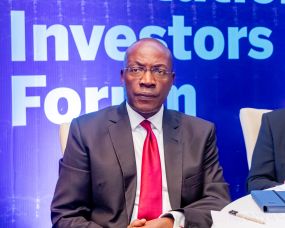 Michael Sseguya, Head of Financial Institutions for Corporate and Investment Banking at Stanbic Bank Uganda, noted that governments alone cannot meet the infrastructure financing burden. “Our discussions are focused on structuring viable transactions and creating stakeholder alignment to attract local capital into large-scale infrastructure,” he said.
The forum also heard calls for institutional innovation, including public-private partnerships (PPPs), listed infrastructure bonds, and securitised investment vehicles that could be traded on regional stock exchanges.
Alex Rumanyika, Head of Strategy at Uganda’s National Social Security Fund (NSSF), emphasised the importance of balancing ambition with prudence. “Pension funds are increasingly moving from passive to active roles in the investment ecosystem. However, our first duty remains the safety of savers’ funds,” he said. “What we need are credible instruments backed by strong governance to help us channel long-term capital into infrastructure without compromising fiduciary obligations.”
Participants also acknowledged structural challenges impeding progress — including political interference, regulatory fragmentation, and a lack of bankable projects. The absence of standardised frameworks across the EAC further complicates efforts to pool capital and share risk regionally.
Still, there was broad consensus that the region has both the capital and the institutional maturity to chart a new path forward — provided that reforms are implemented to improve investment transparency and build trust among private-sector players.
Benedict Nkini, Vice President for Financial Institutions at Stanbic Bank Tanzania, remarked that the EAC is sitting on significant pools of untapped capital held by commercial banks, insurance firms, and pension funds. “This is a conversation that should lead to action. We must now move from ideas to execution if we are to build the infrastructure backbone East Africa needs to compete globally.”
As the forum concluded, participants agreed to deepen dialogue among stakeholders and accelerate the development of investment instruments tailored to the region’s infrastructure needs — signalling a shift toward greater financial self-determination in East Africa’s development journey.
Related Posts
 Government reaffirms commitment to capitalise UDB as Bank deepens development finance role
 Uganda’s DEI Biopharma gene therapy breakthrough could transform sickle cell treatment
 Equity Bank Uganda set to close 2025 on firmer footing as clean-up phase gives way to growth
 Stanbic targets wider access to affordable financing with ‘Oli In Charge’ campaign
 USA–Canada certification dispute could expose Uganda and regional airlines to regulatory risk
 Sumsub launches AI Agent Verification as Africa grapples with surge in AI-driven fraud
Get business news delivered to you everyday
Latest News

Government reaffirms commitment to capitalise UDB as Bank deepens development finance role

Uganda’s DEI Biopharma gene therapy breakthrough could transform sickle cell treatment

Equity Bank Uganda set to close 2025 on firmer footing as clean-up phase gives way to growth

Stanbic targets wider access to affordable financing with ‘Oli In Charge’ campaign

USA–Canada certification dispute could expose Uganda and regional airlines to regulatory risk

The hidden cost of blocked airline funds

KPMG flags widening execution gap as tech leaders bet on AI maturity, talent and partnerships

Uganda targets 200,000 visitors for 2026 National Agricultural Show in Jinja

Destination Uganda clinches “Best in Show – Africa” at New York Travel & Adventure Show

Uganda’s Kibirige edges closer to global golf stage after strong PGTI Q-School showing in India