

Cross-border seamless travel is closer than you think, but data rules need to catch up
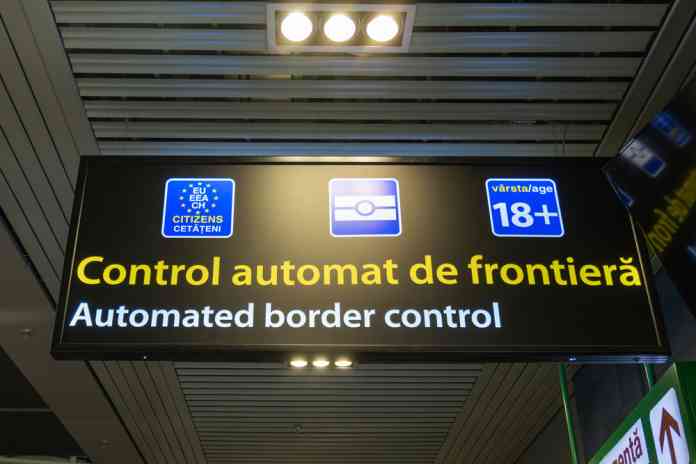
The tools for digital travel are ready, but without changes to data-sharing rules, airlines could find themselves on the wrong side of privacy laws, writes IATA’s Louise Cairney.
 Picture this: you arrive at the airport without fumbling for your passport or boarding pass. Instead, you simply walk in, glance into a camera, and head straight to your gate. Your identity is confirmed, your documents are verified, and your journey begins—no wallet, no paper, no hassle.
This is not a futuristic fantasy. It is the vision shaping the next generation of air travel. The building blocks are already here, yet one major hurdle remains: data.
At the centre of this transformation lies the Digital Travel Credential (DTC), developed by the International Civil Aviation Organisation (ICAO). The DTC is a secure digital replica of your passport, ready to be shared at the tap of a screen. But there’s a catch. The current version of the DTC bundles all your passport details—your name, number, nationality, and date of birth—into one file. That works for border agencies, which need the full picture. For airlines, however, the requirement is much narrower. They may only need your name and date of birth to process check-in or verify eligibility. Sharing an entire passport file to access such basic details is not just inefficient; in many jurisdictions it is illegal. Data protection laws like the EU’s GDPR prohibit the collection of more personal information than necessary.
This is where progress slows. The technology exists, but its design still outpaces the rules around privacy. The solution is rooted in the principle of data minimisation: providing only what is required, and nothing more. Imagine your digital passport divided into encrypted “data envelopes.” Each envelope contains a single piece of information. If an airline needs to verify your age, it requests only that envelope; the rest remain sealed unless you explicitly consent to share them. Travelers retain control, participation is transparent, and consent is voluntary. Refuse, and you follow the manual process of today. Accept, and your journey becomes seamless.
For this to become standard, ICAO has two possible paths: update the DTC to allow selective data release, or provide technical guidance so that data minimization can be built into existing frameworks. Either option would create enormous efficiencies while preserving privacy.
Meanwhile, the aviation industry is not standing still. Airlines, airports, and governments are already experimenting with digital identity programs and biometric journeys designed around consent and minimal data use. IATA’s One ID framework provides the blueprint, setting out how digital identities like the DTC can be applied in practice—verifying passengers, securing consent, and enabling paperless travel from curb to gate. Trials have already proven that digital-first travel works. Technology providers are developing digital wallets that align seamlessly with One ID, and even a transatlantic pilot project is being prepared, with governments exploring temporary agreements for cross-border digital passport trials.
Governments are also moving into action. The European Commission proposed new rules in late 2024 to enable digital identity for travel across the EU, while the OECD is mapping national digital ID frameworks to guide global policy and interoperability.
Beyond pilots and policy, digital travel is already becoming reality. India’s Digi Yatra program, live in more than 20 airports, allows domestic passengers to complete their journeys using only facial recognition linked to a verified digital ID. Globally, more than 70 airports now operate biometric systems that speed up passenger flows and enhance security. To help airlines navigate this fast-changing landscape, IATA has even created a Contactless Travel Directory that shows where such services are available.
Passengers themselves are signalling strong support. According to IATA’s 2024 Global Passenger Survey, nearly half of travellers have already used biometrics at the airport. Of those, 84 percent were satisfied with the experience, and 73 percent say they would prefer biometrics to traditional passports and boarding passes in the future.
The demand is clear. The infrastructure is taking shape. The industry is building toward scale. What remains is regulatory clearance—the adaptation of the DTC to support selective, secure data sharing. Until then, you will still need your passport at the airport. But the direction is unmistakable: the era of digital-by-default travel is approaching final call. And soon, boarding may require nothing more than your face and your phone.
Louise Cairney is the Head of Customer Experience and Facilitation at IATA
Related Posts
 Equity Bank Uganda set to close 2025 on firmer footing as clean-up phase gives way to growth
 Stanbic targets wider access to affordable financing with ‘Oli In Charge’ campaign
 USA–Canada certification dispute could expose Uganda and regional airlines to regulatory risk
 Sumsub launches AI Agent Verification as Africa grapples with surge in AI-driven fraud
 KPMG flags widening execution gap as tech leaders bet on AI maturity, talent and partnerships
 IATA, CFM renew agreement to ease engine maintenance bottlenecks as supply chain crisis deepens
Get business news delivered to you everyday
Latest News

Equity Bank Uganda set to close 2025 on firmer footing as clean-up phase gives way to growth

Stanbic targets wider access to affordable financing with ‘Oli In Charge’ campaign

USA–Canada certification dispute could expose Uganda and regional airlines to regulatory risk

Sumsub launches AI Agent Verification as Africa grapples with surge in AI-driven fraud

The hidden cost of blocked airline funds

KPMG flags widening execution gap as tech leaders bet on AI maturity, talent and partnerships

Uganda targets 200,000 visitors for 2026 National Agricultural Show in Jinja

Destination Uganda clinches “Best in Show – Africa” at New York Travel & Adventure Show

Uganda’s Kibirige edges closer to global golf stage after strong PGTI Q-School showing in India

Breathtaking Uganda unveils curated Easter getaway to Zanzibar