

Airbus cuts 2025 delivery target over supplier issue but maintains financial outlook
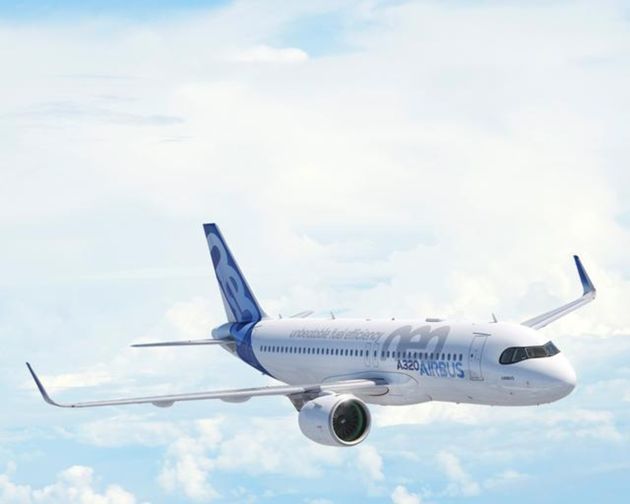
Airbus has trimmed its commercial aircraft delivery target for 2025 following a supplier quality issue affecting fuselage panels on its A320 Family jets, but says the disruption will not derail its financial outlook for the year.
The manufacturer now expects to hand over around 790 aircraft in 2025, down from the earlier projection of 820 units. The adjustment reflects delays linked to a recently identified problem at a supplier that has slowed A320 production flow—its highest-volume programme.
Despite the revised delivery outlook, Airbus has reaffirmed its full-year guidance, maintaining expectations of €7.0 billion in EBIT Adjusted and €4.5 billion in free cash flow before customer financing.
The update comes as Airbus continues to navigate persistent supply-chain pressure while ramping up output across its programmes. The A320 Family remains central to its long-term strategy, with a planned production rate of 75 aircraft per month by 2027. Other programmes are also on upward trajectories: the A330 is set to climb to rate 5 by 2029, the A350 to rate 12 by 2028, and the A220 to rate 12 in 2026 following a moderated ramp-up path.
Nine-Month Results Show Broad-Based Growth
In the nine months to September 2025, Airbus delivered 507 commercial aircraft, generating €47.4 billion in revenue, a 7pc rise from the same period last year. EBIT Adjusted stood at €4.1 billion, supported by stronger profitability in Defence and Space and a double-digit revenue increase within Airbus Helicopters.
Commercial aircraft revenue reached €33.9 billion, buoyed by higher deliveries and expanding services. The company’s order book remains robust: by September, Airbus held 8,665 aircraft in backlog, with 514 net commercial orders recorded over the nine-month period.
Airbus Defence and Space posted a sharp turnaround, achieving €420 million EBIT Adjusted, while Airbus Helicopters grew its EBIT Adjusted to €495 million on the back of higher deliveries and services.
Cash Flow and Balance Sheet Remain Healthy
Free cash flow before customer financing was –€914 million, reflecting inventory build-up ahead of the year-end delivery surge—an annual pattern for the airframer. Airbus closed September with €21.3 billion in gross cash and €7.0 billion in net cash, despite dividend payouts and currency headwinds.
Strategic Reshaping of European Space
Beyond the aircraft business, Airbus is advancing a landmark restructuring of Europe’s space sector. In October, Airbus, Leonardo and Thales signed a Memorandum of Understanding to combine their space activities into a single company. The move aims to consolidate Europe’s industrial capabilities and strengthen strategic autonomy in telecommunications, navigation, earth observation and national security.
The new entity could become operational in 2027, pending regulatory approvals.
Outlook
Airbus says its 2025 guidance is based on an assumption of stable global trade, no major economic shocks, and continued resilience across its supply chain. The current outlook also factors in applicable tariffs and the integration of select Spirit AeroSystems work packages, expected to close later this year.
With deliveries back-loaded and supply-chain pressure still evident, Airbus faces a challenging final stretch to the year. But the reaffirmation of its financial targets signals confidence in its operational recovery and long-term ramp-up strategy.
Related Posts
 Equity Bank Uganda set to close 2025 on firmer footing as clean-up phase gives way to growth
 Stanbic targets wider access to affordable financing with ‘Oli In Charge’ campaign
 USA–Canada certification dispute could expose Uganda and regional airlines to regulatory risk
 Sumsub launches AI Agent Verification as Africa grapples with surge in AI-driven fraud
 The hidden cost of blocked airline funds
 KPMG flags widening execution gap as tech leaders bet on AI maturity, talent and partnerships
Get business news delivered to you everyday
Latest News

Equity Bank Uganda set to close 2025 on firmer footing as clean-up phase gives way to growth

Stanbic targets wider access to affordable financing with ‘Oli In Charge’ campaign

USA–Canada certification dispute could expose Uganda and regional airlines to regulatory risk

Sumsub launches AI Agent Verification as Africa grapples with surge in AI-driven fraud

The hidden cost of blocked airline funds

Uganda targets 200,000 visitors for 2026 National Agricultural Show in Jinja

Destination Uganda clinches “Best in Show – Africa” at New York Travel & Adventure Show

Uganda’s Kibirige edges closer to global golf stage after strong PGTI Q-School showing in India

Breathtaking Uganda unveils curated Easter getaway to Zanzibar

IATA, CFM renew agreement to ease engine maintenance bottlenecks as supply chain crisis deepens