

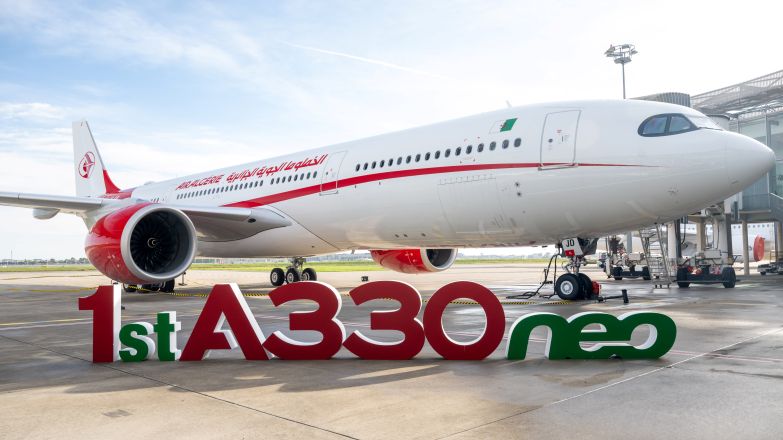
Air Algérie has ushered in a new phase of its long-haul modernisation programme with the delivery and entry into service of its first Airbus A330neo, powered by Rolls-Royce Trent 7000 engines.
The aircraft, part of a wider fleet renewal strategy, touched down in Algiers on Thursday after departing from Airbus’ assembly facility in Toulouse. It is the first of ten A330-900neos set to join the Algerian national carrier’s fleet between now and mid-2027, signalling an accelerated push to strengthen its competitiveness on routes linking Africa, Europe, the Middle East and—more strategically—Asia.
Rolls-Royce executives joined Airbus and airline officials at Houari Boumediene International Airport to mark the milestone, describing it as a significant step in Air Algérie’s ambition to reposition itself as a hub carrier linking continents.
Omar Ali Adib, Senior Vice President for Customers at Rolls-Royce, said the new aircraft formally opens a chapter defined by greater efficiency, sustainability and reach.
“For more than seven decades, the airline has built a proud legacy of connecting Africa, Europe and the Middle East, and is now looking confidently further into Asia and beyond as it expands its global reach,” he said. “The arrival of the A330neo marks a new chapter in this journey — one defined by efficiency, sustainability and ambition. Rolls-Royce is proud to stand alongside Air Algérie as it positions Algiers as a bridge between continents.”
The A330neo fleet will be powered solely by Rolls-Royce’s Trent 7000 engines, the latest evolution in the Trent family line that has generated more than 200 million cumulative flying hours since the first variant entered commercial service 30 years ago. The Trent 7000, designed specifically for the A330neo, delivers between 68,000 and 72,000 pounds of thrust and offers a step-change in efficiency, with 14pc lower fuel burn per seat compared to the previous generation Trent 700 engines.
Noise reduction has also been a major focus: the Trent 7000 is 6 decibels quieter than its predecessor, contributing to Air Algérie’s broader environmental compliance goals as major markets tighten noise and emissions regulations. Critically, the engine is certified to operate on 100% Sustainable Aviation Fuel (SAF), positioning the airline to align with global decarbonisation targets as supply of greener fuels gradually increases.
For Air Algérie, the A330neo’s arrival fits into a broader reset designed to refresh the fleet, optimise operating costs, and prepare the national carrier for renewed international expansion following years of disruption from the pandemic and fluctuating market conditions. The airline has signalled plans to expand frequencies on core European routes, improve connectivity across the Maghreb, and pursue deeper penetration into high-growth Asian markets.
Officials said the combination of the A330neo’s improved range and capacity, alongside the efficiency gains of the Trent 7000, provides the backbone for this strategy, offering lower unit costs and greater flexibility on medium- and long-haul missions.
With nine more A330neos scheduled for delivery over the next two years, the partnership between Rolls-Royce and Air Algérie is set to deepen as the airline positions itself for stronger global relevance and more sustainable operations.
 Equity Bank Uganda set to close 2025 on firmer footing as clean-up phase gives way to growth
 Stanbic targets wider access to affordable financing with ‘Oli In Charge’ campaign
 USA–Canada certification dispute could expose Uganda and regional airlines to regulatory risk
 Sumsub launches AI Agent Verification as Africa grapples with surge in AI-driven fraud
 KPMG flags widening execution gap as tech leaders bet on AI maturity, talent and partnerships
 IATA, CFM renew agreement to ease engine maintenance bottlenecks as supply chain crisis deepens


