

Africa’s farmers to benefit from global push for low-methane, climate-smart livestock
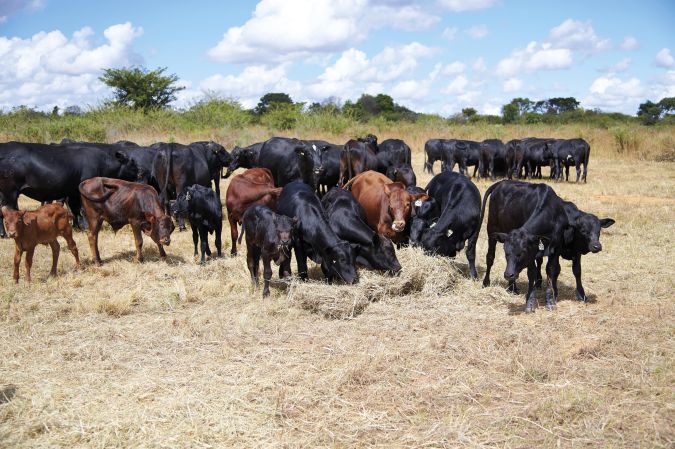
A new global research initiative promises to transform African livestock farming by helping smallholders breed cattle that emit less methane while producing more milk and meat.
Launched by the International Livestock Research Institute (ILRI) with support from the Bezos Earth Fund and the Global Methane Hub, the US$3.35 million, three-year program is part of the Global Methane Genetics Initiative. It seeks to unlock the genetic potential of Africa’s indigenous breeds to curb greenhouse gas emissions while strengthening food security and climate resilience across the continent.
“Reducing methane from cattle is one of the most elegant solutions we have to slow climate change,” said Andy Jarvis, Director of the Future of Food at the Bezos Earth Fund. “By identifying and promoting naturally low-emitting cattle, we can lock in climate benefits for generations.”
Livestock in Africa currently contribute about 18pc of global methane emissions from animals, with cattle alone responsible for 70pc of emissions in Sub-Saharan Africa. Without intervention, scientists warn these levels could triple by 2050, threatening global climate goals, including the 1.5°C target.
For farmers, however, the challenge is not just emissions but productivity. Indigenous breeds are hardy but often low-yielding. The project aims to address both issues by pairing advanced genetics with traditional livestock knowledge.
“This initiative represents an important step towards a more sustainable and productive livestock sector in Africa,” said Raphael Mrode, Principal Investigator at ILRI. “By integrating advanced genetics with Africa’s indigenous breeds and farmer knowledge, we can achieve meaningful reductions in methane emissions while strengthening rural livelihoods.”
The project will measure methane emissions and productivity traits in 3,000 cows across five African countries, using laser detectors and mobile apps, linked to existing data on 9,000 cattle. It will also map microbial communities in over 1,000 tropical cows to understand how rumen microbes affect emissions and productivity.
The research will feed into national breeding programs in Kenya, Ethiopia, South Africa, Burkina Faso, and Benin. New “climate-smart” cattle will be selected not only for low methane emissions but also for heat tolerance, resource efficiency, and higher yields.
Capacity building is another cornerstone: training technicians, strengthening breeding centers, and publishing cow and bull rankings accessible to farmers, particularly targeting smallholders, women, and youth.
ILRI will coordinate efforts from its Nairobi and Addis Ababa hubs, in partnership with institutions such as the Agricultural Research Council (South Africa), CIRAD (France), CIRDES (Burkina Faso), and Université d’Abomey-Calavi (Benin). Industry partners including URUS and GENUS will help scale innovations through farmer networks.
“This work brings together the best of science, industry, and the global breeding community to accelerate genetic improvement for methane efficiency,” said Roel Veerkamp, professor at Wageningen University & Research.
Over 20 years, the program is projected to cut livestock methane by 12pc, through an annual 0.6pc reduction in methane intensity at the herd level. By improving productivity, emissions per kilogram of milk could fall by 20–25pc within just five years.
Importantly, the genomic data generated will be made publicly available, ensuring long-term, low-cost benefits for African breeding programs.
For Africa’s millions of smallholder farmers, the initiative could mean access to more productive, climate-resilient livestock that also reduce environmental pressure.
Related Posts
 Uganda’s DEI Biopharma gene therapy breakthrough could transform sickle cell treatment
 Equity Bank Uganda set to close 2025 on firmer footing as clean-up phase gives way to growth
 USA–Canada certification dispute could expose Uganda and regional airlines to regulatory risk
 KPMG flags widening execution gap as tech leaders bet on AI maturity, talent and partnerships
 Destination Uganda clinches “Best in Show – Africa” at New York Travel & Adventure Show
 Uganda’s Kibirige edges closer to global golf stage after strong PGTI Q-School showing in India
Get business news delivered to you everyday
Latest News

Uganda’s DEI Biopharma gene therapy breakthrough could transform sickle cell treatment

Equity Bank Uganda set to close 2025 on firmer footing as clean-up phase gives way to growth

Stanbic targets wider access to affordable financing with ‘Oli In Charge’ campaign

USA–Canada certification dispute could expose Uganda and regional airlines to regulatory risk

Sumsub launches AI Agent Verification as Africa grapples with surge in AI-driven fraud

The hidden cost of blocked airline funds

KPMG flags widening execution gap as tech leaders bet on AI maturity, talent and partnerships

Uganda targets 200,000 visitors for 2026 National Agricultural Show in Jinja

Destination Uganda clinches “Best in Show – Africa” at New York Travel & Adventure Show

Breathtaking Uganda unveils curated Easter getaway to Zanzibar